Get Full Government Meeting Transcripts, Videos, & Alerts Forever!
Get email alerts on the Stormwater topic
No spam. Unsubscribe anytime.
Public works weighs stormwater bid packages, seeks balance between many small fixes and large, costly projects
Summary
The Brentwood Public Works Committee reviewed two stormwater bid packages and the city's prioritization approach, with staff urging members to consider mixing smaller, quick projects and larger multi-year efforts such as Pine Avenue.
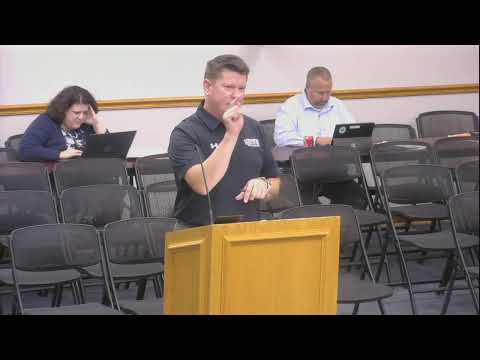
The Brentwood Public Works Committee on Aug. 14 discussed which stormwater projects to bundle into upcoming bid packages, balancing lower-cost, high-frequency fixes against larger, higher-impact projects that would likely span multiple budget years. The committee heard cost estimates, an engineer's ranking from the city's stormwater master plan and preliminary options for packaging work.
The discussion matters because the city will use these selections to shape near-term contracting and multi-year budgeting for stormwater infrastructure. Committee members focused on whether to pursue many smaller projects now or to save and phase funding for larger projects that benefit more properties.
Dan, public works staff, told the committee that bid package 1 originally contained six projects but one site (2217 Park Ridge) will be incorporated into the CSO Mary project, leaving five sites in package 1. "So that's basically bid package 1," he said. He provided construction estimates and explained that several of the proposed projects were submitted as OMCI projects that would be eligible for later reimbursement. "The latest engineer's estimate's a 144,000," he said about the remaining scope in bid package 1. Dan also flagged that preliminary construction estimates do not include design fees.
Committee members discussed package 2 choices, which drew on the stormwater master plan's priority ranks and efficiency ratings. Dan said the Pine Avenue site (priority rank 3) had a "rough cost" estimate of $479,003.80 for construction and that design would add further costs. He explained the city's funding context: "we don't have enough between the OMCI funds and prop s," and suggested phasing or banking funds across budget years if council wanted to pursue that larger project.
Several aldermen argued for concentrating on higher-ranked projects even if they are more expensive because of their greater efficiency and broader benefit. One committee member told staff they would prefer to save toward larger projects and use some smaller projects each year so the city makes steady progress while reserving funds for major corridor fixes. Another member urged that some smaller items could still be packaged so the city continues to deliver visible improvements annually.
Staff said design work must be done before construction bidding; Dan said Gonzales (the engineer of record) was finalizing plans and that bid documents for package 1 would be ready to take bids next month, with a hoped-for final completion later in the year. He noted that some sites overlap or are affected by MSD (Metropolitan Sewer District) plans and cautioned the committee to avoid duplicating work.
No formal motion to adopt a specific bid package was made at the meeting. The committee asked staff to fold the feedback into a revised bid-package recommendation for upcoming budget discussions and to provide costed design estimates so the board can consider phasing across 2026 and 2027.
The committee also debated outreach: one member opposed reopening the public solicitation list this year, saying the city had not yet completed any projects from the initial outreach and that further solicitation might be premature. Another member suggested staff could include a limited, targeted follow-up in the 2026 budget process if the committee wanted to capture newly reported problem locations.
Staff will return with a recommended packaging approach, costed design estimates and a proposed multi-year financing plan to fit the board's budget timeline.
Less-critical background: committee members noted typical useful life for modern storm pipe is long (industry estimates were cited at roughly 70 years for PVC) and stressed that these projects are designed as long-lived infrastructure investments.