Get Full Government Meeting Transcripts, Videos, & Alerts Forever!
Get email alerts on the Public Works Sewer Lateral topic
No spam. Unsubscribe anytime.
Maplewood leans toward hybrid sewer-lateral plan; staff to refine caps and eligibility
Summary
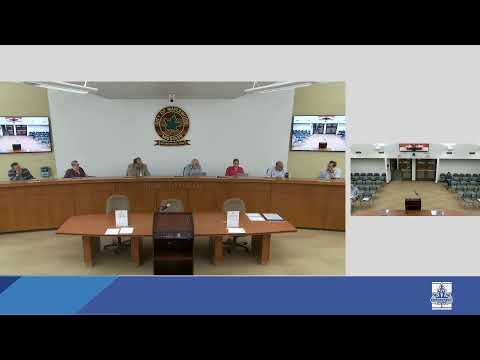
Maplewood City Council and staff spent the April 22 work session discussing proposed changes to the city's sewer-lateral assistance program and signaled a preference for option 5, a hybrid approach limiting homeowner out-of-pocket costs.
Maplewood City Council and staff spent the bulk of the April 22 work session discussing proposed changes to the city's sewer-lateral assistance program. Council members and staff said they prefer option 5, a hybrid approach that spreads initial capital costs and limits what a homeowner must pay out of pocket.
Under the option favored by staff and several council members, a homeowner would pay 30 percent of repair costs up to a cap; the staff discussion used a $5,000 cap for repairs located entirely on private property and an $8,000 cap when the repair includes street or sidewalk (flat-work) replacement. For example, council members clarified that if a repair cost is $10,000 and the repair is entirely on private property, a homeowner would pay 30 percent of the first $5,000 ($1,500) and the remaining $5,000 would be the homeowner's responsibility. If the repair involves street or sidewalk work and the cap is $8,000, the homeowner would be responsible for 30 percent of $8,000 and any remainder above $8,000.
Staff presented five options and confirmed a correction to the packet: option 5's chart showed 60 but the narrative incorrectly said 50; staff confirmed the correct figure is 60 for the metric in the chart. The public-works staff and others explained calculations assumed a conservative 100 percent take rate and did not factor in potential drop-off when homeowners see actual out-of-pocket costs. Staff said they deliberately used conservative assumptions rather than estimate how many residents might forgo repairs.
City staff described current program operations: a plumber or scoped-video inspection documents a failing lateral, the city reviews the video to confirm eligibility, staff obtains an estimated cost, and the city captures required resident funds before proceeding with repairs. Staff said the city generally procures plumbing services through an annual or multiyear bid to secure competitive rates rather than reimburse privately hired contractors after the fact.
Key operational clarifications discussed at the work session included:
- Backlog and capacity: staff said the city has averaged roughly two sewer-lateral repairs per month and prioritizes emergency repairs (for example, basements with sewage). The city expects in-house work and targeted contractor use to reduce backlog.
- Safety and scope: staff said that very deep excavations or other safety-sensitive work may require contractor performance because of OSHA requirements; staff said OSHA safety rules inform whether work is done in-house or bid to a contractor.
- Eligibility and application: staff said there is not a separate homeowner application in the current model for eligible repairs; instead, a plumber's camera/video and staff review generate the eligibility determination. Staff said they will prepare a clearer application and criteria to reduce variability and ensure similar repairs receive consistent treatment.
- Means testing and financial assistance: staff reviewed other-city examples (Manchester was cited) that sometimes waive application fees or request federal-income documentation to determine assistance eligibility. Staff said Maplewood lacks administrative capacity for extensive means testing but will include consideration of limited financial-assistance mechanisms and will coordinate with legal counsel on program changes.
Council members raised additional questions: lifetime caps (whether a homeowner could receive assistance more than once), whether previously covered repairs would remain eligible if another separate section later failed (staff said the program would continue to cover subsequent, separate failures under the new policy), and whether emerging lining technologies could reduce future repair costs.
No formal vote on a program option occurred at the session. Council members gave staff direction to proceed with option 5 as the preferred approach, to clarify numerical caps and the narrative correction (60), refine eligibility criteria and application procedures, coordinate with legal on means-testing options, and return to the council with a final policy and recommended caps.
Public-works staff answered direct questions during the session; for example, when asked whether solid-waste funds could be transferred to the sewer-lateral fund, the Public Works Director replied, "No." Staff also confirmed the city does not currently have public viewing of the work session and that emergency repairs are handled immediately when health or safety concerns are present.
Next steps: staff will return with refined criteria, clarified cost-cap numbers, and proposed policy and procedure language for council review and possible action.