Get Full Government Meeting Transcripts, Videos, & Alerts Forever!
Get email alerts on the Police Recruitment topic
No spam. Unsubscribe anytime.
Committee considers raising police academy pay to 100% and allowing pension contributions for recruits
Summary
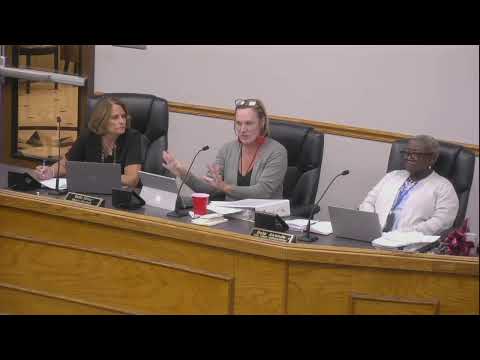
At the Sept. 4 Ways and Means Committee meeting, staff presented a proposed employee-handbook change to pay police recruits 100% while in the academy and allow them to participate in the city's police and fire pension fund; the proposal drew questions about parity with fire recruits, market comparators and operational limits on recruits' duties.
The Ways and Means Committee met Sept. 4 to discuss an employee-handbook update that would change pay and pension participation for police recruits while they attend the academy. Staff said the draft would increase pay for recruits in the police academy from 75% to 100% of salary and allow those recruits to participate in the police and fire pension fund during the academy period.
Why it matters: Committee members said the change could affect recruitment competitiveness and internal parity with the fire department, which staff said already receives full pay and is able to perform some operational duties while in training.
Tangela, a staff presenter, told the committee that "Chief Speaks has come to us and asked to have an update where the police recruit in the academy would receive 100% compensation during their time in the academy versus 75% compensation." Tangela also said police recruits currently cannot participate in the police and fire pension fund and that the handbook change would allow pension contributions while recruits are in the academy.
Committee members asked for operational and market context. A committee member asked whether the change would align police with the fire department; staff answered that the fire recruits often attend the fire academy already certified as paramedics and can perform some duties (such as riding an ambulance) while training, a capability not available for police recruits.
Chief Cottrell, who attended the meeting, confirmed that police recruits cannot be placed on patrol during academy training and that academy attendance typically lasts about six months. A committee speaker said the city expects that, if a recruit chooses not to remain with the city after academy training, the recruit "owes us a 100% of that back," reflecting an existing repayment condition tied to academy-funded training.
Alderman Goad said he supports investment in recruits but questioned paying a trainee the same as a fully trained officer, saying in part: "someone who has completed training has shown success and is a full member, our staff should be compensated at a higher rate." Other members asked staff to research whether peer municipalities offer the same pay and pension participation for police recruits.
Discussion, direction and next steps: Committee members did not take a formal vote on the handbook change at the Sept. 4 meeting. Staff agreed to research comparator cities' practices and return with additional information so the committee can weigh recruitment benefits against pay parity and operational distinctions.
Ending: The committee kept the matter in committee for further review and asked staff to report back with comparator research and any recommended contract or policy language changes needed to implement pension participation for recruits.