Get Full Government Meeting Transcripts, Videos, & Alerts Forever!
Get email alerts on the Public Safety Communications topic
No spam. Unsubscribe anytime.
Police Chief: Blue Shield Grant Will Cover Mobile Video Units, Not MOSWIN Radios
Summary
Oak Grove police will shift a Blue Shield grant application from portable radios to mobile video/audio recording (MBAR) units after state grant rules limit purchases to MOSWIN‑compatible radios. The department will continue piecemeal radio replacements and pursue separate funding for body cameras.
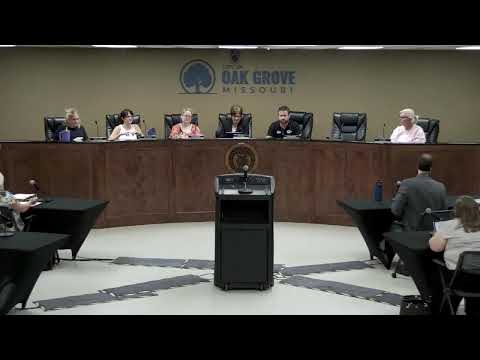
The Oak Grove police chief told the Board of Aldermen on Sept. 2 that the department revised its Blue Shield grant application to seek replacement mobile video and audio recording (MBAR) systems for patrol cars rather than the portable radios originally requested. The change followed a grant manager’s determination that the state’s grant funding would only purchase MOSWIN‑approved radios (Missouri Statewide Interoperability Network), and the department’s patrol radios are MARs‑compatible (Metropolitan Area Regional Radio System), not MOSWIN.
Chief Jackson (referred to in the meeting as “the chief”) said MARs radios (the regional system the department uses) differ from MOSWIN equipment and that MOSWIN‑spec radios were costlier and offered features the department does not need. “It would be truly us going out and buying the Cadillac when we are perfectly fine picking up our Daytona Camaro,” the chief said, describing the difference in capability and cost.
Because MOSWIN funds would not cover the radios the department uses, the chief said the application was adjusted to request MBAR units and related equipment for patrol cars. He said the department’s in‑vehicle video systems range in age from about 7 to 14 years and, in many cases, are beyond repair or obsolete. The chief also said a separate grant application is being prepared to seek funds for body‑worn cameras.
Board members asked whether portable radios would be included in future budget requests; the chief said the department has been replacing radios incrementally (two to three units per year) and will continue a piecemeal replacement plan while pursuing other funding. No formal board action was required or taken; the item was informational and staff noted the change in grant focus to MBAR replacement.
Why it matters: Mobile video systems and reliable communications both affect officer safety, evidence collection, and interoperability with regional responders. The grant reorientation preserves the department’s immediate equipment priorities while keeping pursuit of radios for future budgets or separate grants.
What’s next: The department will submit the revised Blue Shield grant application for MBAR units, continue piecemeal radio replacement in the operating budget, and pursue additional grants for body‑worn cameras.