
Republic Services explains single‑stream recycling, carts and yard‑waste rules at community Q&A
Get AI-powered insights, summaries, and transcripts
Subscribe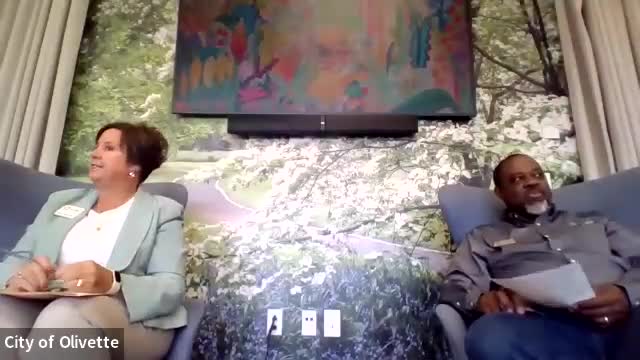
Summary
A Republic Services representative answered residents’ questions about what belongs in single‑stream recycling, extra cart fees, yard‑waste limits, and local recycling facilities, and urged clearer household sorting to keep contamination rates low.
At a recent community question-and-answer session in Olivette, Joel, a Republic Services representative, reviewed what materials belong in single‑stream residential recycling and answered residents’ questions about extra carts, yard‑waste limits and where local recyclables are processed. "When in doubt, throw it out," Joel said, urging residents to avoid placing uncertain items in curbside recycling.
Joel said single‑stream recycling for the municipality accepts six material categories — paper and cardboard, plastic jugs and containers, aluminum and metal cans, and glass — which may be commingled in one container for collection and processing at a material recovery facility (MRF). He said the MRF serving the area audits loads for contamination and that the goal set with the county and MRF is 15% contamination or less; currently the city’s loads are at about 14% contamination, below a stated municipal average of roughly 20%.
On plastics, Joel cautioned that the numbered resin code on a container only identifies the type of plastic, not whether it is recyclable in the local system. He described Republic Services’ polymer‑center program, saying the company opened a polymer center in Las Vegas in 2023 and a second center "just opened in March in Indianapolis," where rigid plastics such as water and detergent bottles are sorted, flaked and remade into like products instead of being sold as loose commodities.
Residents asked about food‑soiled paper and takeout containers, black plastic takeout trays, and cardboard lined with coatings or grease. Joel advised that takeout containers or cardboard that has been soaked with food should go to the trash because food contamination impedes fiber recovery. He said black rigid plastics are accepted but many food‑contact fiber containers and film packaging are not suitable for single‑stream and should be handled through store drop‑off programs or landfilled when in doubt. Joel offered to follow up on questions about PFAS in some coated cartons.
On bulk and construction waste, Joel said weekly residential service is intended only for material generated in a single week; construction debris and large amounts of decking or drywall should be handled by a temporary container or separate bulk pickup arrangements with Republic Services. He said an extra cart (trash, recycling or yard‑waste) is available for lease at $5 per month and that smaller 48‑gallon carts are available for households that need a smaller container.
Joel explained yard‑waste handling: large branches should be cut to about 4‑foot lengths and kept to roughly 50 pounds per bundle when possible, and the municipality’s yard waste is taken to St. Louis Compost (the company used for the area, with the primary site referenced in Maryland Heights) for mulching.
On special items and alternatives, Joel noted that not all local MRFs accept glass; where glass is accepted it is recycled, but broken glass placed in curbside carts can fall through processing equipment and be diverted to trash. He pointed residents to local options such as Ripple Glass purple drop‑off bins for all types of glass and to online resources including republicservices.com, recyclingsimplified.com and the Saint Louis County "Recycle Wizard" tool for item‑by‑item guidance.
Joel also described broader waste‑management developments mentioned during the session: Republic Services is operating landfill gas‑to‑energy programs at many company landfills (he said 69 nationwide) and said the landfill that services the area participates in a gas‑to‑energy project; and the company is planning a new recycling facility in Bridgeton slated to open in 2027. He reiterated the operational practice that Republic drivers will retrieve visible trash or recycling carts placed at the street at no charge for residents who cannot move carts to the curb, provided the driver can see the carts from the street.
The session included multiple resident questions about evolving local recycling rules, confusion over plastic numbering, and how to reduce contamination. Joel recommended creating an online account at republicservices.com to receive service alerts, report missed collections and track the truck on service day. He encouraged residents to consult the county "Recycle Wizard" and store drop‑off programs for films, bags and other materials that damage single‑stream machinery.