
Butler County officials, state lawmakers press for property-tax fixes as 2026 revaluation looms
Get AI-powered insights, summaries, and transcripts
Subscribe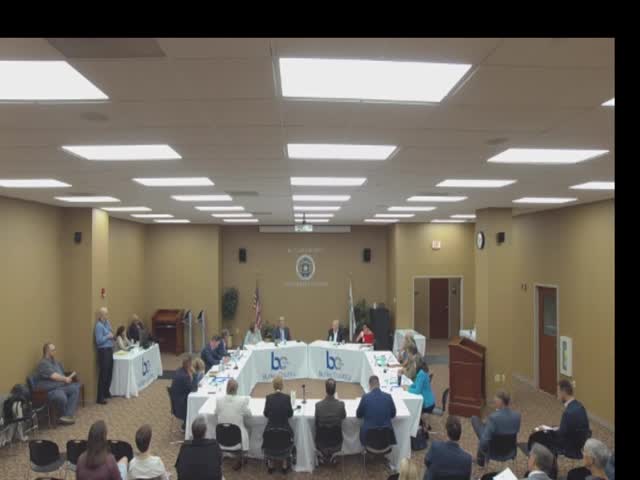
Summary
County auditors and treasurer warned of a 15–25% countywide assessment increase as local leaders, state legislators and county associations discussed options from targeted relief to a constitutional amendment; no formal policy change was enacted at the meeting.
BUTLER COUNTY, Ohio — County leaders and state lawmakers met Aug. 5 to discuss mounting property-tax pressures after the county auditor projected substantial increases in assessed values ahead of the 2026 revaluation.
"We're looking at 2026 at 15 to 25% increase in values," Butler County Auditor Nancy Nix said, summarizing her office's projection and the uneven impact district to district. She said parts of the county already saw a 37% increase in values in 2023.
The meeting brought together the Butler County Board of Commissioners, county financial officers, the Ohio County Commissioners Association and several state legislators to review the causes, consequences and policy options. The conversation focused on the 20-mill floor in Ohio law and an array of possible responses including targeted senior relief, a homestead “piggyback” option, statutory fixes such as changing the three-year average or inside-millage reforms, and the possibility of a voter-driven constitutional amendment.
Why it matters: Property taxes fund most local services in Butler County. Nix said the county collected about $660,000,000 in property taxes last year, with roughly $393,000,000 going to schools; county sales-tax receipts were about $59,000,000. Those numbers were presented to show why wholesale elimination or rapid reduction of property-tax revenue would leave a large funding gap for schools, public safety and other local services.
Treasurer Mike McNamara presented data and several recommendations he labeled common-sense reforms. McNamara urged measures to improve transparency and voter awareness — for example, ending permanent/continuous levies and better explaining levy costs to voters — and listed technical changes his office favors. "Eliminate the stealth levies," McNamara said, and said clearer ballot notice and simpler bill language would help restore voter trust.
State lawmakers at the meeting emphasized limits to what the state can do without broad legislative agreement. Representative Thomas Hall urged caution about proposals that would shift costs to the state. "If you see some of the ads, with abolished property tax, they will say... That is not true," Hall said, arguing that abolishing property tax would not automatically result in higher state income or sales taxes to replace local funding.
Several speakers described the 20-mill floor as central to recent windfalls and spikes in school-district revenue in some areas. Auditor Nix said the floor has produced “windfalls” for some districts and disparate tax impacts across Butler County; she recommended targeted relief and a balanced approach between property and sales or income tax that would not rely solely on homeowners.
Discussion points included short-term statutory fixes (for example, adjusting the multiplier or averaging method used in revaluations), expansion of the homestead exemption, targeted senior caps or circuit-breaker programs, and long-term structural change. Some participants urged a legislative route this fall; others proposed a statewide ballot initiative if the legislature does not act.
No formal policy change or vote on county authority was taken at the meeting. Commissioners and association leaders agreed to continue coordinating with the Ohio County Commissioners Association, the auditors association and county legislators to craft proposals. Cheryl Subler, executive director of the Ohio County Commissioners Association, said the association supports many of the auditors’ and treasurer’s proposals and pledged to keep advocating with member counties.
Dissent and concerns: Multiple speakers warned of unintended consequences. Several legislators and county officials said rapid reductions in property tax revenue could force cuts in police, fire, EMS and school services. One legislator called outright elimination “insane” because of the immediate fiscal shock to local governments. Others argued the current system has become unfair to long-term homeowners, particularly seniors on fixed incomes.
Next steps: Officials said they will pursue both legislative options this fall and the design of a possible people-led ballot measure. No county-level ordinance, levy decision or formal direction to staff was adopted at the meeting; participants left with a commitment to continue drafting proposals and to coordinate advocacy through county associations.
The meeting opened and closed with routine procedural motions; the board did not vote on any of the tax-policy options discussed.