Get Full Government Meeting Transcripts, Videos, & Alerts Forever!
Get email alerts on the Ice Detention Public Comment topic
No spam. Unsubscribe anytime.
Residents protest ICE detentions; county prosecutor defends sheriff’s authority and facilities
Summary
Multiple residents urged the county to end or limit ICE-related detentions; the county prosecutor responded that Ohio law and an Ohio Attorney General opinion permit sheriffs to contract with federal immigration authorities, and said the county’s facility meets federal standards. No policy change was made at the meeting.
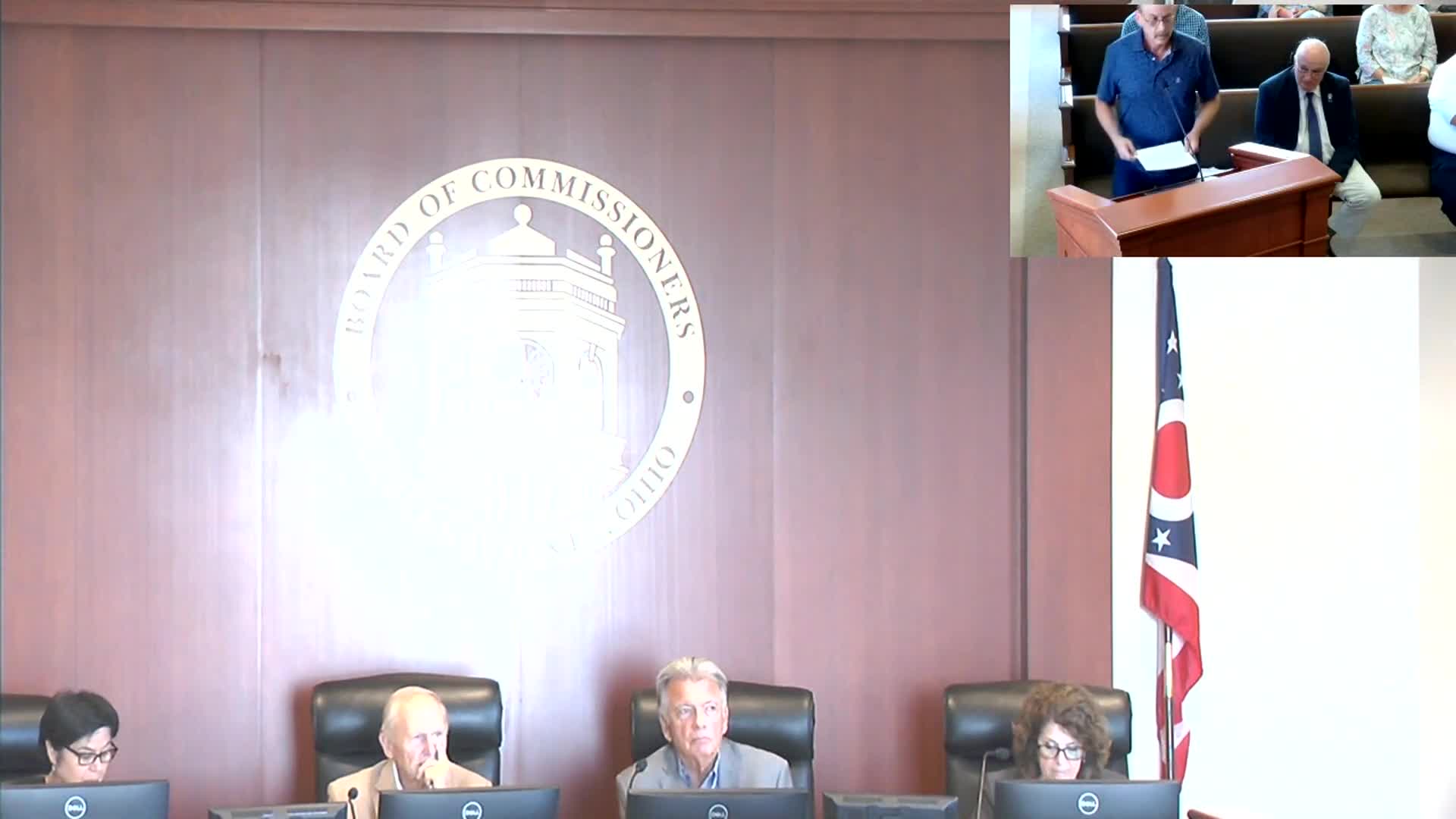
Dozens of residents addressed the Butler County commissioners during public comment on Sept. 2, urging the county to stop housing people detained by U.S. Immigration and Customs Enforcement. Speakers said the county’s involvement in ICE detentions creates fear in immigrant communities and urged commissioners to cease cooperative arrangements.
“I am asking you as our representatives to choose compassion over complicity,” Linda Spurrier, a Hamilton resident, told the board. Several speakers described concerns about mass deportation policies and the human impact on families; speaker Steve Holmquist warned that the term “remigration” has “roots in the far right” and described his objections to federal plans he characterized as forced migration.
Residents also raised questions about a county facility known as the Resolutions Building and its lease from Community Behavioral Health, including whether county funds were being used to support space for detainees. Anne Brown asked whether commissioners had discussed the issue publicly when the previous resolution was adopted and said nearly $906,459 had been listed for security expenses attached to the building.
County officials and the prosecutor responded in public session. The county prosecutor, speaking to the board and the public, said Ohio law and guidance permit county sheriffs to contract with federal authorities to hold persons detained for civil immigration violations. “The county sheriffs have the right and can contract through you to detain those held by ICE by the government for the purpose of civil violations of immigration law,” the prosecutor said. He also told the public the counties that host federal detainees have been inspected and approved to meet federal standards and that Butler County’s facility had passed such reviews.
The prosecutor addressed concerns about where the funding came from for the Resolutions Building: he said the county purchased the facility from Community Behavioral Health using inmate commissary funds, not general tax dollars, and that a state grant application (House Bill 2 funding) had been pursued for security upgrades though award status was not yet confirmed.
No policy change or vote to limit sheriff contracting or to alter housing arrangements was made at the meeting. Sheriff officials were not present to answer questions during public comment; several speakers said they wanted the sheriff to engage in dialogue. The prosecutor said public protests did not provide operational support to the sheriff’s office and characterized the request to remove detention contracts as an attempt to constrain the sheriff’s ability to work with federal authorities.
Clarifying details from the meeting: speakers said more than 400 ICE detainees were in the jail (public commenters’ figure); the prosecutor said the county purchased the Resolutions Building from Community Behavioral Health for about $200,000 and the building was appraised near $600,000; the prosecutor said funds for the purchase came from the jail commissary rather than the county general fund; the prosecutor referenced an Ohio Attorney General decision and Ohio Revised Code provisions governing intergovernmental detention agreements.
Next steps: no board action was taken. Commissioners closed public comment and moved to scheduled executive session; residents and the board may seek additional briefings with the sheriff or prosecutor outside the public-comment period.