Get Full Government Meeting Transcripts, Videos, & Alerts Forever!
Get email alerts on the Essential Goods Bpt Exemption topic
No spam. Unsubscribe anytime.
Parkinson bill to exempt essentials from BPT prompts warnings over hospital funding
Summary
Senator William Parkinson's proposal to suspend BPT on food, medicine, baby and elder care items drew support from proponents who called it an "experiment" to see if tax reductions lower prices; Guam Memorial Hospital warned the measure would reduce its pharmaceutical fund tied to BPT receipts.
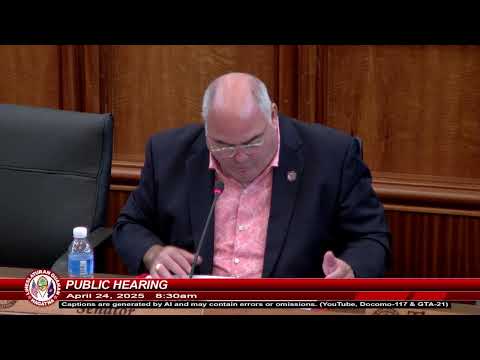
Bill 71‑38, the Guam Crisis Readiness and Economic Relief Act of 2025, was considered April 24. Sponsor Senator William A. Parkinson described the measure as a targeted repeal of BPT on essential goods — food, medicine, baby care and elder care items — that he would amend to respect bond covenants if necessary.
Parkinson said he introduced the bill to test whether targeted BPT relief translates into lower consumer prices: "If we grant these tax cuts for food and groceries, medicine and medical supplies, baby care products, and elder care items, and we see significant savings for our community, maybe we can have an extended dialogue on expanding the reduction of the BPT to other sectors," he said.
The committee received written and oral testimony from Guam Memorial Hospital Authority (GMHA). Lillian Perez Posadas, GMHA CEO, opposed the bill and warned of direct effects on the hospital’s pharmaceutical fund. GMHA noted that under Title 2, Guam Code Annotated §26208, 6.19 percent of all BPT collections are deposited into the GMHA pharmaceutical fund; a reduction in BPT collections would proportionally reduce that dedicated funding and could impair the hospital’s ability to purchase pharmaceuticals and supplies.
Other witnesses included GEDA and pharmacy representatives; Tina Garcia (GEDA) expressed concern about fiscal impacts but supported measures that help local businesses. Marie Lizama reiterated DRT’s operational constraints: the agency does not currently track receipts by specific product and would need form and program changes to implement product‑level exemptions.
Committee members debated tradeoffs between targeted relief for vulnerable households and the fiscal consequences for core public services. Senator Turlahi and others pointed to prior experience where different implementations of receipt itemization caused consumer confusion and litigation; Senator Parkinson said he favors a cautious, experimental approach.
No formal action was taken; senators asked DRT and GMHA to provide more detail about fiscal impacts and about how the hospital’s pharmaceutical fund would be affected, and signaled a desire for additional analysis before any move to amend law.