Get Full Government Meeting Transcripts, Videos, & Alerts Forever!
Get email alerts on the Nuclear Disarmament Resolution topic
No spam. Unsubscribe anytime.
Physicians, veterans and peace advocates urge Massachusetts to support 'Back from the Brink' resolution and press for nuclear risk reduction
Summary
A broad coalition of physicians, veterans, peace activists and local officials urged the Joint Committee on Public Safety and Homeland Security to report favorably on S1649, a nonbinding resolution endorsing the Back from the Brink platform to reduce nuclear risks and press for multilateral negotiations.
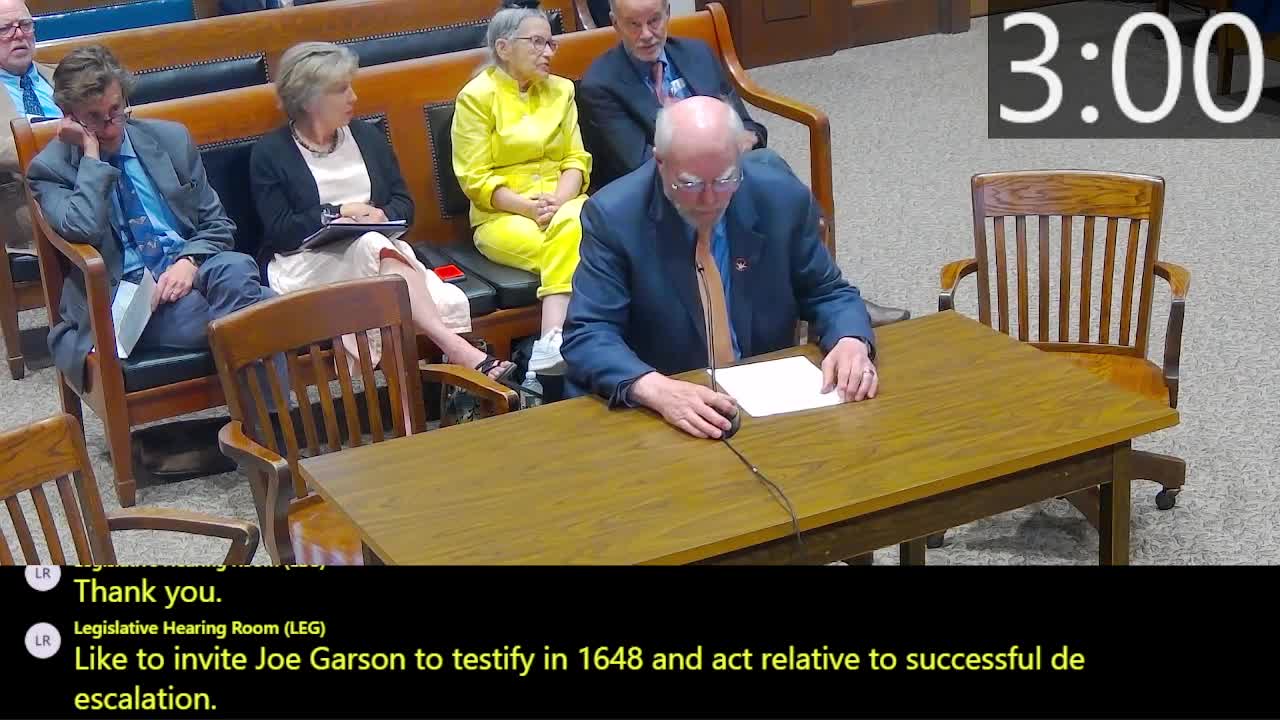
Physicians, veterans, surviving families, peace activists and local officials urged the Joint Committee on Public Safety and Homeland Security to advance Senate Bill 1649, a resolution titled "Back from the Brink," which calls on federal leaders to pursue specific measures to reduce the risk of nuclear weapons use and to negotiate verifiable elimination agreements. "Passing S1649 will add pressure on Washington to take urgently needed action to save our species from it," said Joe Garson of the Campaign for Peace, Disarmament and Common Security. Witnesses framed the issue as an existential public‑health threat and described local and state actions as meaningful steps to influence federal policy. Dr. Ira Helfand, past president of International Physicians for the Prevention of Nuclear War, said "the danger of nuclear war today is greater than it's ever been" and called for state legislative leadership alongside Congressional sponsors. Nut graf: Supporters said the resolution is nonbinding, requires no state funding, and would align Massachusetts with other states and cities that have advocated for multilateral nuclear disarmament measures such as renouncing first use, taking weapons off hair‑trigger alert and ending sole presidential launch authority. They argued state and municipal resolutions help create political pressure for federal negotiations. Multiple medical voices described the catastrophic medical consequences of nuclear use. Dr. Joe McCabe and Dr. Lachlan Farrow stressed there is no feasible medical response to nuclear detonations and urged the legislature to "choose life" by supporting measures to reduce nuclear danger. Local groups reported public opinion and municipal resolutions in multiple Massachusetts communities backing the initiative. Ending: Testimony urged a favorable committee report and floor votes so Massachusetts can join other states and municipalities calling for risk‑reduction steps; committee members heard the witnesses but took no vote during the public session.