Get Full Government Meeting Transcripts, Videos, & Alerts Forever!
Get email alerts on the Correctional Officer Pay Parity topic
No spam. Unsubscribe anytime.
Sheriff urges pay parity for county correctional officers, warns against unintended effects of privileged‑contact bill
Summary
A county sheriff told the public safety committee that correctional officers across Massachusetts perform identical work but receive disparate pay due to county contracts; he urged parity and recommended sheriffs be consulted on a separate bill creating privileged contact between legislators and inmates.
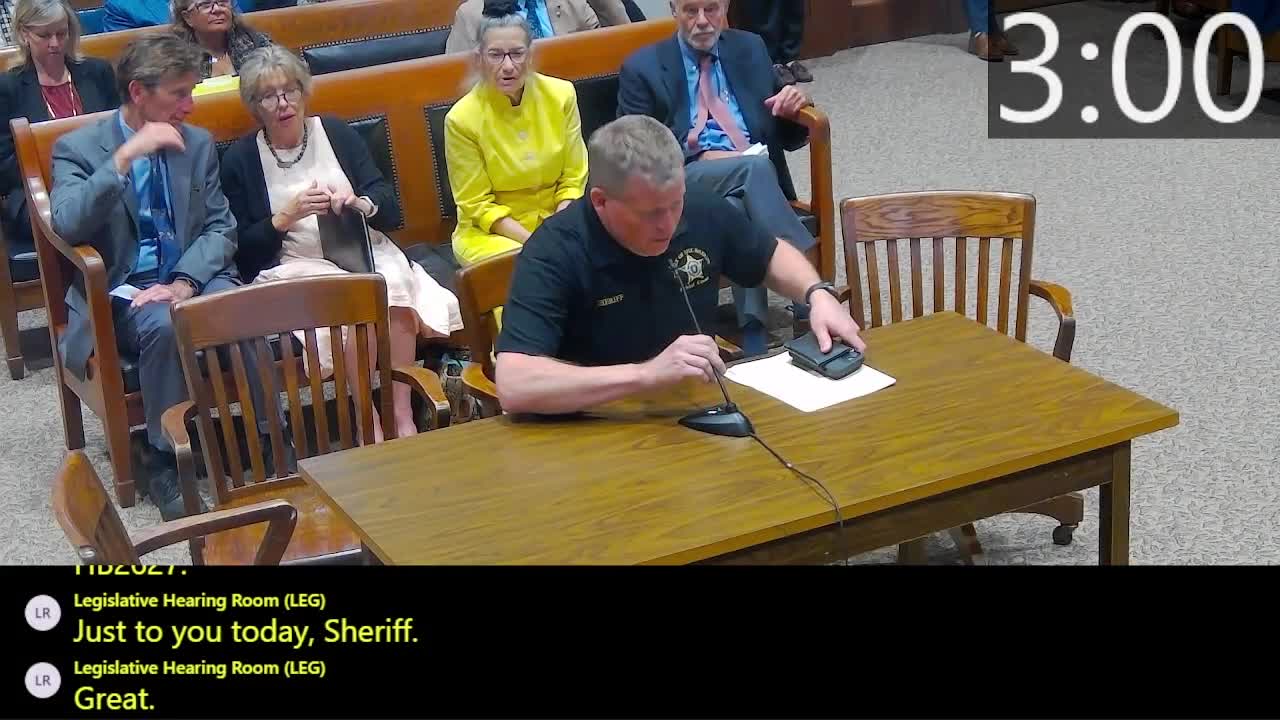
A sheriff testifying before the Joint Committee on Public Safety and Homeland Security urged lawmakers to support House Bill 2627 to achieve pay parity for county correctional officers, and he asked that related bills be drafted in consultation with sheriffs. "Sheriff's office correctional officers do the same job all over the state as they are paid differently," the speaker said, adding the pay differences stem from separate county union contracts. He recommended amending the bill to avoid distinguishing correction officers and jail officers at the county level. The sheriff said county correctional officers have sought parity for over a decade but were told it was cost‑prohibitive, citing an estimate that parity would add about $25 million to the state budget. "There is a way to achieve parity," he said, noting he had provided written testimony with suggested amendments. Nut graf: The sheriff contrasted the roughly $25 million price tag for correctional officer parity with the legislature's decision to fund no‑cost inmate phone calls at an estimated $30 million annually — arguing that fiscal priorities reflect policy choices. He also cautioned the committee on House Bill 2721 (privileged contact with members of the General Court), saying jails must manage the safety and suicide risk that can follow private visits. The sheriff said his county jail had a period with the state's highest suicide rate — "three times the national average" — and asked that legislators consult sheriffs and the Massachusetts Sheriffs' Association on any bill that expands access to inmates. He also described extensive audits of sheriffs' offices by DOC and other agencies, and suggested overlapping oversight bills could create redundant reporting burdens. Ending: The sheriff filed written testimony and asked the committee to coordinate with the Sheriffs' Association on bill language; the hearing did not include a committee vote on the item.