Get Full Government Meeting Transcripts, Videos, & Alerts Forever!
Get email alerts on the Behavioral Health Children topic
No spam. Unsubscribe anytime.
Hospitals and advocates urge plan to reduce long hospital stays for children in state care
Summary
Clinicians from Boston Children's Hospital and child welfare advocates urged a bill to require state agencies to develop coordinated plans so children involved with state agencies can access behavioral health services and return to appropriate placements without prolonged hospital stays.
Pediatric psychiatrists and social workers described multiple cases in which children under state supervision remained in hospitals for weeks or months after they were medically or psychiatrically ready for discharge because there was no appropriate post‑acute placement. Dr. Johannes Anglero Diaz, medical director of Boston Children's medical and psychiatric inpatient unit, said the hospital sometimes cannot place children with medical needs—such as diabetes or complex equipment—because group homes lack clinical capacity. “I can think of a particular patient who ended up staying in our unit for over 8 months, having interviewed at multiple group homes, at multiple programs that said, ‘No, we can't take care of you,’” he said.
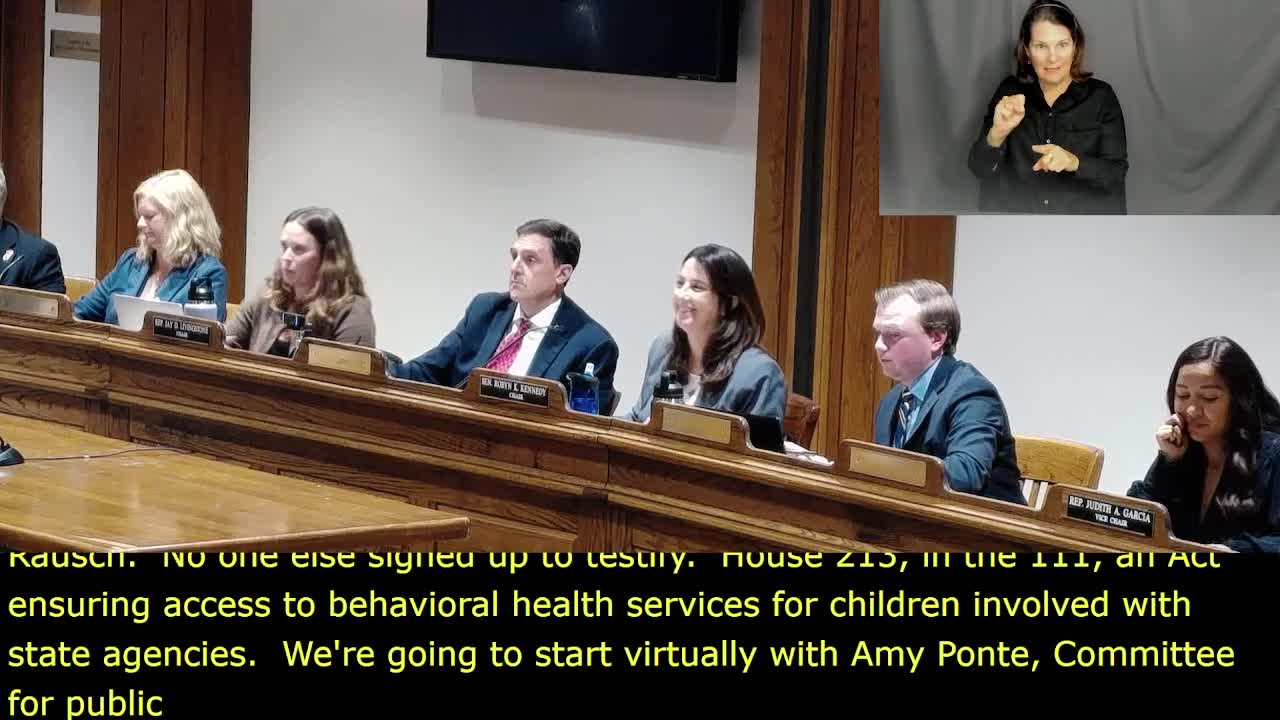
Ryan O'Connor of Boston Children's testified in support of House Bill 213, which would require state agencies such as DCF, DMH and DDS to develop comprehensive plans for patients during behavioral or medical emergencies, ensure children can return to assigned group settings after hospital stays, and improve collaboration between hospitals and state agencies. Amy Ponte of the Committee for Public Counsel Services, who represents children, urged better mobile crisis intervention and reduced reliance on law enforcement during behavioral crises.
Supporters asked for interagency coordination, increased training for residential and hospital staff, and expansion of post‑acute placement options that can handle combined medical and behavioral needs. They urged the committee to move the bill forward to reduce hospitalization time, restore skills lost during long stays, and avoid the negative educational and social impacts of prolonged inpatient care.