Get Full Government Meeting Transcripts, Videos, & Alerts Forever!
Get email alerts on the Prior Authorization topic
No spam. Unsubscribe anytime.
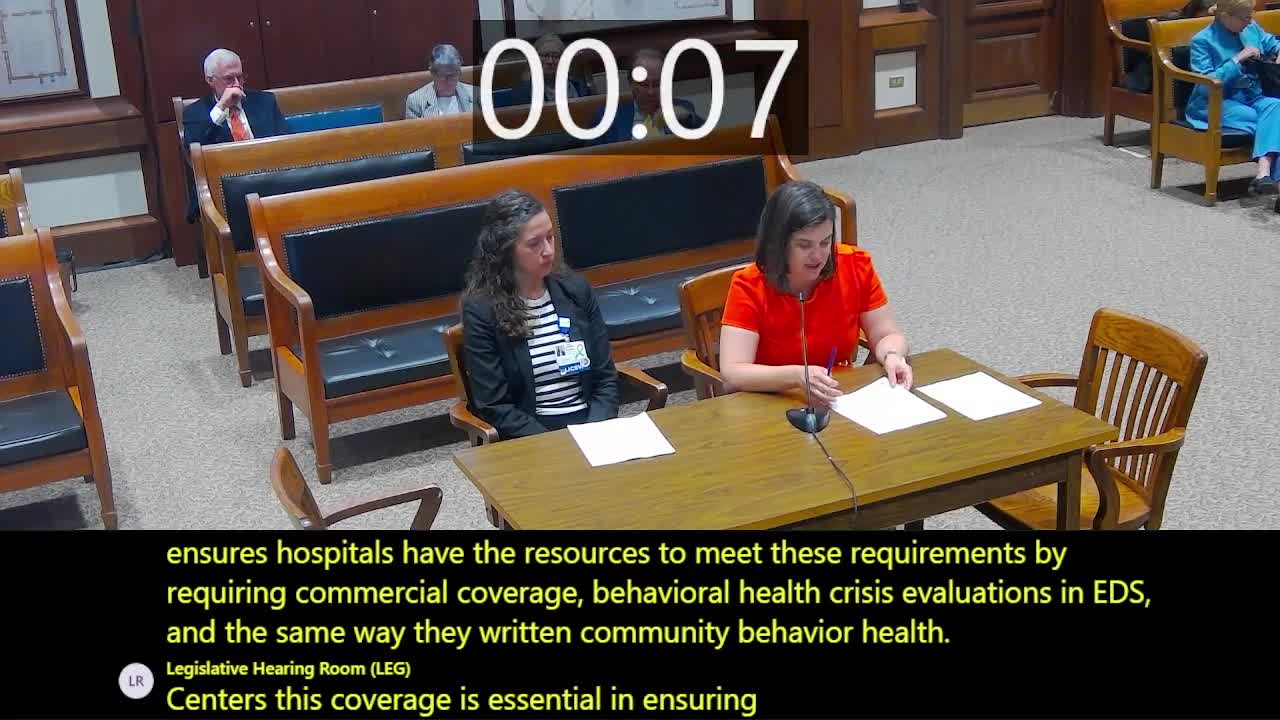
Hospitals describe continuing prior-authorization obstacles for psychiatric inpatient care despite statutory reform
Summary
Hospitals told the Joint Committee on Financial Services that prior-authorization and other payer administrative reviews continue to burden inpatient psychiatric units despite statutory reform that eliminated prior auths for admissions.
Hospital clinical leaders told the Joint Committee on Financial Services that reforms intended to eliminate prior-authorization barriers for inpatient psychiatric care have not fully realized their purpose in practice. Instead, they said, the administrative burden has shifted to inpatient units and case managers, causing delays, denials and staff burnout.
Denise Mason, executive director for inpatient behavioral health at Beth Israel Lahey Health, said that while the Mental Health ABC Act eliminated prior auths for psychiatric inpatient admissions, payers still request comprehensive clinical detail within 72 hours and sometimes deny claims for documentation reasons. "Initial reviews from payers are now functionally prior authorizations under another name," Mason testified, describing inconsistent notification requirements and multiple submission channels (web portals, fax, phone, email).
Donna Mosch of the Massachusetts Association for Mental Health and others urged the committee to consider bills that remove prior-authorization and step-therapy requirements for certain medications for people with severe and disabling mental illnesses. Mosch said early access to appropriate medications is clinically critical and delays imposed by prior auth or step therapy can worsen outcomes.
Why it matters: Hospital witnesses said these administrative practices divert clinicians' time from patient care, increase staff burnout and make it harder for hospitals to manage capacity. They requested technical fixes and statutory clarifications so the intent of prior-authorization reform is realized in practice.
Next steps: Witnesses asked the committee to close regulatory gaps, consider statutory language to prevent substitution of administrative hurdles for prior authorization, and report related bills favorably to ensure clinicians can focus on timely patient care.