Get Full Government Meeting Transcripts, Videos, & Alerts Forever!
Get email alerts on the Nuclear Waste Monitoring topic
No spam. Unsubscribe anytime.
Cape advocates seek mandated monitoring and emergency plans for Pilgrim spent-fuel canisters
Summary
Speakers from Physicians for Social Responsibility and Cape environmental groups urged the committee to require active monitoring of dry-cask storage at the decommissioned Pilgrim nuclear plant, citing potential cracked canisters and inadequate emergency planning.
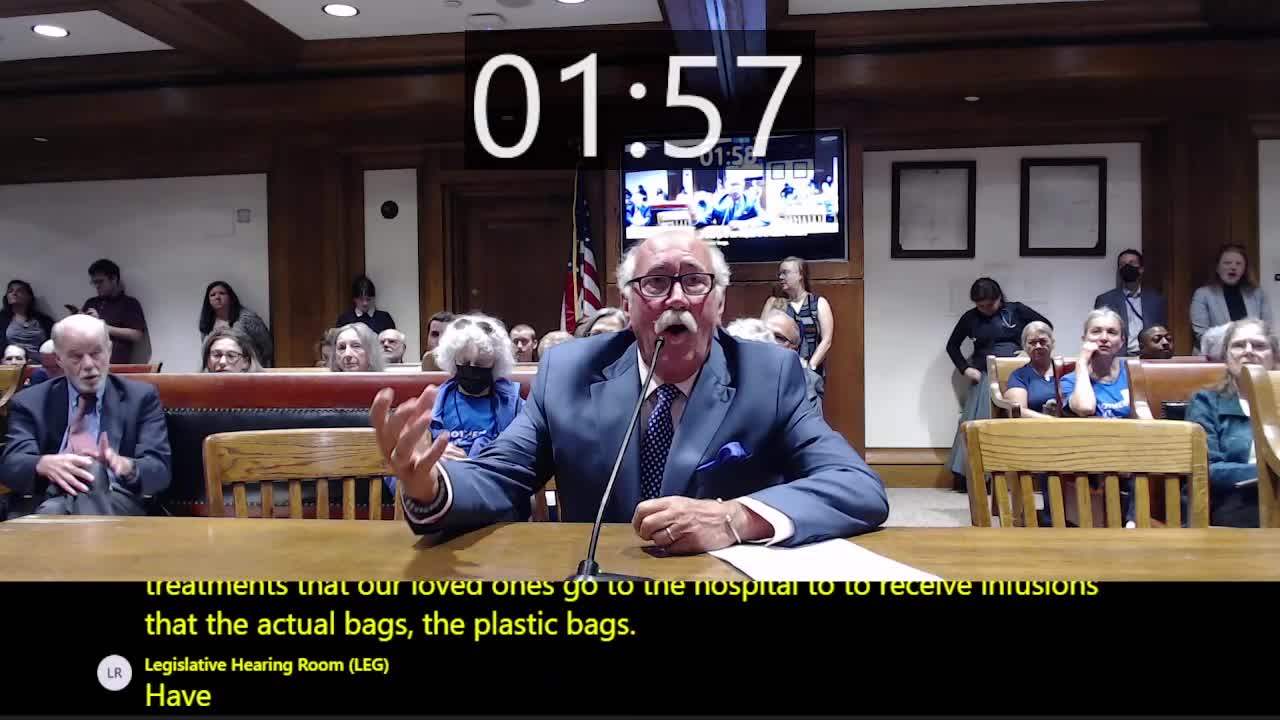
Speakers from Physicians for Social Responsibility and Cape Cod environmental groups urged the Joint Committee on Public Health to support legislation that would require improved monitoring and emergency planning for dry-cask spent-nuclear fuel stored at the Pilgrim site in Plymouth. Peter Moyer, a retired emergency physician and member of Physicians for Social Responsibility, described visiting the site and seeing 62 large dry-storage canisters: “These are high-potency nuclear waste, and it is stored there for now,” he said, noting that no national deep repository exists. Diane Turco of Cape Downwinders said current storage lacks internal monitoring for temperature, radiation or helium and that the operator (Holtec) has sought exemptions from emergency-planning obligations because it asserts there is no credible release scenario. Speakers asked the committee to advance S1596/H2488, legislation that would require monitoring of the canisters and a transparent mitigation and emergency plan should leakage or other events occur. They pointed to the decommissioning panel’s prior findings that the canisters pose a significant safety and security issue for nearby populations. Why it matters: Witnesses said the site is near population centers and that a microscopic crack could release radioactive material; they argued that monitoring and response planning are necessary to protect public health and local economies. Outcome: No committee vote was taken. Witnesses urged timely action and said they would provide written testimony.