Get Full Government Meeting Transcripts, Videos, & Alerts Forever!
Get email alerts on the Hoisting Machinery Licensing topic
No spam. Unsubscribe anytime.
Operating engineers push for state hoisting machinery board to tighten crane operator licensing
Summary
Union leaders and business representatives told the committee HB2664/SB1736 would improve public safety by creating a governor‑appointed hoisting machinery board to set training, licensing and experience standards for operators of large cranes and heavy equipment.
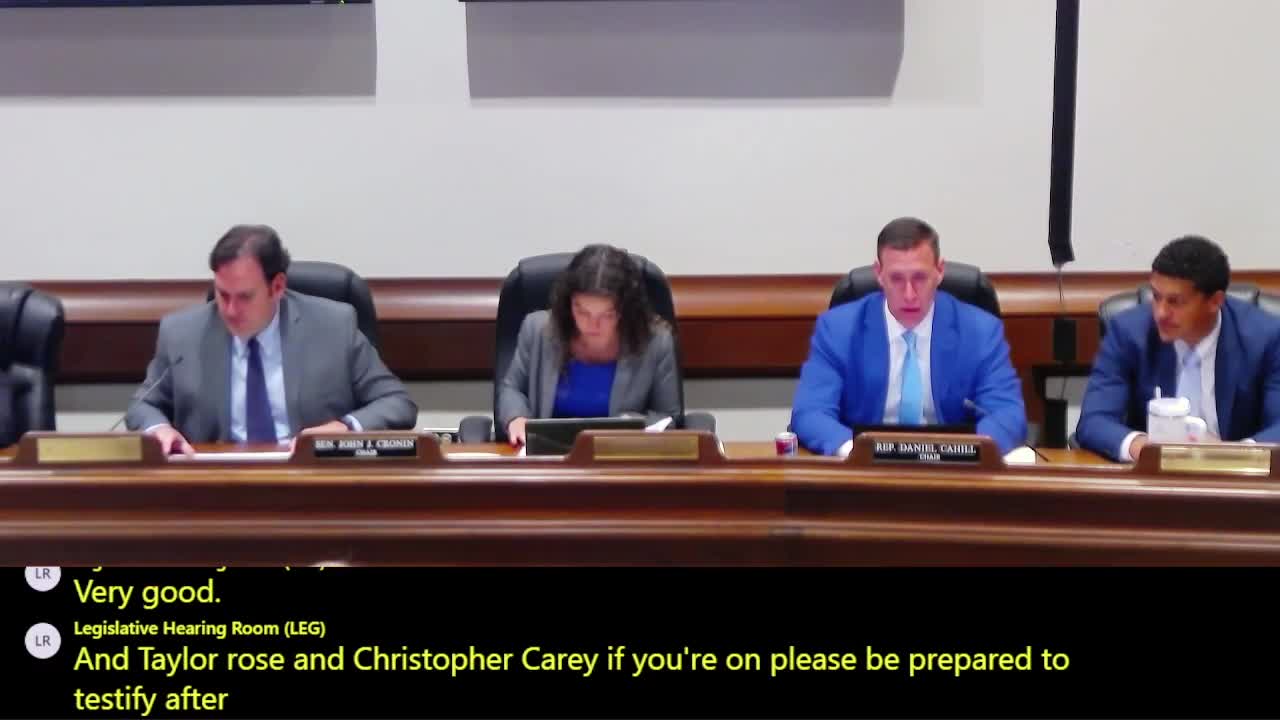
Representatives of operating engineers and heavy‑equipment unions urged the Joint Committee on Public Safety and Homeland Security to establish a state board to regulate licensing and standards for hoisting machinery operators. "We're in strong support of HB2664 and SB1736 in this enact establishing a board of hoisting machinery," said Chris Carey, vice president of Operating Engineers Local 4. Testimony described current licensing as limited to a Department of Transportation medical and a 30‑question multiple‑choice exam, and speakers argued that passing a short written test does not prove real‑world competence for large cranes or urban lifts. "Passing a short multiple choice test does not prove that someone can safely operate cranes or heavy equipment in real world conditions," said Taylor Rose, business representative for Local 4. The proposed six‑member board would include labor, business, OSHA, training and public‑safety representatives and set higher standards and training to reduce accidents. Nut graf: Proponents said Massachusetts already requires licensing boards for other building trades and argued that hoisting machinery — including multi‑hundred‑ton cranes used in urban construction — merits similar oversight to prevent catastrophic accidents in populated areas. Guy Glotis, speaking for the building trades executive board, said the bill previously passed the committee favorably in prior sessions and called it a public‑safety measure. Carey and Rose described operator duties that affect schools, hospitals and roadways and emphasized apprenticeship and hands‑on training as part of board standards. Supporters asked the committee to recommend the bill favorably so drafting and membership details can be finalized. Ending: The committee heard no opposition testimony at the public session; proponents requested a favorable report to advance the bill.