Get Full Government Meeting Transcripts, Videos, & Alerts Forever!
Get email alerts on the Food Dyes topic
No spam. Unsubscribe anytime.
Parents, clinicians urge ban or limits on synthetic food dyes in school foods
Summary
Parents and clinicians testified that synthetic food dyes (e.g., Red 40, Yellow 5) can worsen attention and behavioral problems in some children and urged legislation to prohibit harmful dyes in competitive school foods.
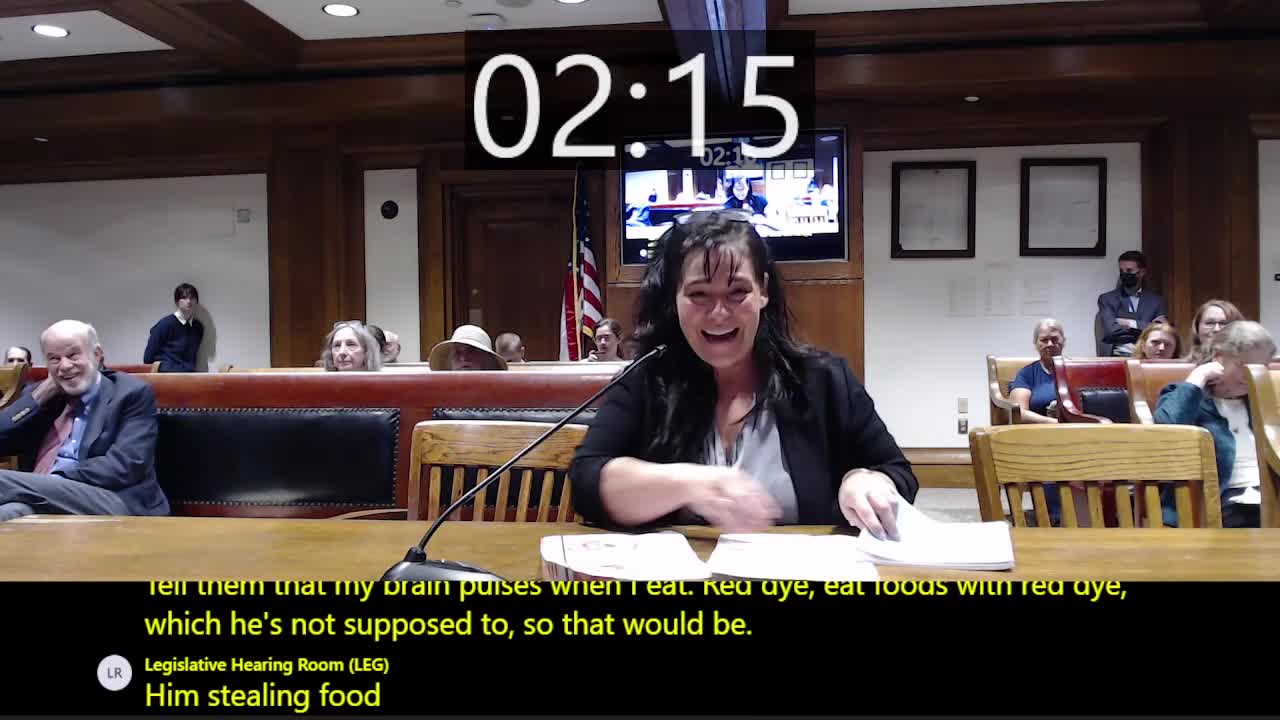
Multiple parents, clinicians and researchers asked the Joint Committee on Public Health to prohibit certain synthetic food dyes from school-sold competitive foods and vending machines, describing links to behavioral and gastrointestinal harms. Allison Chapman and Alicia Williams described personal and family experiences in which removal of synthetic food dyes from a child's diet correlated with improvements in behavior, attention and classroom functioning. Chapman said her son experienced seizures and behavioral episodes correlated with dye ingestion. Witnesses cited peer-reviewed studies and regulatory differences abroad: testimony referenced a 2009 double-blind randomized trial as well as the European Union’s requirement that some foods carry warnings about hyperactivity; speakers noted some manufacturers sell reformulated, dye-free versions in other countries. Advocates urged H2496/S1531 to begin by restricting dyes in competitive school foods to improve learning environments and reduce classroom disruptions. Why it matters: Testimony framed the measure as a classroom- and public-health intervention that supports learning and school safety for children sensitive to synthetic dyes. Outcome: No committee vote was taken. Sponsors and parents requested a favorable report and to coordinate implementation timelines with school-district food-service procurement.