Get Full Government Meeting Transcripts, Videos, & Alerts Forever!
Get email alerts on the Postpartum Mental Health topic
No spam. Unsubscribe anytime.
Advocates back bill to remove cost-sharing for post-pregnancy mental health care and extend coverage after pregnancy loss
Summary
Supporters from advocacy groups and families urged the committee to require insurers, MassHealth and the GIC to cover post-pregnancy mental-health care without copays or deductibles, including for people after miscarriage or stillbirth; witnesses asked the legislature to treat postpartum mental health like other postnatal care.
A coalition of advocates, parents and clinical leaders urged the Joint Committee on Financial Services to report favorably on H 13 14 / S 8 23, legislation that would require coverage of post-pregnancy mental-health care without copays, deductibles or other cost-sharing across commercial insurance, MassHealth and the Group Insurance Commission.
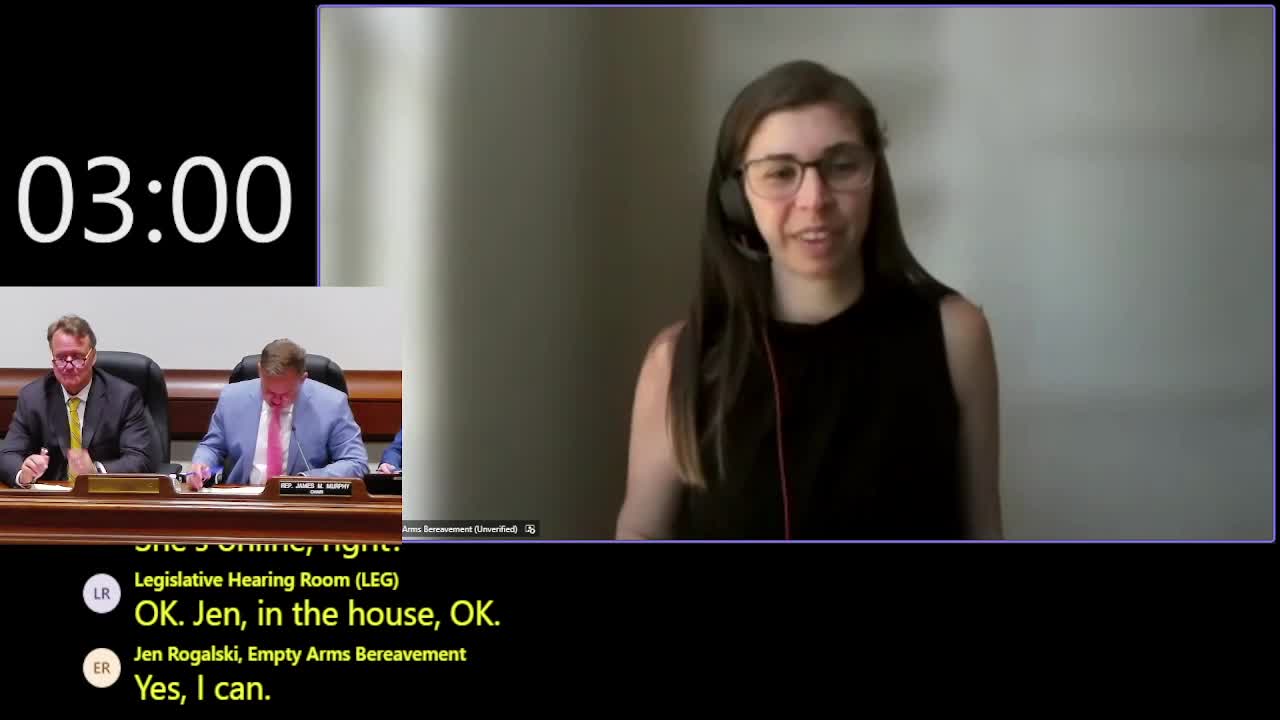
Senator Brendan Crighton (testimony delivered by proxy) and speakers from the Mind the Gap Coalition and peer-support organizations described how postpartum mood and anxiety disorders (PMADs), pregnancy loss and stillbirth create deep and prolonged mental-health needs. Jen Rogalski, who lost a child at 38 weeks, said she spent more than $20,000 out of pocket for mental-health care after her loss; she testified that while lists of therapists were provided at the hospital, insurers did not cover necessary care.
Jesse Colvert of the Mind the Gap Coalition and other witnesses cited prevalence data and said screening alone does not ensure treatment. They asked the committee to ensure that coverage is parity with other postnatal care, that the policy apply regardless of whether a pregnancy resulted in a living baby, and that coverage be available without cost-sharing to remove financial barriers.
Why it matters: Witnesses argued PMADs are common and under-treated; removing cost barriers would increase access to evidence-based therapy, peer support and other services and reduce family hardship. Supporters noted racial and ethnic disparities in screening and treatment and stressed that universal coverage would address inequities.
Next steps: Supporters requested a favorable report and said they would supply written testimony showing the evidence base and personal stories; the committee did not vote during the hearing.