Dental-therapy bill backed as way to expand access; hygienists seek nitrous authorization
Loading...
Summary
Physicians, dental hygienists and advocates supported licensing dental therapists to increase access to basic procedures and proposed allowing registered dental hygienists to administer nitrous oxide, pointing to evidence and examples from other states.
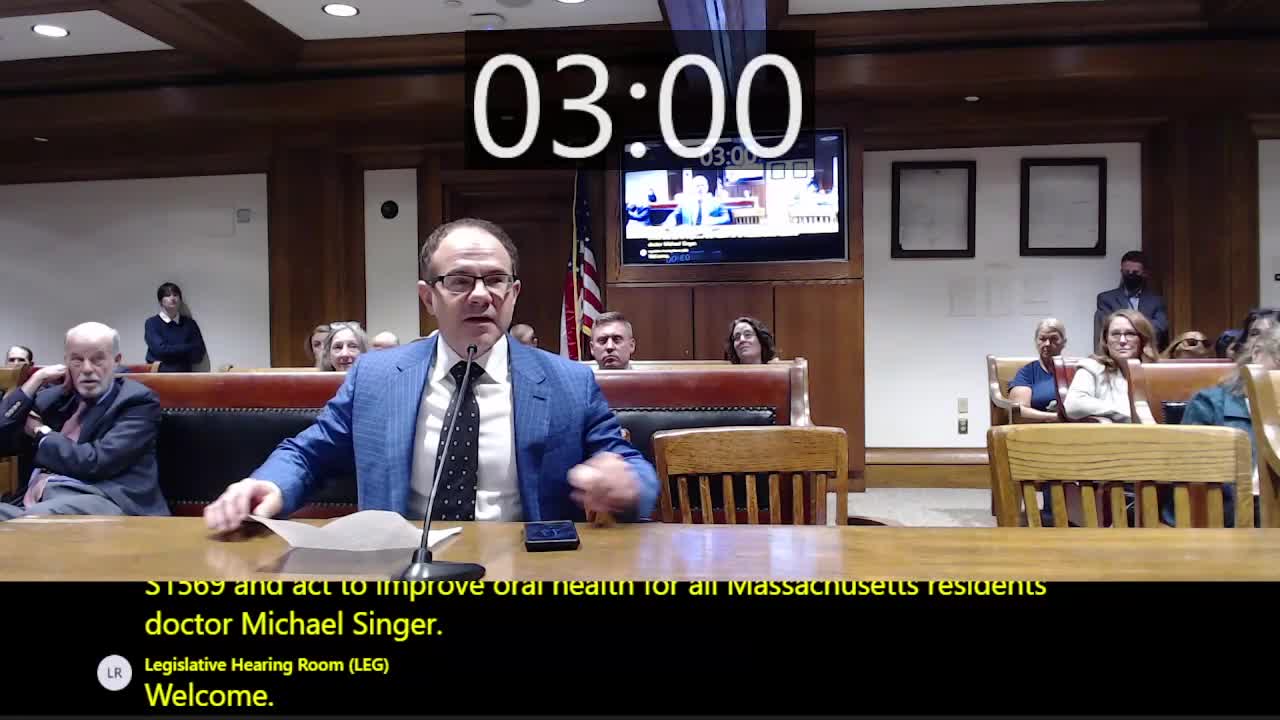
Public-health and dental-workforce advocates urged the committee to approve legislation authorizing dental therapists and to permit certain hygienists to administer nitrous oxide to improve access to care, lower costs and reduce preventable dental emergency visits. Dr. Michael Singer, a physician and advocate, described dental therapists as a midlevel dental provider modeled on physician assistants and nurse practitioners with training accredited by dental education bodies and supervised by the state Board of Registration in Dentistry. “Dental therapists are a mid level role focused on prevention and fillings,” Singer told the committee, noting more than a dozen jurisdictions have authorized dental therapy. Aliyah Diamond, a registered dental hygienist and Massachusetts Dental Hygienist Association regulation chair, said dental therapy has been associated with measurable increases in patient visits and reductions in untreated decay in states that adopted the model. She also urged passage of H2426 to permit registered dental hygienists to administer nitrous oxide under appropriate training and oversight, arguing other states allow that practice safely. Why it matters: Proponents framed dental therapy as an evidence-based workforce solution to dentist shortages and low MassHealth participation, while nitrous authorization was pitched as a tool to improve patient comfort and allow more procedures in community settings. Outcome: The committee did not vote. Supporters asked for a favorable report and noted that the board and accrediting bodies would handle training and supervision standards.