Get Full Government Meeting Transcripts, Videos, & Alerts Forever!
Get email alerts on the Wiretap Carve Out topic
No spam. Unsubscribe anytime.
Survivors urge carve-out to wiretap law; ACLU warns against expanding surveillance powers
Summary
The committee heard competing testimony: victims and family-law advocates asked for a narrow carve-out to the state wiretap statute to allow recordings by abuse victims to be used in court; the ACLU and civil-liberties witnesses opposed broad expansions of wiretap authority.
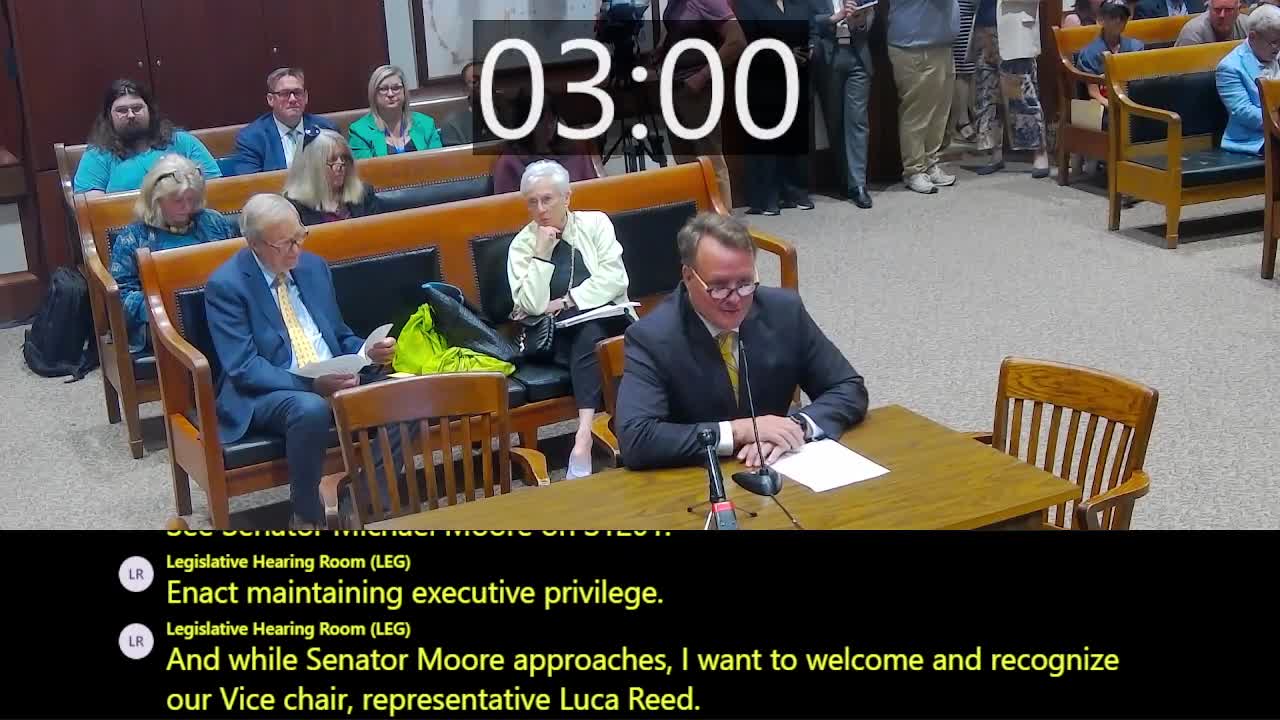
Senator Michael Moore and others introduced proposals to amend Massachusetts wiretap law during the Sept. 9 hearing, prompting sharply divided testimony. Supporters urged a narrowly tailored exemption to permit victims of harassment, threats or abuse to record conversations when the recording is necessary to prove criminal conduct. “For many of these individuals, recordings of the abuse that they have endured is their only means of getting the evidence that they need,” Senator Patrick O’Connor said when introducing the proposals.
Several survivors described how the threat of wiretap prosecutions had left them criminally exposed after recording threats and abuse. Shauna Fabiano said she recorded repeated threats and abusive acts and later faced criminal wiretapping charges. “I walked into the Plymouth Courthouse as a defendant… facing 8 felony counts of unlawful wiretapping and up to 40 years in prison,” Fabiano said, describing how the criminal case was later dismissed but had lasting impacts.
Medical and legal experts, clinicians and family-law attorneys testified that recordings can be crucial evidence in protection-order cases and child-protection matters. Dr. Lisa Fontes, a counseling psychologist who provides expert testimony in abuse cases, said recordings helped her clients prove serious child-abuse claims in other states and urged the committee to ensure Massachusetts victims can use similar evidence.
Civil-liberties advocates warned against broad expansion of wiretap authority. Kate Crockford of the ACLU of Massachusetts told the committee, “Today, we are living in the golden era of mass surveillance,” and argued that expanding wiretap authority risks enabling indiscriminate surveillance. She urged the committee to preserve the wiretap statute’s limitations and instead restrict surveillance.
Prosecutors and law-enforcement representatives expressed mixed views. Senator O’Connor and sponsors said the carve-out would be narrowly tailored and would not change the rigorous warrant standards for wiretaps when law enforcement seeks to use them. Committee members asked witnesses about how the proposed carve-out would interact with existing prosecutorial discretion and the risks of false or surreptitious recordings.
The committee did not take a vote. Lawmakers asked for additional drafting language and consultation between survivors’ advocates, the district attorneys’ association and privacy advocates.
Ending: The committee said it would collect follow-up material and suggested possible redrafting to narrow scope and clarify prosecutorial and evidentiary standards.