Get Full Government Meeting Transcripts, Videos, & Alerts Forever!
Get email alerts on the Emergency Management Reform topic
No spam. Unsubscribe anytime.
Mass. emergency management overhaul sparks split testimony: state planners back update, fire officials warn of local control loss
Summary
Supporters from emergency management associations urged the committee to replace the Civil Defense Act of 1950 with an all‑hazards modern statute to strengthen preparedness and coordination. Fire chiefs and professional firefighters opposed parts of the draft, saying the bill reduces local authority and lacks collaboration with the fire service.
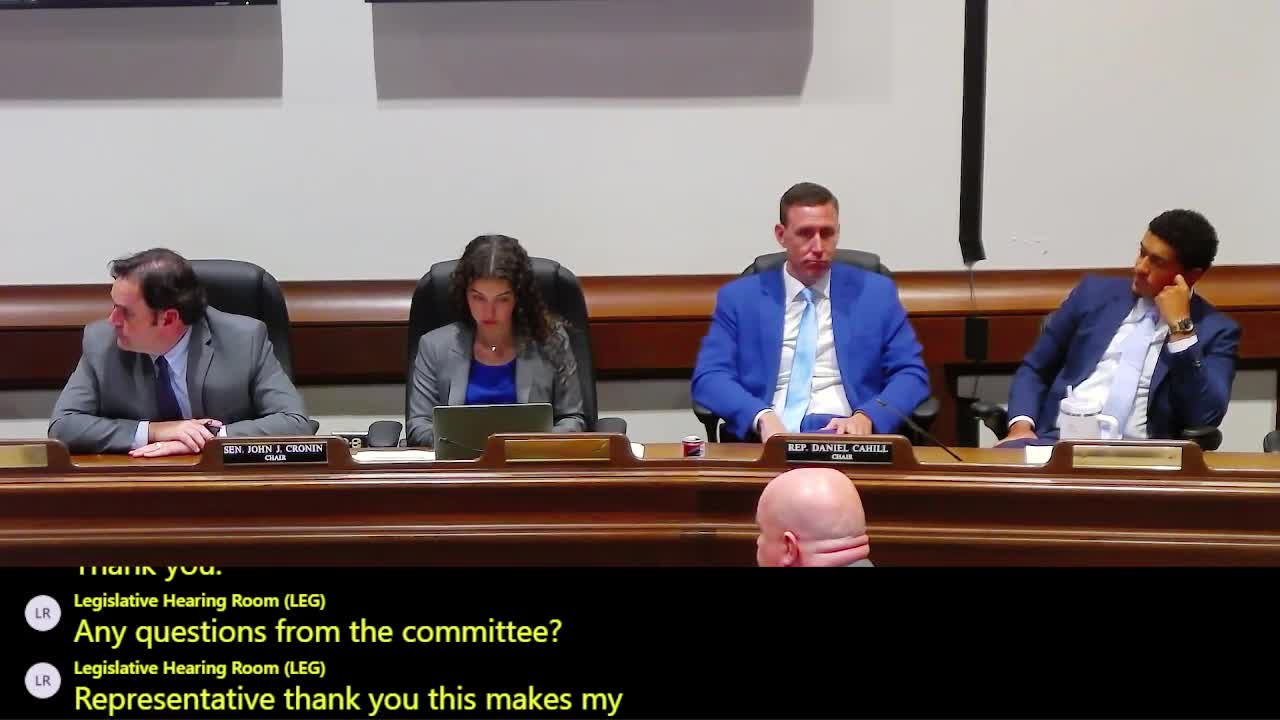
Federal funding instability and growing climate‑related disasters prompted advocates for emergency management reform to ask the Joint Committee on Public Safety and Homeland Security to modernize Massachusetts law, while fire chiefs warned that parts of the proposal would improperly remove local authority. "The Civil Defense Act of 1950 is dangerously outdated," said Christian Conney of the International Association of Emergency Managers. He testified that House Bill 2572 and Senate Bill 1668 would replace the old statute with a modern, all‑hazards framework that clarifies governor and MEMA authority, codifies the state emergency operations center and strengthens statewide and interstate coordination. Proponents also said the bill would permit towns to offer up to $1,000 in property tax relief to non‑salaried emergency management directors, authorize out‑of‑state licensed healthcare professionals to operate during declared disasters, and require the MEMA director to have emergency management experience. "This bill reflects how emergency management must operate today," Conney told the panel. Nut graf: The hearing brought sharply divergent testimony: emergency management professionals and several municipal EMDs backed the bill as overdue modernization, while the Fire Chiefs Association and Professional Firefighters argued that portions — particularly proposed changes to local emergency management control and incident management structures — risked undermining on‑the‑ground response. Fire chiefs testified they were not consulted and objected to language that they said lacks incident command, qualifications for local emergency directors, and clear incident management team roles. Chief Pat Purcell and others objected that the draft allows the MEMA director to designate local planning areas and to reassign personnel from municipal departments during emergencies. "This bill removes local control during a disaster," said Gene Daugherty for the Fire Chiefs Association. Chief Michael Dudley of Brockton described the 2023 Brockton Hospital evacuation, saying firefighters ran the unified incident command and that local fire incident command made rapid, life‑saving decisions. Professional Firefighters of Massachusetts and the Fire Chiefs urged either major redrafts or rejection of the current language. Supporters acknowledged the need for continued stakeholder work and several emergency management directors asked the committee to preserve local authority while strengthening statewide capacity, for example by codifying an advisory council and creating a statewide incident support team to deploy qualified personnel. Larry Holmberg, an EMD in rural Western Massachusetts, asked the committee to require every community to have a designated emergency management director and to retain local declaration authority. Ending: The split testimony indicates further drafting and stakeholder negotiations are likely before the committee considers a report; no vote was taken during the hearing.