Get Full Government Meeting Transcripts, Videos, & Alerts Forever!
Get email alerts on the Telecommunicators First Responders topic
No spam. Unsubscribe anytime.
Dispatchers press committee to designate 9‑1‑1 telecommunicators as first responders, citing PTSD and staffing shortages
Summary
Representatives of emergency communications centers, NENA and dispatch unions urged the committee to pass bills recognizing telecommunicators as first responders and to extend internal public‑safety benefits; witnesses said the change would aid recruitment, retention and access to wellness services.
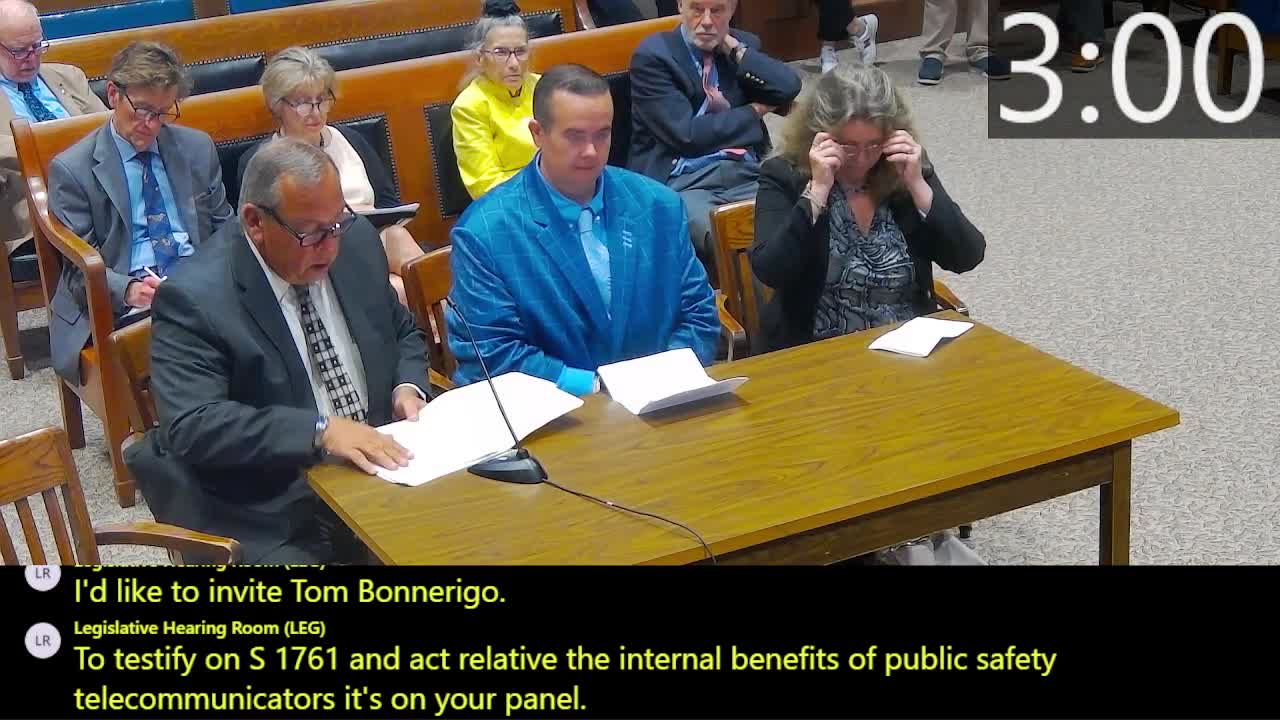
Emergency dispatchers and emergency communications leaders told the Joint Committee on Public Safety and Homeland Security that Massachusetts should recognize 9‑1‑1 telecommunicators as first responders and grant them internal benefits similar to police, firefighters and emergency medical technicians. "We are the first point of contact in every emergency," said Erin Hastings, executive director of the Middlesex Regional Emergency Communications Center. "Passing this bill tells them and tells the public the truth that the dispatchers really are first responders." The bills under consideration — House Bill 2663 and Senate Bill 1761 — would statutorily classify public safety telecommunicators as first responders and make it easier for them to access wellness programs, training and benefits that other first responders receive. Advocates said the classification would not change pensions or create additional state costs but would remove administrative barriers to services like counseling and vaccine prioritization. Nut graf: Proponents said telecommunicators face high rates of workplace trauma and acute staffing shortages while performing lifesaving work that now goes unrecognized in state statute; they urged the committee to report the bills favorably so local centers can reduce turnover and improve emergency outcomes. Tom (Brian Hickey Associates) opened the panel by explaining the duties of telecommunicators: dispatchers triage calls, coordinate responders and sometimes stay on the line until help arrives. Kevin Lessard, president of the Massachusetts chapter of the National Emergency Number Association (Mass NENA), told lawmakers that the profession is evolving with next‑generation 9‑1‑1 technology, increasing the duties and stresses on telecommunicators. "More than 25 states in the country statutorily define 9‑1‑1 telecommunicators as first responders," he said. Witnesses described high rates of traumatic stress and workforce shortages. Hastings said nearly one in four dispatchers suffers from post‑traumatic stress disorder, comparable to or higher than rates among police and firefighters. She noted that more than 80 percent of 9‑1‑1 centers nationally report staffing shortages, mirrored in Massachusetts centers. "Mandatory overtime, burnout, and turnover are draining our systems," she said. Mass NENA and telecommunicator associations argued the bills would improve recruitment and retention by granting access to first‑responder wellness programs and other internal benefits, and would enable quicker access to medical personnel from other states during declared disasters. Unions representing police locally also expressed support, saying dispatchers perform critical, stressful duties and deserve parity in internal benefits. Ending: Panels requested a favorable report to allow the legislature to place language on the floor for further consideration; committee members did not vote during the hearing.