Get Full Government Meeting Transcripts, Videos, & Alerts Forever!
Get email alerts on the Addiction Treatment Coverage topic
No spam. Unsubscribe anytime.
Committee hears bills to expand addiction treatment coverage: lengthen mandated stay and cover co-occurring disorders
Summary
Sponsors and providers urged the Joint Committee on Financial Services to lengthen mandated insurance coverage for inpatient detox and clinical stabilization from 14 to 30 days and to ensure coverage for patients with co-occurring substance use and mental-health disorders; proponents cited CHIA cost estimates and prior legislative reviews.
Legislation before the Joint Committee on Financial Services would increase mandated insurance coverage for inpatient detoxification and clinical stabilization from 14 days to 30 days and require coverage of transitional support services, and a companion bill would ensure patients with co-occurring substance use and mental-health disorders receive appropriate integrated care.
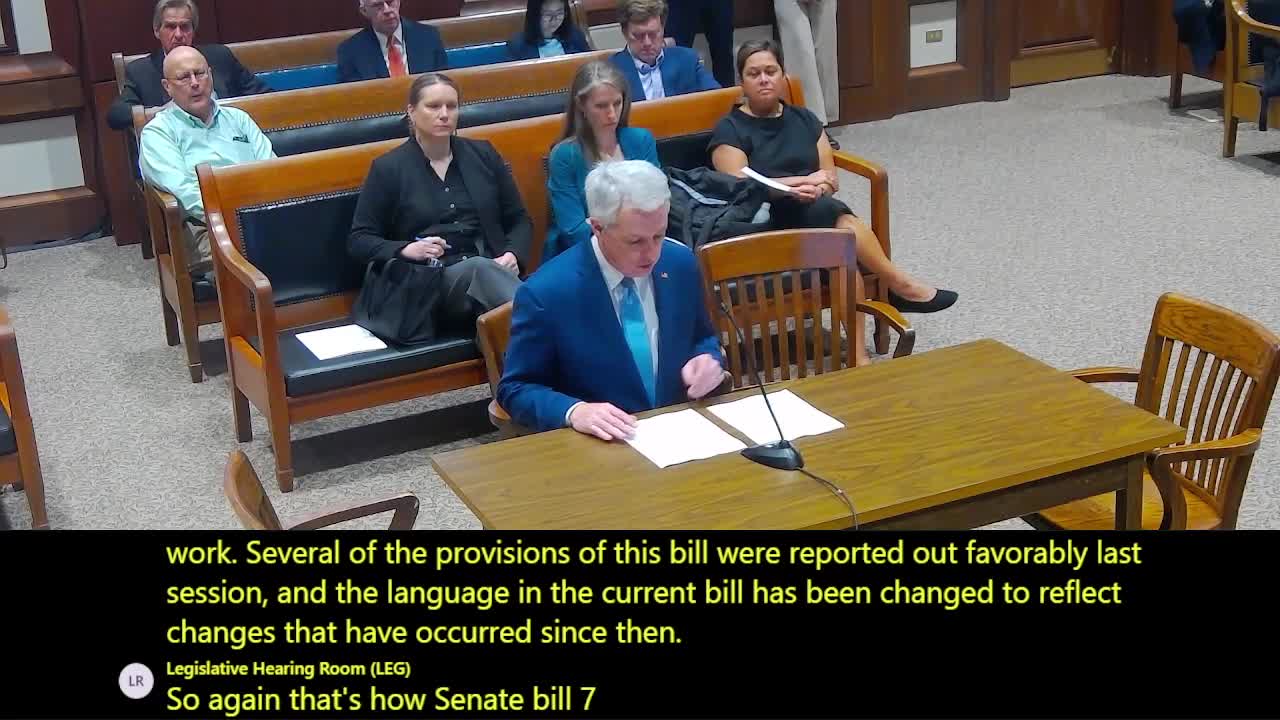
Representative Adam Scanlon, sponsor of H 13 19 (Senate S 7 72), told the committee that the current 14-day mandate under chapter 258 of the Acts of 2014 covers only the withdrawal period and often leaves patients without medically necessary step-down and transitional supports. Scanlon said CHIA reviewed the proposal and estimated the cost as between "no cost and 22 cents per month per member," which the representative characterized as negligible relative to the public-health benefits.
Senator John Keenan, who presented a portfolio of mental-health bills, said a related bill (H 1277 / S 7 71) would require insurers to cover integrated care for dual-diagnosis patients — people with both mental illness and substance use disorder — and cited national survey figures for co-occurrence: testimony referenced that about 45.8% of people with substance use disorders have co-occurring mental illness and that only about 14.5% receive treatment for both conditions.
David Matioto of the Mass Association of Behavioral Health Systems told the committee that Massachusetts law already guarantees 14 days of inpatient substance-use treatment without prior authorization and that the proposed changes would extend parity to psychiatric inpatient settings and to dual-diagnosis care, aligning coverage across treatment settings.
Why it matters: Witnesses said extending coverage to 30 days and adding transitional supports would address gaps that cause premature discharge, treatment interruptions and higher hospital readmissions. They argued that integrated care for co-occurring disorders is clinically necessary and economically modest in premium impact, according to CHIA or other studies cited in testimony.
Next steps: Sponsors urged the committee to report the bills favorably and noted that similar provisions received favorable reports in prior sessions or during mandated-benefit reviews.