Get Full Government Meeting Transcripts, Videos, & Alerts Forever!
Get email alerts on the Real Estate Transfer Fees Housing topic
No spam. Unsubscribe anytime.
Island towns and municipalities press Joint Committee to allow local transfer fees to fund affordable housing
Summary
Officials and residents from Martha's Vineyard, Nantucket, Chatham, Amherst and Western Massachusetts urged the Joint Committee on Revenue to approve local-option real estate transfer fees and island housing banks to preserve year‑round housing and aid workforce retention.
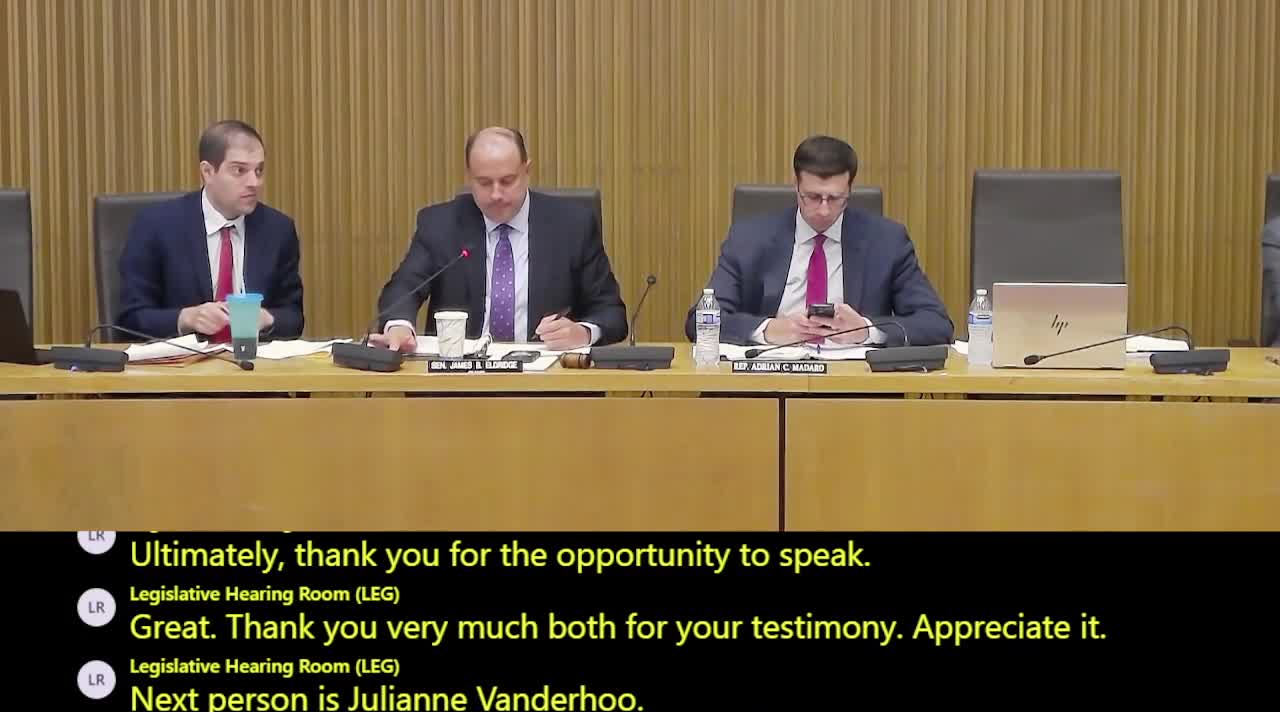
At a Joint Committee on Revenue hearing, municipal officials, nonprofit leaders and residents urged lawmakers to approve local-option real estate transfer fees and housing banks to preserve year‑round housing in seasonal communities and across the Commonwealth.
Why it matters: Witnesses said rising home prices and a surge in short-term rentals have reduced year‑round housing supply, harming staffing for hospitals, schools, public safety and small businesses. Testimony emphasized that a locally authorized transfer fee — typically a small percentage of high‑end real estate transactions — would create a predictable dedicated revenue stream for preserving and producing affordable year‑round housing.
Martha's Vineyard and regional testimony: Julian Vanderhoop, select board member of Aquinnah and a Wampanoag elder, urged support for House Bill 3193 and S.1955, bills that would let the six island towns create an islandwide housing bank funded by a local-option real estate transfer fee. "This is our territory. We have a natural right to remain on our traditional territories," Vanderhoop said, adding concerns about elderly island residents on long waiting lists for housing.
Felipe Jordy, testifying for Island Housing Trust, said the islands face urgent need: "Our median home price is at an unprecedented $1,500,000," and only about 40% of the island's housing stock is available year round. Jordy said voters approved the housing bank approach in 2022 and that the proposed island bank would preserve existing homes, convert short‑term rentals and build affordable housing while protecting the aquifer. Laura Silber, island housing planner for the Martha's Vineyard Commission, described a funding formula proposed by local voters: a 2% transfer fee on transactions above $1 million with the first $1 million exempt, and she said that formula would have generated about $12,000,000 locally in 2023 under that structure.
Nantucket testimony: Officials and residents from Nantucket urged support for House Bill 3903, a home‑rule petition to authorize a Nantucket transfer fee. Nantucket Police Chief Jody Casper said the housing shortage threatens essential services: the department has 67 full‑time year‑round employees and 119 seasonal employees, and "Of our police officers, only 12 own homes," she said, noting the crisis affects recruitment and retention. Elizabeth Hallett, superintendent of Nantucket Public Schools, said "Each year between 20 and 25 percent of our teachers leave Nantucket because of housing." Rachel Freeman, executive director of the Nantucket Islands Land Bank, described a 2% transfer fee already used for conservation on Nantucket since 1984 and said the land bank is experienced in administering transfer fees and partnering on housing projects.
Local-option design and protections: Multiple witnesses described the bills as local options communities could adopt or decline. Testimony from a LOHA Coalition representative explained the proposed state framework would allow municipalities to adopt a fee between 0.5% and 2% and set a luxury threshold at $1,000,000 or the county median sale price as a minimum; communities could set higher thresholds and exempt classes of buyers (for example, first‑time homebuyers or those eligible for senior tax credits) through local bylaws.
Other municipal testimony: Speakers from Chatham, Amherst and Western Massachusetts supported enabling legislation and local home‑rule petitions. Chatham representatives said median home prices exceed $1.5 million and municipal employers lack workers because of housing shortages; Amherst officials described a proposal tailored to local markets (a higher threshold or exemptions for owner‑occupied homes) and estimated that a targeted fee could raise approximately $1.5 million for affordable housing. A witness for the Western Massachusetts Network to End Homelessness cited a recent study estimating a 23,420 housing‑unit gap in the region.
Discussion versus decision: Testimony recorded was advocacy and explanation of proposed bills; no committee votes or formal enactments were recorded in the transcript. Witnesses repeatedly asked the Joint Committee on Revenue to report favorably on enabling legislation (S.1937/H.3056 and related home‑rule petitions) so individual communities could choose whether to adopt a transfer fee.
Next steps: The bills remain under committee consideration; witnesses encouraged tailoring local thresholds and exemptions to municipal conditions and emphasized that the fee is an additional tool among many to preserve the year‑round workforce.