Get Full Government Meeting Transcripts, Videos, & Alerts Forever!
Get email alerts on the Air Quality topic
No spam. Unsubscribe anytime.
Advocates press for state plan and monitors to address air-quality "hot spots"
Summary
Environmental-justice groups, physicians and local advocates urged the Joint Committee on Public Health to pass a bill requiring the state to identify air-pollution hot spots, expand monitoring (including ultrafine particulates) and set reduction targets for impacted communities.
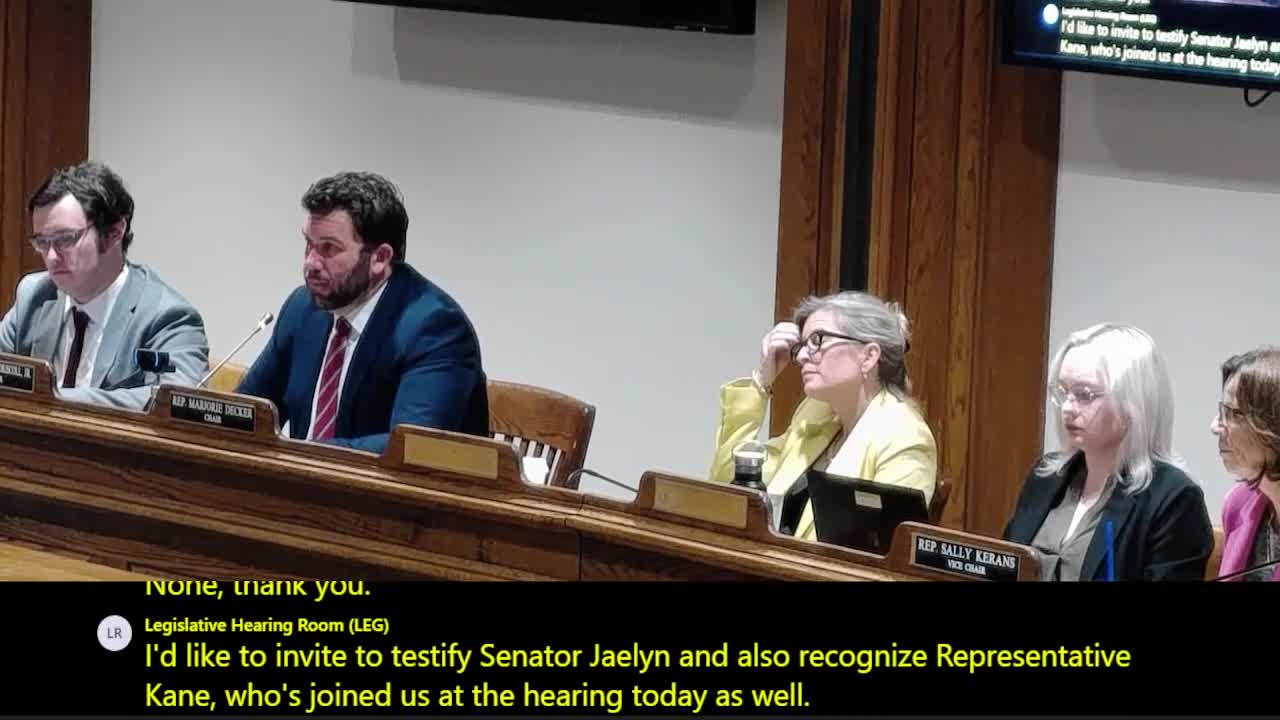
A broad coalition of environmental-justice organizations, physicians and municipal representatives urged the Joint Committee on Public Health to report favorably on legislation (H2369/S1548) to identify pollution hot spots, expand state monitoring and set enforceable reduction goals. Sen. Jalen, sponsor of the bill, said the measure would establish a technical advisory committee, require targeted monitoring in hot-spot locations and direct the Department of Environmental Protection to implement policies to reduce measured pollution by 75 percent in affected areas by 2035. “This is a bill that addresses an issue that has caused both public health, poverty, and the environment,” Sen. Jalen said, adding that some neighborhoods in her district lie adjacent to heavy road traffic and show elevated rates of asthma and heart disease. Dr. Shalini Shah, an environmental pediatrician at Boston Children’s Hospital, told the panel that children breathe more air by body weight than adults and that traffic- and wildfire-related pollution worsens asthma and lung development: “Children in low income and communities of color face the greatest burden,” she said, citing hospitalization disparities and a shortfall in fixed air-quality monitors across 351 towns. Local groups described community-led sensor programs and the limits of temporary projects. Emma Weiss of Clean Water Action and Emmanuel DiBarros of ACE (Action for Environmental Justice) urged a durable, state-funded baseline-monitoring network and a technical advisory committee that centers residents of overburdened neighborhoods. Emmanuel said community data shows peak ultrafine particulate levels during school arrival and dismissal near busy bus routes and that residents rely on grassroots sensors to make daily health decisions. Why it matters: Witnesses stressed that ultrafine particulate pollution and black carbon concentrate near pollution sources, produce localized health harms and are poorly captured by the Commonwealth’s existing monitoring network. Advocates said targeted monitoring and enforceable reduction goals are needed to prioritize interventions in environmental-justice communities. Next steps and outcome: No vote occurred during the hearing. Sponsors sought a favorable report to allow further drafting and funding discussions.