
Former BU adjunct urges state ombudsman to handle antisemitism complaints in higher education
Get AI-powered insights, summaries, and transcripts
Subscribe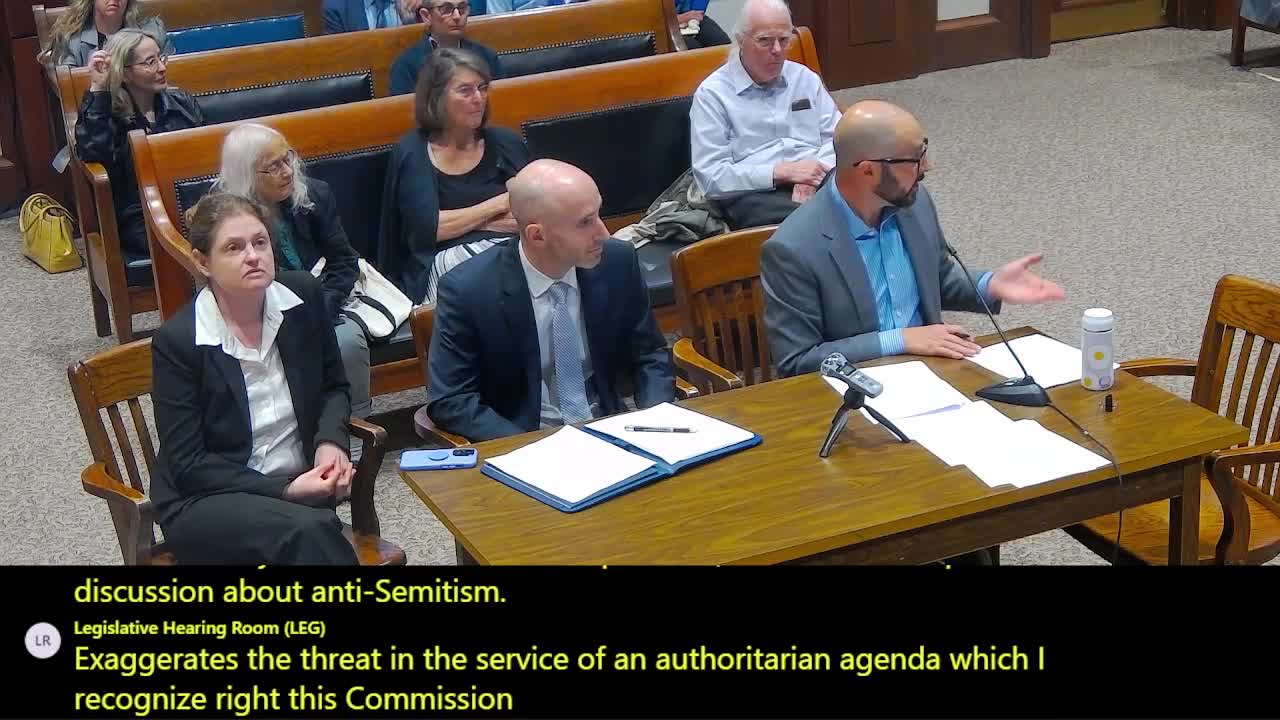
Summary
Douglas Hart, a former adjunct at Boston University who says he was targeted by a Title IX complaint after protesting antisemitism, told commissioners he supports creating an ombudsman in the attorney general's office dedicated to antisemitism in higher education so students and faculty have an alternative to campus grievance systems.
Douglas Hart, a former adjunct professor at Boston University, urged the Special Commission on Antisemitism to recommend that Massachusetts create a state‑level ombudsman within the attorney general’s office focused on antisemitism in higher education.
Hart described his own case: he said he was "harassed out" of Boston University in January 2025 after protesting what he described as antisemitic conduct, and that he faced a Title IX complaint that was ultimately dismissed. Hart said the complaint was "fraudulent" and that his experience left him concerned about relying solely on university adjudication when allegations involve campus offices that may be closely connected to the issues being raised.
Why it matters: Hart said some students, faculty and staff will not feel comfortable using campus reporting processes because the same campus offices (Title IX, diversity/inclusion) may have overlap with the actors involved in complaints. He recommended a state‑level mechanism that would provide an independent pathway for complaints alleging antisemitism in higher education.
Proposal details: Hart suggested an ombudsman or office within the Massachusetts attorney general’s office created by lawmakers to handle antisemitism complaints from students, faculty and staff at colleges and universities. He argued that the state already has a record of protecting civil rights and that an independent office would prevent institutions from "conducting themselves with deliberate indifference and get[ting] a free pass."
Discussion vs. decision: Commissioners discussed options for state remedies and whether such a function should be institution‑specific or broader. No formal vote was taken at the hearing; commissioners noted alternative options may include strengthening existing state or federal complaint pathways, but expressed interest in studying Hart’s recommendation further.
What’s next: Hart said he would be available to provide more details; commissioners asked staff to consider possible institutional homes and legal mechanisms for independent review of campus antisemitism complaints.