Get Full Government Meeting Transcripts, Videos, & Alerts Forever!
Get email alerts on the Pfas topic
No spam. Unsubscribe anytime.
Legislators, towns urge swift passage of omnibus PFAS bill and remediation fund
Summary
Municipal leaders, health experts and state lawmakers testified in favor of omnibus PFAS legislation that would phase out certain PFAS uses and create a remediation trust fund to help cities and towns pay for costly water treatment and cleanup.
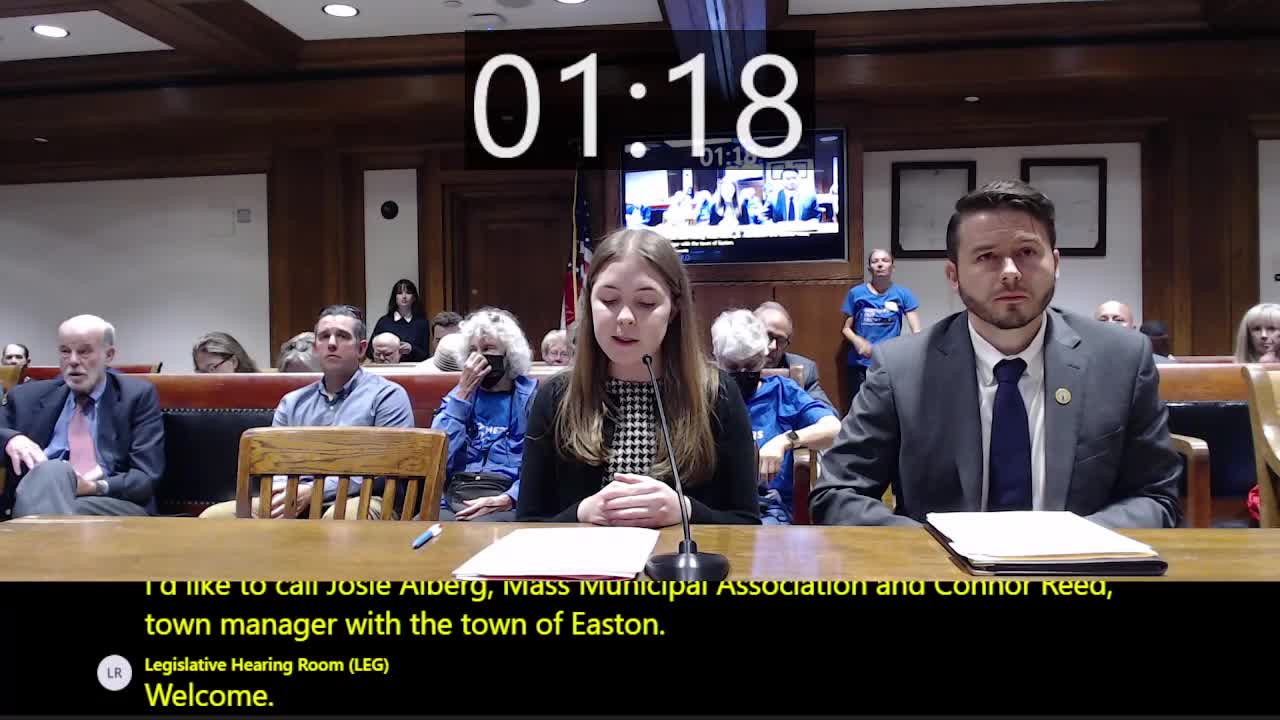
Chairmen and witnesses told the Joint Committee on Public Health on May 20 that Massachusetts must act now to curb PFAS pollution and help municipalities pay for remediation. Connor Reed, town manager of Easton, described his town’s response to PFAS contamination after routine tests detected PFAS in 2019: “Since then, we've spent significant time and effort navigating a changing state and federal regulatory landscape,” Reed said, noting Easton built three PFAS water-treatment facilities that went online in February 2023. He said capital costs totaled about $16,000,000 and annual operations now exceed $500,000, driving water rates up more than 30 percent for residents and businesses. The bill before the committee, represented most prominently as House 2450 and Senate 1504, would create a PFAS remediation trust fund, phase out certain PFAS uses in consumer products, and direct agencies to take additional steps to curb contamination. Judy Seaberg, author of Minnesota’s “Amara’s Law,” told the panel that state action is necessary when federal timelines are uncertain: “We can’t count on the federal government to get anything done, so I applaud the Commonwealth of Massachusetts for stepping forward with this legislation,” she said. Advocates and utilities urged both source controls and sustained public funding. Jennifer Peterson, executive director of the Massachusetts Water Works Association, said the Commonwealth has committed hundreds of millions to PFAS-related projects but that future federal and state support will be needed: “DEP estimates that 163 systems will be impacted by the new federal standard,” Peterson said, urging robust appropriation to the proposed trust fund because national settlements and current loan capacity will not be enough. Public-health and environmental groups also urged broader product bans and immediate steps. Environmental League of Massachusetts and Conservation Law Foundation witnesses recommended expanding the bill’s scope to limit PFAS in more product categories and to avoid overly broad exemptions. Speakers highlighted practical challenges such as spent filter media disposal and the need for state support to replace treatment media and pay for capital projects. Why it matters: Many Massachusetts communities are already paying millions to treat PFAS in drinking water; witnesses warned costs escalate as federal standards tighten. Supporters said the remediation fund and product restrictions are needed to “turn off the tap” at the source rather than rely solely on filtration. Context and next steps: Committee members did not take a vote at the hearing. Several sponsors asked the committee for a favorable report so the bill can move to ways and means and then the floor. Municipal officials and public-health groups committed to providing written comments and to working with the committee on funding language and exemptions.