
Panel of scholars urges data‑driven, rights‑sensitive approach; warns IHRA adoption and federal pressure risk chilling academic freedom
Get AI-powered insights, summaries, and transcripts
Subscribe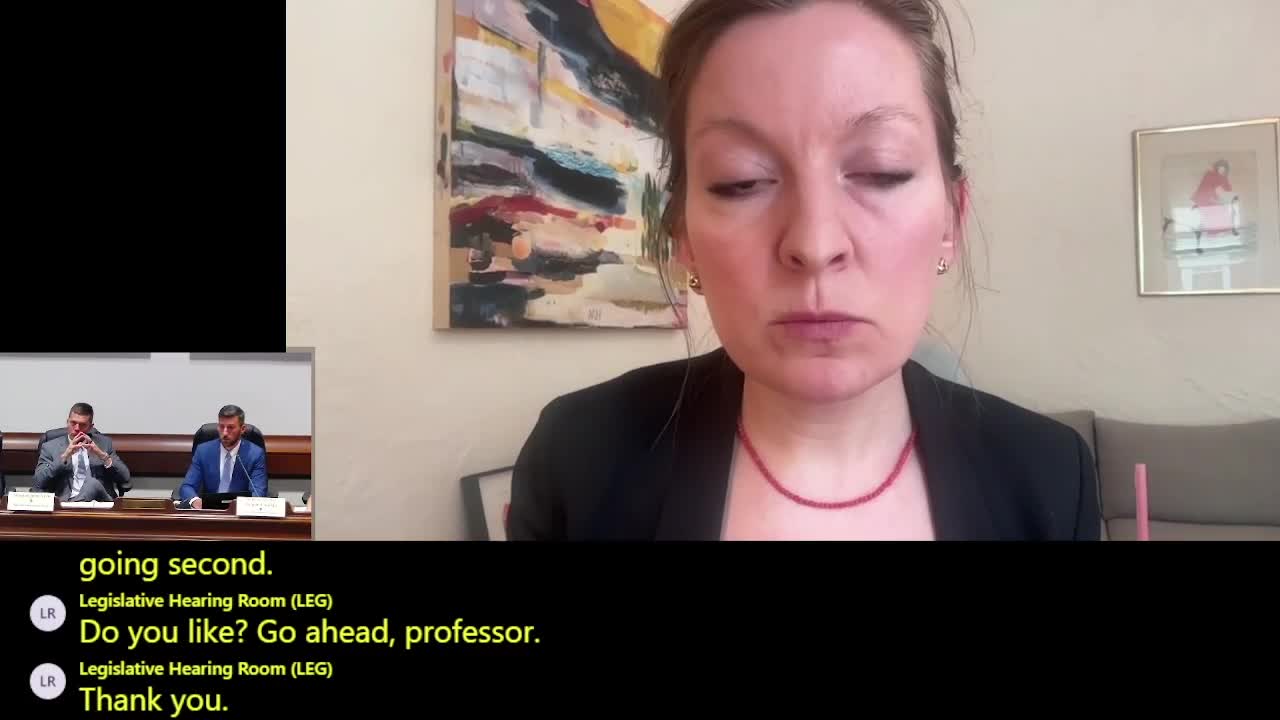
Summary
A group of academics told the Special Commission on Antisemitism that combatting antisemitism requires reliable data, protection for diverse Jewish viewpoints, and caution about adopting policy tools that could be used politically to chill scholarship.
A group of academics and researchers who testified to the Special Commission on Antisemitism urged a data‑driven approach to the problem, emphasized that Jews are diverse in their political views, and warned that some policy responses can unintentionally harm academic freedom and minority voices within the Jewish community.
The speakers—Professor Jeremy Menschik (director, Institute on Culture, Religion, and World Affairs), Professor Francis Tanzer (Holocaust Studies, Clark University), Professor Hillary Lustick (educational leadership, UMass Lowell) and Professor Jonathan Feingold (law, Boston University)—offered overlapping but distinct perspectives.
Why it matters: Panelists said accurate measurement and careful framing are prerequisites to sound policy. They urged the commission to avoid simple, one‑size‑fits‑all prescriptions and to guard against measures that could be exploited by political actors to weaken university autonomy.
Main points from witnesses: - Data and measurement: Professor Menschik called for reliable incident data and sound research methods, saying the commission’s prior K–12 work relied too heavily on data "widely known to be systematically biased and unrepresentative." He recommended rigorous, transparent incident‑reporting systems before making definitive claims on scale. - Minorities within minorities: Menschik emphasized that an estimated 20–40 percent of Massachusetts Jews are non‑ or anti‑Zionist and said policies that conflate Jewish identity and specific political stances can marginalize those Jews. He urged protections for all Jewish viewpoints. - Filosemitism and IHRA risks: Professor Tanzer warned that certain federal actions and adoption of the International Holocaust Remembrance Alliance (IHRA) working definition, when combined with political pressure, can "curtail meaningful research and education about antisemitism and the Holocaust" by treating criticism of Israel or Zionism as potentially punishable antisemitism. - Restorative approaches in education: Professor Lustick, an expert on school discipline reform, urged restorative dialogue and circles as constructive responses within schools and universities to interpersonal harms and to build resilience without over‑reliance on exclusionary discipline. - Political context and weaponization: Professor Feingold (Boston University) cautioned that conservative networks and federal actors have attempted to link university DEI efforts, anti‑racism, and student protest movements to antisemitism in order to discredit and defund higher education. He urged the commission to avoid enabling that strategy by endorsing approaches that can be weaponized to punish speech or academic work.
Discussion vs. decision: The panel's testimony produced substantial debate among commissioners about data interpretation and priorities; no formal policy decision was adopted during the hearing. Commissioners signaled interest in distinguishing institutional obligations from political debates and in preserving academic freedom while combating harassment.
What’s next: Panelists offered written materials and said they would meet with commissioners to provide data and model language for policies that balance harassment protections, free expression, and academic freedom.