Get Full Government Meeting Transcripts, Videos, & Alerts Forever!
Get email alerts on the Community Services topic
No spam. Unsubscribe anytime.
Two nonprofits seek Smithville funding; board considers restoring neighborhood grant pool of about $25,000
Summary
Two nonprofits — Northland Assistance Center and Smithville Community in Action — asked the Smithville Board of Aldermen for municipal funding; aldermen discussed bringing a neighborhood‑grant program back into the budget process to handle such requests.
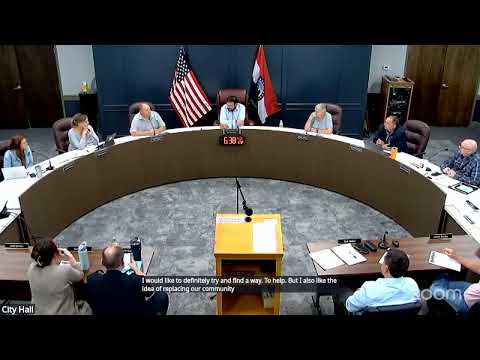
Two community nonprofits requested city funding during the Smithville Board of Aldermen work session; aldermen asked staff to consider a neighborhood‑grant style program during upcoming budget discussions.
Rita Pierce, executive director of the Northland Assistance Center, asked the city to consider a $5,000 contribution to allow the agency to provide rent, utilities, food and other short‑term assistance specifically to Smithville residents. Pierce said Northland Assistance Center will track assistance by city residency (not by ZIP code alone), can provide reports on disbursements and has prior experience managing city referrals during COVID. Pierce offered to execute an MOU and emphasized the agency’s volunteer and low‑overhead structure.
Jennifer Road, representing Smithville Community in Action (a volunteer coalition focused on youth substance‑use prevention), described the coalition’s long history in Smithville and warned that federal prevention grants are becoming less reliable. She said the coalition needs roughly $55,000 to maintain staffing and administration necessary to sustain youth prevention programming and noted the coalition has pursued state and county grant opportunities and local fundraising. Road said the group favors diversifying revenue sources to avoid reliance on a single federal grant.
Aldermen discussed mechanisms to provide funding without opening ad hoc requests to every organization. Several aldermen recalled a prior neighborhood block grant program (previously $25,000 annually) and suggested either reinstating that program or creating a similar competitive nonprofit grant process with reporting requirements. Staff proposed treating such awards as part of the budget process rather than making immediate one‑off donations.
The board directed staff to develop budget scenarios that could include a $25,000 neighborhood/nonprofit grant pot for the upcoming budget cycle and to outline application and reporting requirements. No direct appropriation to either nonprofit was approved at the work session.