Get Full Government Meeting Transcripts, Videos, & Alerts Forever!
Get email alerts on the Compensation Benefits topic
No spam. Unsubscribe anytime.
Staff propose 4% salary increase, LAGERS enhancement and wellness reimbursement amid recruitment concerns
Summary
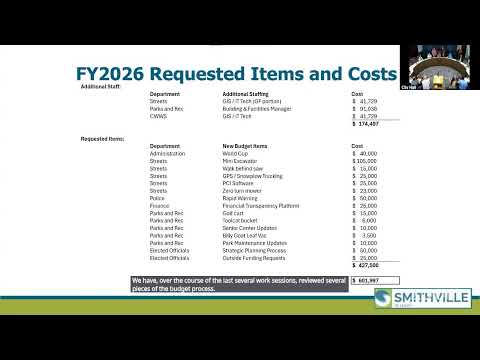
HR and finance staff proposed a 4 percent salary adjustment for current employees, an increase in the city's LAGERS retirement multiplier for recruitment and retention, and a $300 annual wellness reimbursement option; staff also presented an inclusive list of capital and staffing priorities for the 2026 budget.
Gina, staff member, presented compensation and benefits proposals and asked the board for direction as staff develops the 2026 budget. She recommended a 4 percent salary adjustment for current employees and an enhanced retirement multiplier through LAGERS, the local government retirement system used by the city, to improve recruitment and retention.
Nut graf: Staff framed the package as a response to statewide and national recruitment pressures for police and certified utility operators; the proposed budget impacts are primarily recurring personnel costs that staff said would be funded from general and public safety-dedicated revenues and would be reflected in five-year projections.
Proposals and cost estimates: Gina, staff member, said the city is recommending a 4 percent salary adjustment and moving the retirement multiplier to the LAGERS level that equates to a higher employer rate (referred to in the meeting as moving to the higher LAGERS multiplier). She described the estimated budget impact: "Every 1 percent in salary is just under $25,000," and staff estimated the total general-fund impact of the 4 percent adjustment at roughly $98,000. For the LAGERS enhancement, staff estimated the general-fund employer cost at about $69,000 (no salary change) and $71,000 when paired with the 4 percent salary increase; staff said the public-safety sales tax fund would absorb a roughly $50,000 annual cost to implement the enhanced LAGERS level for police-specific retirement benefits.
Wellness and retention items: Gina proposed a wellness benefit in two options: a $25 monthly stipend (taxable) or a reimbursement up to $300 annually upon submission of documentation. Board members favored reimbursement and asked staff to implement a $300-per-year reimbursement that would require receipts. Gina said the wellness item was not included in the initial cost calculations and staff would return the budget impact once the board provided direction.
Recruitment context and other budget priorities: Staff noted local recruitment shortages in police staffing and certified water/wastewater operators; Gina said the city had been "down a total of 3 police officers" for an extended period and had few qualified applicants for certified plant operator openings. Board members directed staff to prioritize staffing additions, strategic planning, and select capital items; staff said they would explore lease options for high-cost equipment, reclassify an existing position to create a building and facilities manager, and return with refined funding scenarios. The five-year projections presented by Rick, staff member, showed conservative revenue assumptions with reserve targets potentially reached in 2028 under the presented scenarios.
Process, timing and next steps: Staff said the public-safety sales tax revenue will not begin to flow until retailers start charging it in October and there will be a delay before collections appear; staff also noted COP (certificate of participation) issuances in 2025 and 2027 that affected multi-year cashflow. The board requested further detail and directed staff to return with refined budget scenarios at the August 19 work session.
Ending: Staff will return with final line-item costings, the wellness reimbursement implementation method, and refined five-year projections for board consideration before formal budget readings in October.