Get Full Government Meeting Transcripts, Videos, & Alerts Forever!
Get email alerts on the Assisted Living Guam topic
No spam. Unsubscribe anytime.
Guam committee hears Bill 31 to expand assisted‑living options as island’s elderly population grows
Summary
Bill 31, introduced by Senator Will Parkinson, would create a statutory and regulatory framework for assisted living facilities on Guam. Supporters and agencies said the measure addresses a service gap; Department of Public Health and Social Services recommended technical changes and warned Medicaid currently does not pay room and board.
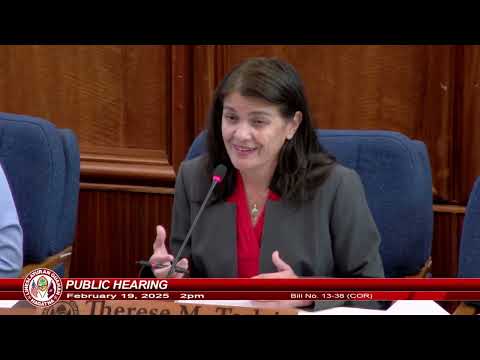
Senator Will Parkinson introduced Bill 31 on Feb. 19, proposing statutory and regulatory changes to expand assisted‑living options on Guam and to create qualifying certificates and licensing pathways for new facilities. The measure aims to fill a gap between independent living and nursing‑home care for seniors who need daily assistance but not 24‑hour skilled nursing.
Why it matters: The island’s aging population and limited assisted‑living capacity leave some older adults stuck in hospitals or without safe alternatives. Advocates said the bill would attract investment and permit a range of residential care models; public health officials recommended precise definitions and noted state/territorial Medicaid limits on what services federal Medicaid will cover.
Senator Will Parkinson opened the hearing by saying Guam’s aging population “must ensure that our elderly, our many seniors require assistance beyond what independent living can offer.” Parkinson framed the bill as creating standards for licensing, operation and oversight and as leveraging programs like MIP and Medicaid where feasible.
Peter Alexis Ada, founder of Guma Oru and an applicant proposing an assisted‑living site, said assisted living is not currently covered by Guam law and that the lack of rules created uncertainty for developers. Ada described a local pilot model that would combine private lodging with on‑site services and outreach, and emphasized immediate demand: he told senators that 19–22 patients at GMH were medically ready for discharge but had no placement.
Teresa C. Areola, director of the Department of Public Health and Social Services (DPHSS), testified in support of the bill’s intent but offered detailed recommendations. DPHSS noted national guidance that most assisted‑living residents pay privately and that Medicare does not cover assisted‑living room and board. Areola testified: “Medicaid programs do not pay for rent, mortgage, utilities or food,” although some states use Medicaid waivers or state plan options to cover personal care services in assisted living. DPHSS pointed out that Guam Medicaid currently provides medically‑necessary home‑health services but does not cover home‑and‑community‑based personal care, case management, or room and board, and warned changes could have fiscal implications exceeding Guam’s Medicaid cap.
DPHSS and the Division of Environmental Health recommended separate, clear definitions for assisted living versus nursing homes and proposed sanitary, inspection, and administrator licensing revisions. Tom Nadeau, chief environmental public health officer, said sanitation standards for nursing homes exist (Title 10, Chapter 6, Article 3 interim regulations) but licensing and other rules for assisted living are absent. The Guam Housing and Urban Renewal Authority recommended definitions aligned with industry practice and cautioned that inconsistent definitions could confuse investors and grantors.
No vote was taken. Senators said they support the bill’s intent but asked agencies to collaborate on definitions, licensing requirements, inspection frequency (DPHSS cited quarterly sanitation checks for high‑risk facilities), and the fiscal effect of expanding Medicaid coverage or pursuing waivers.
Next steps: Committee members asked DPHSS, GHURA and other stakeholders to refine statutory definitions and to return with draft regulatory language and fiscal estimates. The committee will accept written testimony through Feb. 21 and indicated willingness to revise the bill before moving it forward.