Get Full Government Meeting Transcripts, Videos, & Alerts Forever!
Get email alerts on the Airport Leases And Concessions topic
No spam. Unsubscribe anytime.
Committee hears bill to let airport offer longer leases, prompting debate over transparency and safeguards
Summary
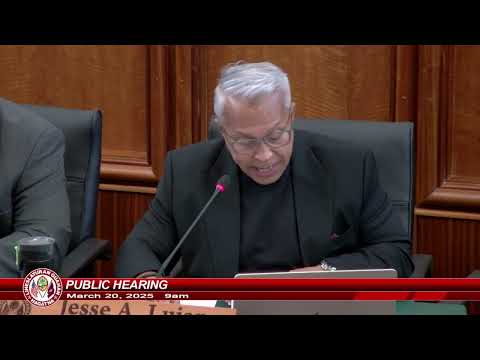
Senator Jesse A. Luhan opened a public hearing on Bill 67‑38, COR, telling the Committee of Transportation, Tourism, Customs, Utilities, and Federal and Foreign Affairs that the measure would amend Article 2, Title 12, Guam Code Annotated to allow the A.B. Won Pat Guam International Airport Authority (GIAA) to adopt policies and procedures for solicitation, selection and award of agreements for airport property and visitor‑related activities. "This bill changes that. It gives the airport the flexibility and the authority to forge strategic partnerships, attract new businesses, and maximize the use of its property," Luhan said.
Senator Jesse A. Luhan opened a public hearing on Bill 67‑38, COR, telling the Committee of Transportation, Tourism, Customs, Utilities, and Federal and Foreign Affairs that the measure would amend Article 2, Title 12, Guam Code Annotated to allow the A.B. Won Pat Guam International Airport Authority (GIAA) to adopt policies and procedures for solicitation, selection and award of agreements for airport property and visitor‑related activities. "This bill changes that. It gives the airport the flexibility and the authority to forge strategic partnerships, attract new businesses, and maximize the use of its property," Luhan said.
Nut graf: Bill 67‑38 would expand the GIAA’s ability to enter longer lease and concession agreements—concessions up to 15 years and other leases up to 50 years—and shift authority for policies and procedures to the airport board. Proponents at the hearing said the change would help the airport attract large capital projects (hangars, maintenance, repair and overhaul facilities, cargo/warehousing), diversify revenue beyond aeronautical fees, and support tourism and jobs. Opponents and several senators warned the bill, as written, removes or exempts existing procurement and oversight safeguards and asked for clearer transparency and PUC/legislative checks.
Airport officials and industry supporters repeatedly framed the bill as a tool to attract large, long‑term private investment. Brian Bomba, chair of the GIAA board of directors, told the committee the airport “must explore other non‑aeronautical revenue” and said the current five‑year lease cap discourages capital investment. "Attracting air service and investors in airport facilities is very competitive on all fronts," he said, and longer terms were needed to allow investors to amortize major projects.
John M. Kinatsa, identified in testimony as the airport’s executive manager, described the authority as an autonomous public corporation required to operate on self‑sustaining revenue. Kinatsa said Bill 67‑38 "authorizes the GIAA to lease airport facilities and properties for a period of up to 50 years, with concessions limited to a period of up to 15 years" and that longer terms would allow developers to justify heavy capital expenditures—he noted potential projects could exceed $100 million for hangars, MROs and cargo facilities.
Supporters from the private sector and tourism and education groups urged passage. Regine Bisco Lee, president and CEO of the Guam Visitors Bureau, said 15‑year concessions would encourage larger in‑terminal investment by retailers and food and beverage operators. A representative of Asia Pacific Airlines and a local restaurant operator and charter‑school officials described workforce opportunities if hangars and MROs return to Guam.
Committee members pressed airport witnesses on several points of process and safeguards. Senators asked why the bill gives the airport board authority to adopt solicitation policies and procedures rather than requiring conformity with current procurement rules and administrative adjudication (AAA) filings. Senator Sabina Perez and others warned the bill language includes a "notwithstanding any other provision of law" clause that would exempt GIAA from provisions including 5 GCA chapter 5 (section 5‑127) and chapter 9 as well as portions of 21 GCA (sections 60112, 60114 and 60115), and said those are "gaping holes" in oversight if retained.
Kinatsa and other airport managers said the change responds to a mismatch between procurement rules designed for spending and industry norms for revenue‑generating concessions. They said GIAA intends to hold public comment periods ("no less than 30 days") and stakeholder engagement before policies are adopted, and that FAA requirements and covenants (including fair market value for non‑aeronautical rates) will continue to apply. Kinatsa also said the FAA had reviewed the draft measure and "has no objection" because it generally promotes the airport’s ability to be self‑sustaining.
Senators sought additional detail on conflicts of interest, board vetting and recusal practices. Senator Telo Tadegwe asked whether subleasing would be permitted under long leases; Kinatsa said subleases would require airport approval. Several senators requested that the airport demonstrate how public procurement safeguards—particularly AAA filing and legislative approvals tied to property disposals—would be preserved or replaced. Senator Chris Duenas and others urged public meetings and town‑hall engagement to give the community oversight and to ensure contracts serve the public interest.
Questions of economic impact and timing surfaced throughout the hearing. Airport management said GIAA lost more than $150 million in revenues since the COVID‑19 pandemic and that diversifying non‑aeronautical revenue would reduce pressure on airline fees. GIAA and supporters cited other jurisdictions and past public laws (for example, an earlier law authorizing 30‑year UOG leases and CNMI authority for up to 55 years) as precedents for longer terms where large capital investment is required.
There were no formal committee votes during the hearing. The committee chair closed the session by inviting further written testimony and stating the panel will accept written submissions for seven days.
Ending: The hearing produced broad agreement on the airport’s need to expand revenue sources and attract long‑term investment, but it also highlighted unresolved policy questions: whether procurement and oversight exemptions in the bill should remain, how the airport will preserve public comment and AAA protections, and how the board will manage conflicts of interest when negotiating long‑term, high‑value leases. The committee left the record open for seven days for written testimony as it considers revisions.