Get Full Government Meeting Transcripts, Videos, & Alerts Forever!
Get email alerts on the Environment Coral Reefs topic
No spam. Unsubscribe anytime.
Guam committee hears testimony on bill to bar sunscreens with oxybenzone, octinoxate and octocrylene
Summary
The Committee on Land, Environment, Housing, Agriculture, Parks and Infrastructure held a public hearing Feb. 10 on Bill No. 35‑38 (COR), which would prohibit importing sunscreens containing oxybenzone, octinoxate and octocrylene. Agency witnesses urged reef-protective action but noted enforcement and economic questions; no vote was taken.
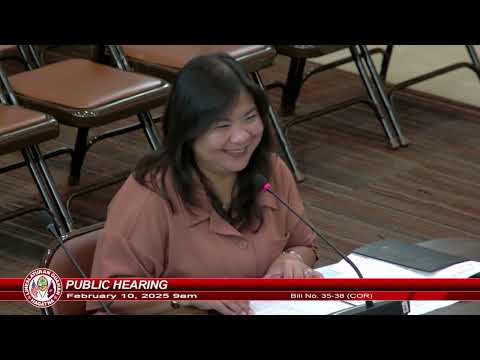
Vice Speaker Tony Ada, chair of the Committee on Land, Environment, Housing, Agriculture, Parks and Infrastructure, opened a Feb. 10 public hearing on Bill No. 35‑38 (COR), a measure that would add a new article to Title 10, Guam Code Annotated, to prohibit the importation of skin‑care products containing certain chemical UV filters that studies have linked to coral damage.
The bill drew support from resource agencies and questions from legislators about enforcement, retailer inventory and alternatives. No formal vote was taken; the committee invited additional written testimony for seven days and left next steps to future action.
The measure aims to ban products containing oxybenzone, octinoxate (also spelled in testimony as actinosate/actinoxate) and octocrylene from Guam’s market. Michelle Lastimosa, administrator of the Guam Environmental Protection Agency, told the committee, “The Guam Environmental Protection Agency is supportive of any measure where reasonable action is taken to protect our coral reefs in Guam,” but reminded members that “the authority and enforcement of sunscreen lies with the Department of Public Health and Social Services, Division of Environmental Health” under Title 10. Lastimosa said the FD&C framework and U.S. Food and Drug Administration oversight mean Guam EPA is not currently delegated to enforce sunscreen importation and sales and recommended placing any new article in 10 GCA Chapter 40 rather than Chapter 32 (the Hazardous Substance chapter).
Ashton Williams, program manager for the Guam Coral Reef Initiative in the Department of Agriculture’s Division of Aquatic and Wildlife Resources, urged passage. “By banning the import of products containing the most harmful chemical sunblock agents and providing alternatives that we know are less harmful, we can ensure that swimmers, snorkelers, divers, and other beach goers are using less harmful alternatives,” Williams said, adding that reef‑protective restrictions have been adopted in other places including Hawaii, the U.S. Virgin Islands and Palau.
Agency witnesses described the scientific evidence and its limits. Williams and Lastimosa noted most laboratory studies show DNA damage and deformities in coral larvae and other marine organisms exposed to those chemicals; Lastimosa also cited a 2022 National Academies review and said measured environmental concentrations at some popular sites are small (reported in testimony as roughly 1–10 micrograms per liter), but that lab exposures are often higher and that cumulative stressors could magnify harm.
Legislators pressed on implementation and economics. Several senators asked which agency would enforce a ban; Lastimosa repeated that enforcement of sunscreen as an over‑the‑counter drug falls to DPHSS/Division of Environmental Health (DEH). Senator Chris Duenas, vice chair of the committee, and others asked whether Guam EPA would cooperate if enforcement authority remained with DPHSS; Lastimosa answered the agency would support environmental goals but lacks statutory authority to regulate drugs under the FD&C framework.
Retailers and importers’ concerns were raised in testimony submitted to the committee and in questions from lawmakers. Members said some importers reported inventory worth up to $500,000 on island and asked whether retailers should be allowed to sell existing stock (a grandfather clause) or be given longer compliance windows. Senator William Parkinson said he opposed grandfathering: “I oppose any idea of grandfathering current products because I see it as just dumping it directly into the ocean.” Other senators said they wanted to weigh economic impact and enforcement costs before deciding on compliance timing.
Committee members also discussed alternatives and outreach. Witnesses recommended greater availability of mineral‑based sunscreens and other chemical filters that are considered less toxic to reefs, along with public education and point‑of‑sale outreach. Ashton Williams said Guam Coral Reef Initiative carries out outreach events and provides ingredient guidance rather than endorsing specific brands.
No amendments or motions were taken at the hearing. The chair said the committee will continue to accept written testimony for seven days and will schedule further action; the bill’s author and cosponsors were noted on the record. The hearing concluded without a vote.
The hearing also noted that a separate housing bill (Bill No. 26‑38 concerning accessory dwelling units) was removed from today’s agenda at the author’s request and will be rescheduled.