
County judges ask commissioners to raise pay for court reporters and clerks amid heavy magistrations
Get AI-powered insights, summaries, and transcripts
Subscribe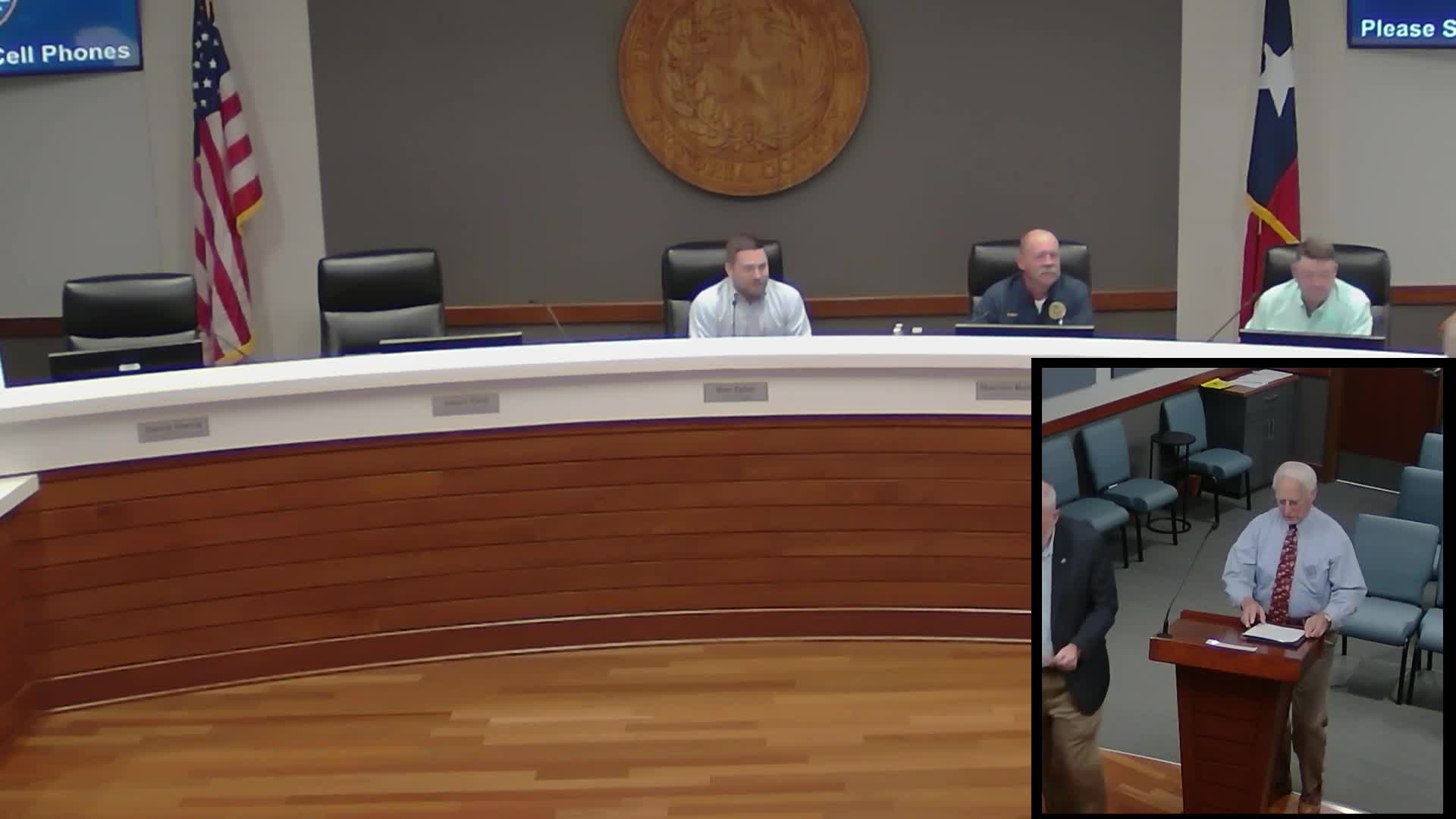
Summary
County court and justice court judges told commissioners that court reporters and clerks are understaffed and underpaid relative to comparable positions; county court judges requested moving court reporters to the top of their current pay grade, while JPs described heavy magistrations and unfunded statutory duties.
County court judges and two justices of the peace told the Commissioners Court they want higher pay for court staff, arguing that reporters and longtime clerks face a regional market that pays more and that unfunded mandates have increased daily workloads.
County court at law judges requested that their two dedicated court reporters be moved within their existing classification (level 16) from the current midpoint to the top of that pay grade, saying the district court reporters are paid substantially more. “Govsalaries.com reports the average court reporter salary for a government-employed court reporter at $119,008,” one county court judge said, and noted a local comparison where San Patricio County pays its county-court reporters roughly $115,068. The judges requested raising their reporters toward the top of the grade (about $105,955) and estimated the county impact at roughly $39,726 in recurring payroll costs for two positions.
Justice of the Peace Robert Whitaker (JP Precinct 3) outlined magistration duties that drive clerk workload and defended a requested pay increase for a long-serving clerk: his office handles daily magistrations for arrest cases (setting probable cause, bond and bond conditions), and his staff prepares and processes arrest paperwork for district courts, county courts, municipal court and other JPs. “Most folks are [bond-eligible],” Whitaker said, and described days with as many as 15–25 magistration matters. He pointed to additional statutory requirements — including screening for mental-health risks and compliance with the Damon Allen and Sandra Bland-related procedures — that add paperwork and coordination with the local mental-health authority (Gulf Bend).
Justice of the Peace (Precinct 2) Judge Durham said his two long-serving clerks (one with about 22 years’ service and one with about 19) shoulder a heavy caseload and that Precinct 2 is among the busiest for civil filings and truancy dockets. Durham said his office received 71 filings from a single hospital’s filings over a recent period and described regular high-volume civil and truancy business.
Why it matters: Judges argued that differential pay is driving recruitment difficulty and that the county could lose experienced reporters and clerks to higher-paying district-court positions; county court judges noted an open district-court ‘‘rover’’ reporter position at $120,000 that has been difficult to fill. A county court judge warned that if a reporter applied for higher pay and moved to a district court, the county could be left short-handed and forced to suspend court activity until a replacement is hired.
Discussion vs. decisions: Commissioners did not adopt any salary changes in the meeting; they acknowledged prior steps taken in earlier budget cycles and asked staff to incorporate the requests and cost estimates into the draft budget for further consideration. No formal motions or votes were recorded during this session.
Ending: Judges urged commissioners to consider pay adjustments this budget cycle to retain qualified reporters and experienced clerks and asked commissioners to visit court operations to see magistration and docket workload firsthand.