
Sheriff asks county for 8% pay increase to shore up jail and patrol staffing
Get AI-powered insights, summaries, and transcripts
Subscribe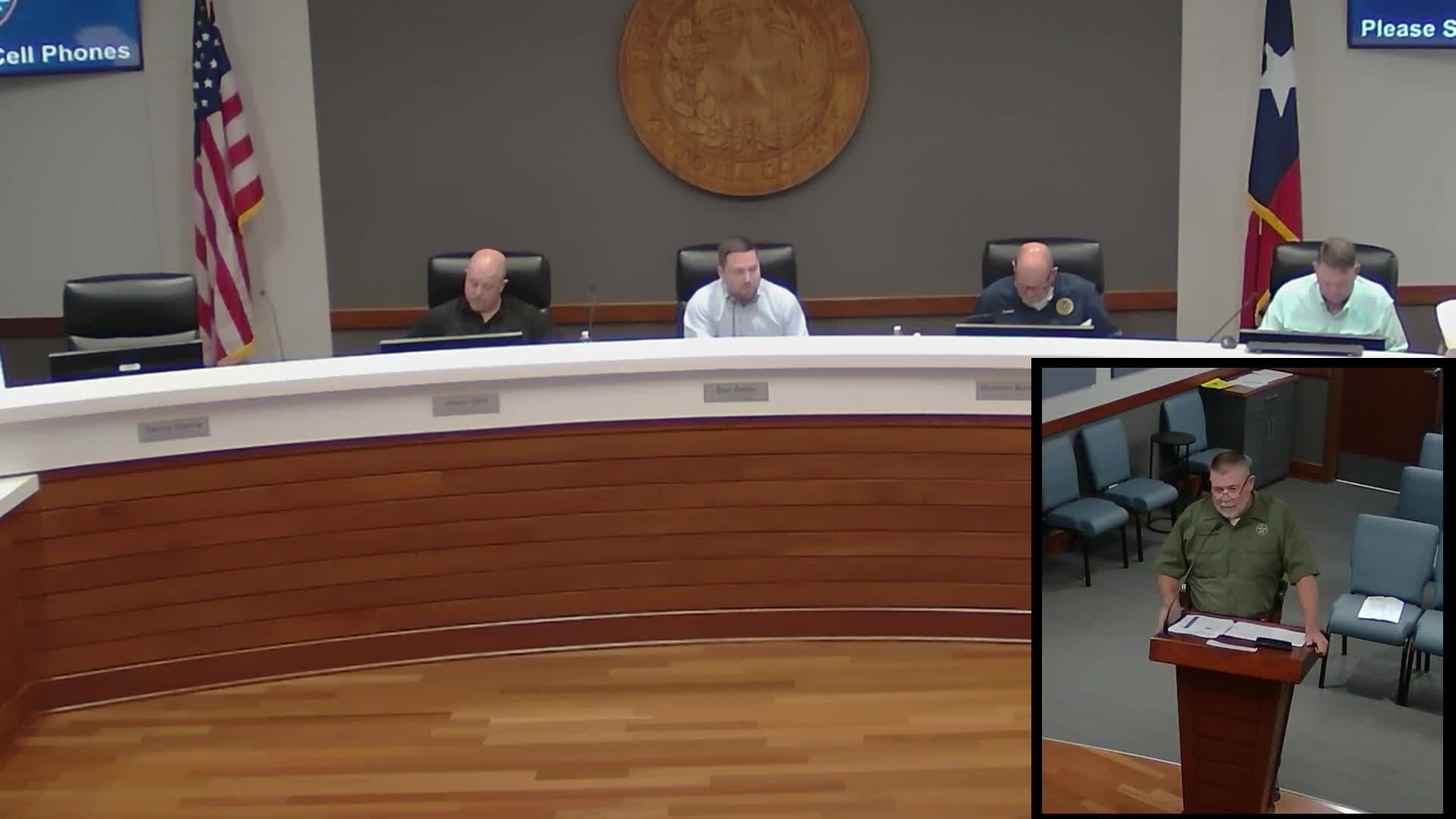
Summary
Sheriff requested an 8% across-the-board pay increase for law enforcement and detention staff to remain competitive with neighboring jurisdictions, citing chronic jail understaffing, rising inmate counts and operational costs; commissioners discussed funding sources, comp-time liabilities and capital needs including Guadalupe School range work.
Sheriff Sydney told the Victoria County Commissioners Court that his top budget priority is addressing personnel pay and said he is requesting an 8% salary increase for law enforcement and detention staff to remain competitive with nearby employers. “Our goal this year would be to address salary situations,” he said, adding the increase would help the county “hold our ground and be competitive.”
The sheriff said the county jail is “pretty unique” in size and workload and that the office is short ‘‘probably 25’’ detention staff; the facility is currently trending “400 plus inmates.” He described routine staff losses to neighboring counties — “Last week alone, I lost 2 jailers that had been there over well over a year to Lavaca County” — and said turnover is driven partly by workload and partly by pay differentials. “8% is a lot. That's a big ask. But if I didn't think… that's what it takes,” he said.
Why it matters: Commissioners and staff said salaries are a central budget pressure. A county official noted the sheriff’s proposal includes a built-in 3.8% adjustment attributable to an extra pay period, so the net recurring budget impact differs from a simple 8% calculation. Commissioners discussed several funding sources the court can tap to cover increases, including anticipated payroll float in the sheriff’s office and state funds (“SB202” money referenced by speakers).
Operational details and constraints: The sheriff said detention staffing choices affect patrol staffing because internal promotions or reassignments to patrol would draw from the jail; he said he is temporarily holding some newly hired officers in the jail until jail staffing improves. The office has paused intake of Class C inmates effective immediately “to get our numbers back up,” and the sheriff said city–county reimbursement practices for city arrests could merit review because the county does not bill the city in some circumstances.
Additional budget items discussed included modest increases for training (the sheriff requested about $25,000), routine cost-drivers (vehicles, auto expenses, food service, uniforms) and paying down accrued compensatory time banks for specialized units such as K‑9 and SWAT. The sheriff described a significant comp-time liability but did not provide a total dollar amount; staff said that comp balances could be provided later that afternoon.
Capital projects: Commissioners and the sheriff discussed capital needs tied to the Guadalupe School property (including gun range infrastructure, electricity and septic) and a partially addressed roof repair; the sheriff said he is pursuing potential outside funding but was not ready to provide details. On vehicles, the sheriff said the county purchased three vehicles under the current cycle and has three additional vehicles pending through Operation Lone Star eGrants.
Policy changes and demand drivers: The sheriff said legislative changes to pretrial law (he referred to “Senate Bill 9”) will likely increase jail intakes but the precise impact is uncertain. He also described increasing mental-health-related demands inside the jail, more frequent hospital transports and the operational burden of required inmate scans (15–60 minute intervals depending on risk). Commissioners repeatedly described the jail as the “elephant in the room” and raised the prospect that a new facility will eventually be necessary.
Discussion vs. decisions: The court discussed funding approaches and asked the sheriff for additional numbers (comp balances, cost estimates). No formal budget vote or adoption occurred during the session; commissioners directed staff to incorporate the request into the ongoing budget workshop and requested the sheriff provide comp‑time and other figures for final consideration.
Ending note: Commissioners indicated the sheriff’s staffing and pay request is a top priority for the budget deliberations and that staff will circulate a draft budget later the same day for continued discussion.