Get Full Government Meeting Transcripts, Videos, & Alerts Forever!
Get email alerts on the Evacuation Planning topic
No spam. Unsubscribe anytime.
Officials say evacuation planning is complex; sign up for county alerts and consider local drills
Summary
Travis County commissioners, fire chiefs and emergency managers told residents that large-scale evacuation drills are logistically intensive, urged sign-up for the county alert system, and recommended community-level planning and simulation tools for evacuation preparedness.
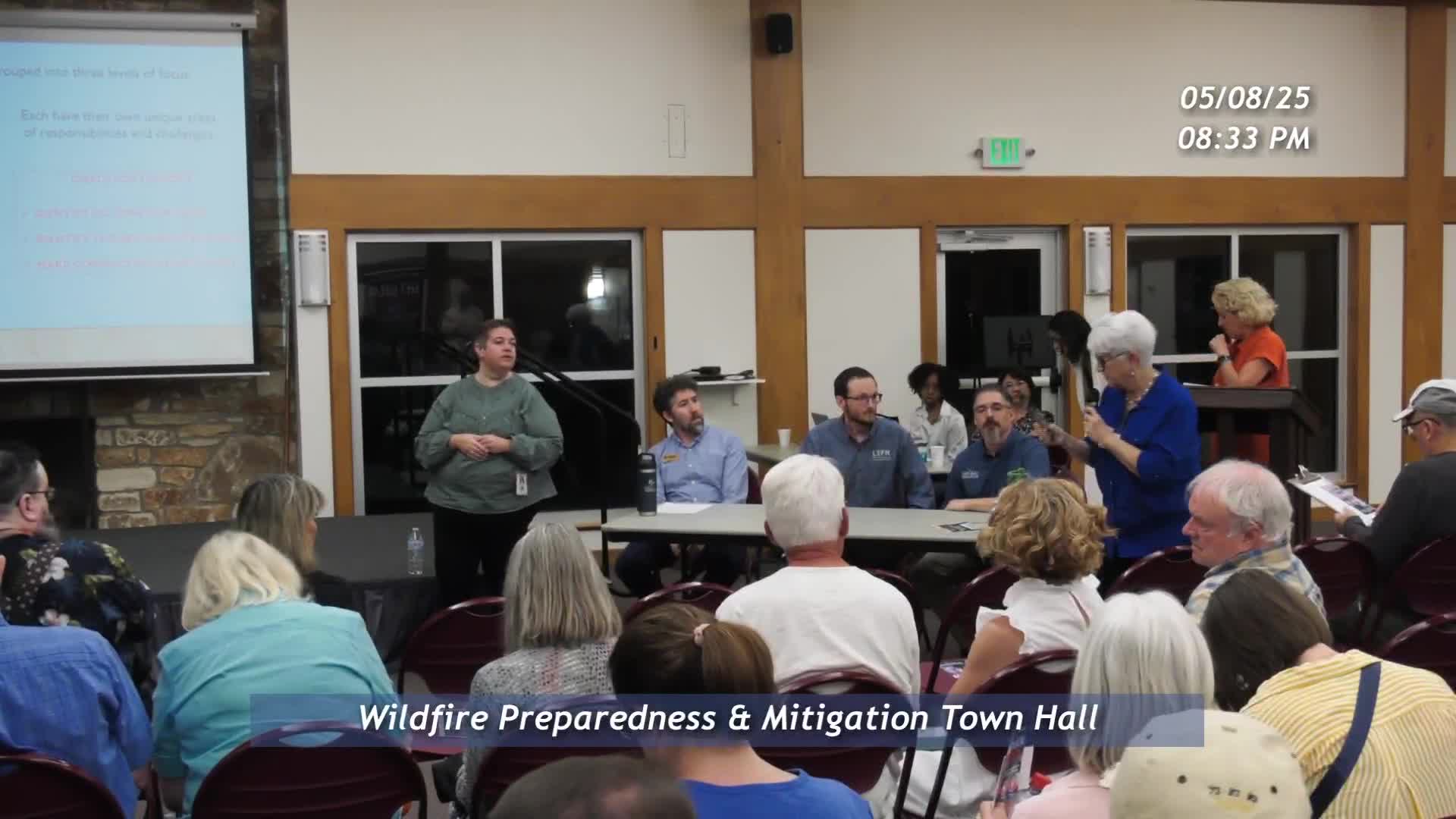
Travis County Commissioners Anne Howard (Precinct 3) and Bridget Shea (Precinct 2) and emergency-management partners told the meeting that evacuation planning spans many jurisdictions and agencies, so residents should focus on household and neighborhood preparedness while public agencies work on larger plans.
Commissioner Bridget Shea urged attendees to sign up for the county’s emergency notification system (WarnCentralTexas) so they receive texts, calls or emails during emergencies. County staff said the prior landline-based system covered a small share of households and that the mobile-enabled upgrade increased reach from roughly 7% to over 70% of residents who opt in.
Panelists said full community evacuation drills are resource- and labor-intensive; one organizer described a prior drill that required about a year of planning for a large neighborhood. For large communities, officials recommended simulation tools and phased exercises rather than single, large-scale live drills. Chief Abbott (ESD 6) noted simulation and modeling tools are commonly used for larger exercises to limit logistical strain on response agencies.
Speakers emphasized layered preparedness: (1) household readiness using Ready-Set-Go checklists and pet plans; (2) neighborhood-level coordination — knowing routes, refuges and neighbors who may need assistance; and (3) regional evacuation planning by agencies. Panelists said that, while evacuation is sometimes necessary, “home hardening and sheltering in place is as important” as evacuation planning.
Residents were invited to pursue neighborhood evacuation or refresher exercises with support from local fire departments; officials offered to connect HOAs to simulation resources and to assist with planning. County staff distributed a QR-code resource page with local contacts, ESD listings and outreach materials.
Speakers repeatedly cautioned that each incident differs — wind direction, access and fuel conditions change — so residents and planners should prepare multiple routes and shelter options rather than rely on a single practiced exit direction.