Get Full Government Meeting Transcripts, Videos, & Alerts Forever!
Get email alerts on the Home Hardening topic
No spam. Unsubscribe anytime.
Travis County experts urge homeowners to ‘harden’ houses against wildfire embers
Summary
Local fire officials told a Travis County wildfire preparedness meeting that most home ignitions in wildfires happen from embers and that relatively low-cost maintenance and Home Ignition Zone assessments can greatly increase a house’s survivability.
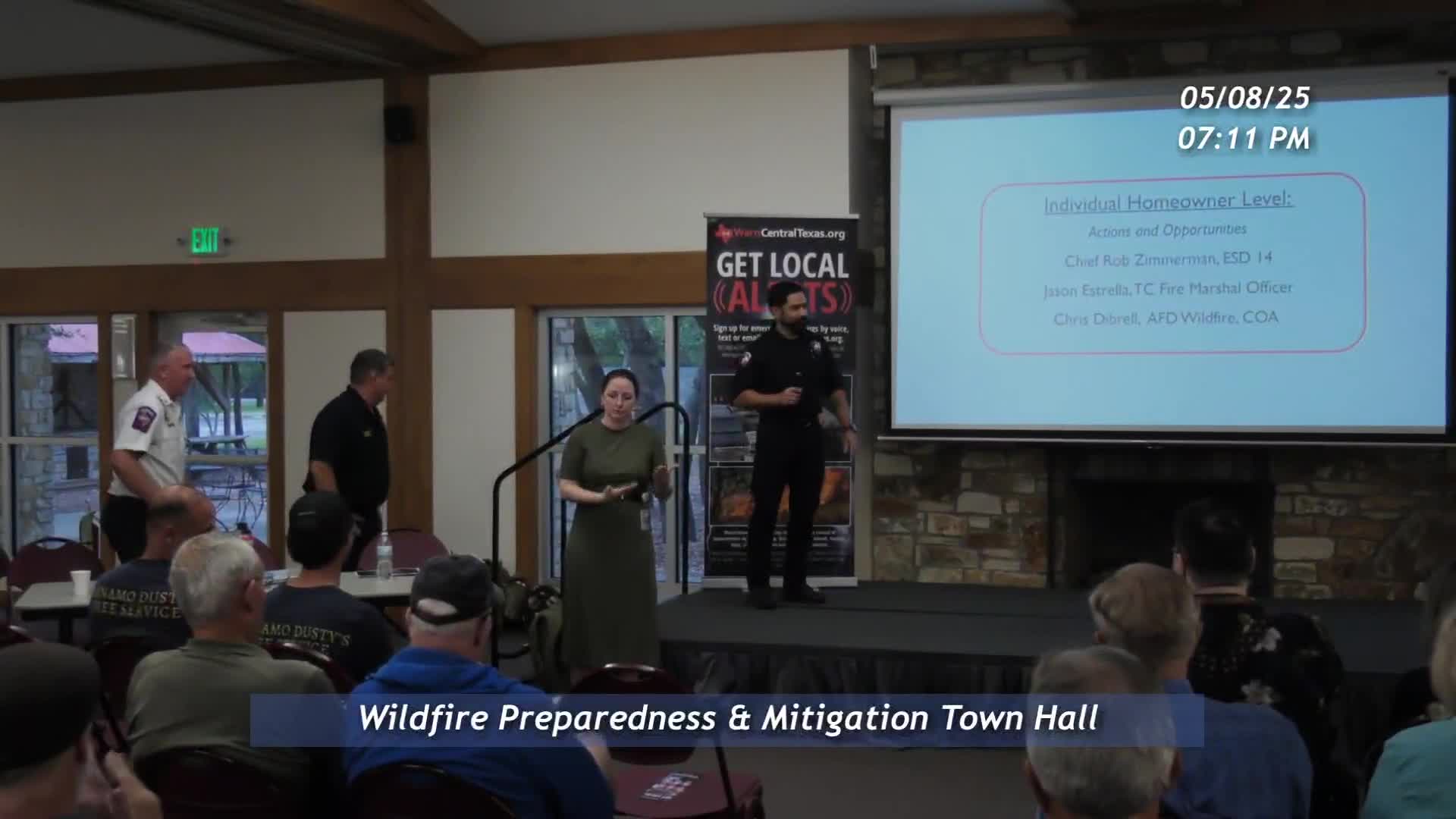
At a community wildfire-preparedness forum in northwest Travis County, Jason Estrella, wildfire mitigation specialist with the Travis County Fire Marshal’s Office, said homeowners are the first line of defense against wildfires and urged residents to “think of your home as fuel.”
Estrella told the audience that national research shows a large share of residential losses in wildland-urban interface fires begin with embers. Citing material used in his presentation, he said many sources indicate that embers — not the flame front — cause most structure ignitions and can travel long distances.
The discussion focused on five practical areas residents can address to reduce risk: roofs, vents, decks, siding and the 0–5-foot zone around structures. Officials recommended noncombustible roofing when possible, cleaning gutters, installing 1/8-inch metal mesh over vents to keep embers out of attics, removing combustible items stored under decks, and replacing flammable mulch in the immediate perimeter with noncombustible materials.
Estrella and other panelists emphasized that the goal is to reduce vulnerabilities rather than strip landscapes bare. “A lot of it…is just basic maintenance,” a panelist said, adding that simple repairs such as caulking gaps and removing debris can make a big difference for older homes.
Speakers described Home Ignition Zone (HIZ) or home-risk assessments — free or low-cost walk-throughs by trained personnel that point out vulnerabilities and offer prioritized mitigation steps. Estrella said assessments can be requested through the Travis County Fire Marshal’s Office, local Emergency Services Districts (ESDs) or the Austin Fire Department’s wildfire hub; whoever receives the request will route it to the correct provider.
Cost and practical barriers were discussed. Estrella said the Insurance Institute for Business & Home Safety (IBHS) materials indicate routine maintenance can materially raise survivability and that “around $500 worth of maintenance on average” can meaningfully reduce risk for many homes. Separately, a county fuels specialist later noted that fuels-treatment work on larger parcels has much higher per-acre costs (see related articles), and that homeowners should weigh low-cost maintenance against larger-scale neighborhood projects.
Questions from residents covered roof types, sprinkler systems and spray-on retardants. Panelists advised that permanent water-based sprinkler systems are generally a poor substitute for home hardening in extreme, hot, low-humidity conditions because water can evaporate quickly and systems can fail if power or supply is lost. On spray-on products for attics or fences, panelists said they were not aware of a commonly recommended interior attic spray and reiterated that preventing ember entry (for example by screening vents) is the primary defense.
Officials closed by pointing residents to IBHS, the Texas A&M Forest Service, National Fire Protection Association (NFPA) Firewise materials and local HIZ resources for step-by-step guidance and videos, and encouraged neighbors to involve one another: an assessed, hardened home next to an untreated house remains at risk from structure-to-structure ignition.
The county and local ESDs offered to coordinate assessments and outreach; residents were directed to sign up through local ESDs or the county fire marshal’s office for assessments and educational materials.