Get Full Government Meeting Transcripts, Videos, & Alerts Forever!
Get email alerts on the Employee Compensation topic
No spam. Unsubscribe anytime.
Travis County employees press commissioners for higher pay, relief from salary compression
Summary
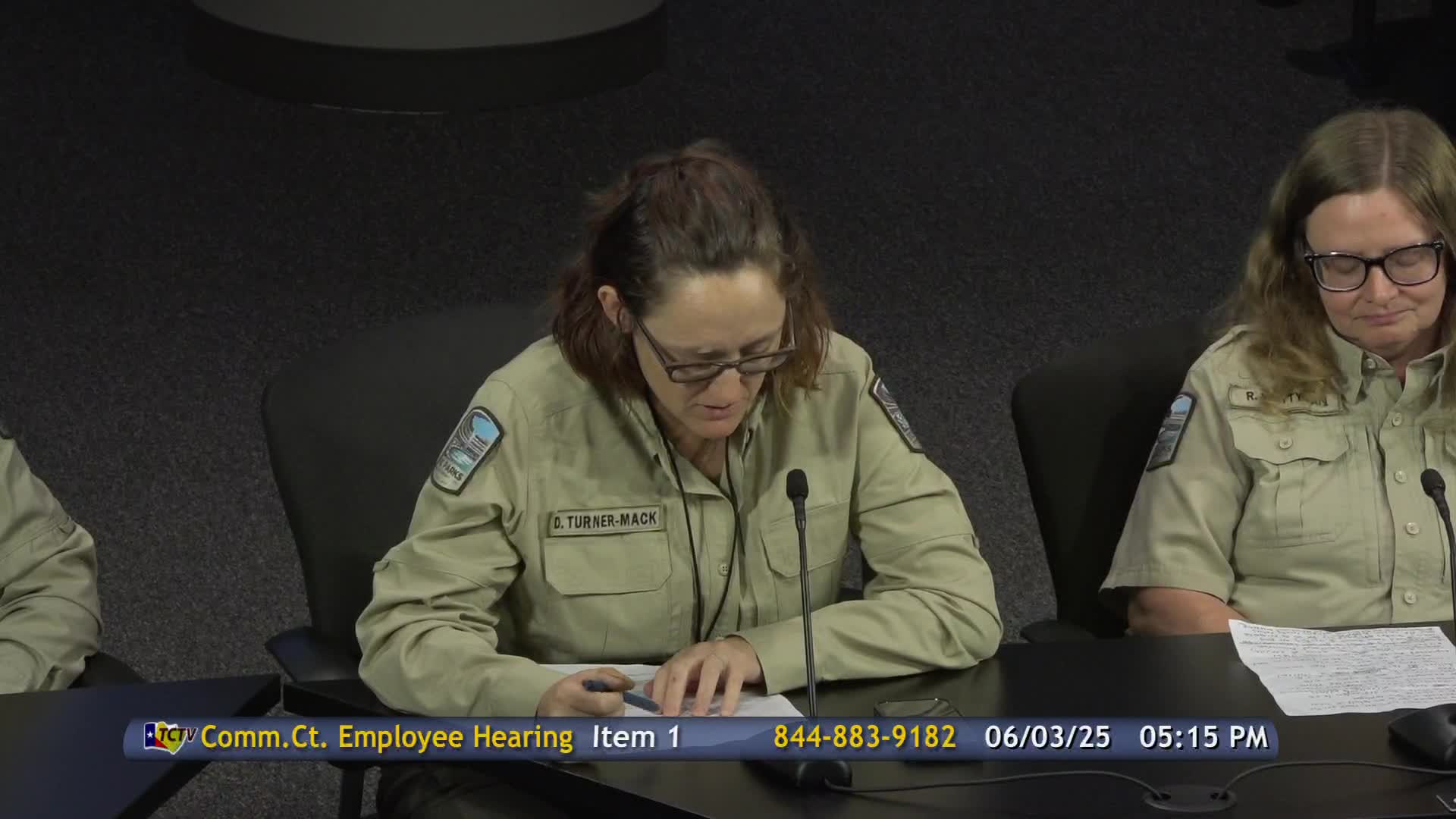
Dozens of Travis County employees, including union leaders and supervisors, urged the Commissioners Court to address salary compression, complete a delayed compensation study and adopt targeted raises during a public hearing on the FY26 budget.
Dozens of Travis County employees and AFSCME Local 1624 representatives urged the Commissioners Court on Thursday to adopt across‑the‑board raises, fund career ladders and fix salary compression they say is driving turnover and harming service delivery.
Speakers said long delays in the county’s compensation review have left some long‑tenured workers earning less than recent hires and reduced managers’ ability to retain staff. Bridal Summers, president of American Federation of State, County and Municipal Employees Local 1624, told the court the union supports a living‑wage baseline of $24.55 per hour (MIT living‑wage calculator) and proposed a progressive cost‑of‑living adjustment that would prioritize larger increases for lower‑paid employees.
The appeals were part of a public comment hearing held as the court begins work on the fiscal 2026 budget. Todd Osborne, assistant director of Human Resources and Management Development (HRMD), opened the meeting’s staff presentation by reviewing recent compensation steps the court has taken and by noting the budget office has set aside $27,200,000 for compensation and benefits in the FY26 planning documents.
Why it matters: speakers said pay and career‑path problems are already affecting county operations. Amanda Kemp, project manager in the county’s Natural Resources & Environmental Quality (TNR) sustainability program, said she was hired into a higher‑level role only to take a pay cut compared with a previous city job and that the market and compensation studies she expected to resolve that have been delayed. “Now I’m three years into this role,” Kemp said, “and it seems the plan is to put the rest of the exempt positions on hold for another year or two.”
Supervisors and division leaders echoed that message. Yaira Robinson, assistant director of sustainability for TNR, warned that the county risks losing employees whose roles depend on long‑standing relationships and institutional knowledge. “All of our work rides on relationships,” Robinson said. “Keeping people is really important because relationships take a long time to build.”
Union leadership outlined specific proposals. Bridal Summers urged the court to target pay increases at the lowest paid workers and endorsed a “progressive COLA” that would give a larger effective bump to employees making under $53,000 — a proposal the union illustrated as a $2,120 flat increase for that cohort (roughly 4% of $53,000).
Employee survey findings were cited during remarks from County Clerk leaders. Angela Dillman, chief deputy for organizational development in the County Clerk’s Office, said an internal survey found nearly 34% of respondents hold a second job and that just 4% of staff said their Travis County pay provided a fully livable wage. Dillman said most respondents asked the court for “fair pay” and wages adjusted for local cost of living.
Court procedure: early in the hearing the court voted to reduce public comment time from three minutes to two minutes to allow more speakers to testify. Judge Brown made the motion and Commissioner Shea seconded it; the motion passed unanimously by hand vote.
What the court did not do: no compensation policy or budget appropriation was adopted at the hearing. HRMD staff said any across‑the‑board increases or pay‑scale changes would require formal court approval later in the budget process. Court members did not vote on salary decisions during the public comment session.
Other concerns raised: speakers described childcare costs, housing and the geographic displacement of employees who now live outside Travis County because of housing costs. Jordan Tyler of the County Clerk’s Office cited U.S. Department of Labor figures on local infant‑care costs and urged the court to consider a childcare assistance program similar to one offered by the City of Austin.
Next steps: HRMD and the budget office will continue to develop recommendations for the Commissioners Court during the FY26 budget cycle; the court did not set a date for a compensation decision at the hearing. Employees and union leaders said they expect to press for specific, targeted measures as the budget moves toward adoption.