
Alexander Farm owner urges Travis County to coordinate with City of Austin over historic-property tax exemption
Get AI-powered insights, summaries, and transcripts
Subscribe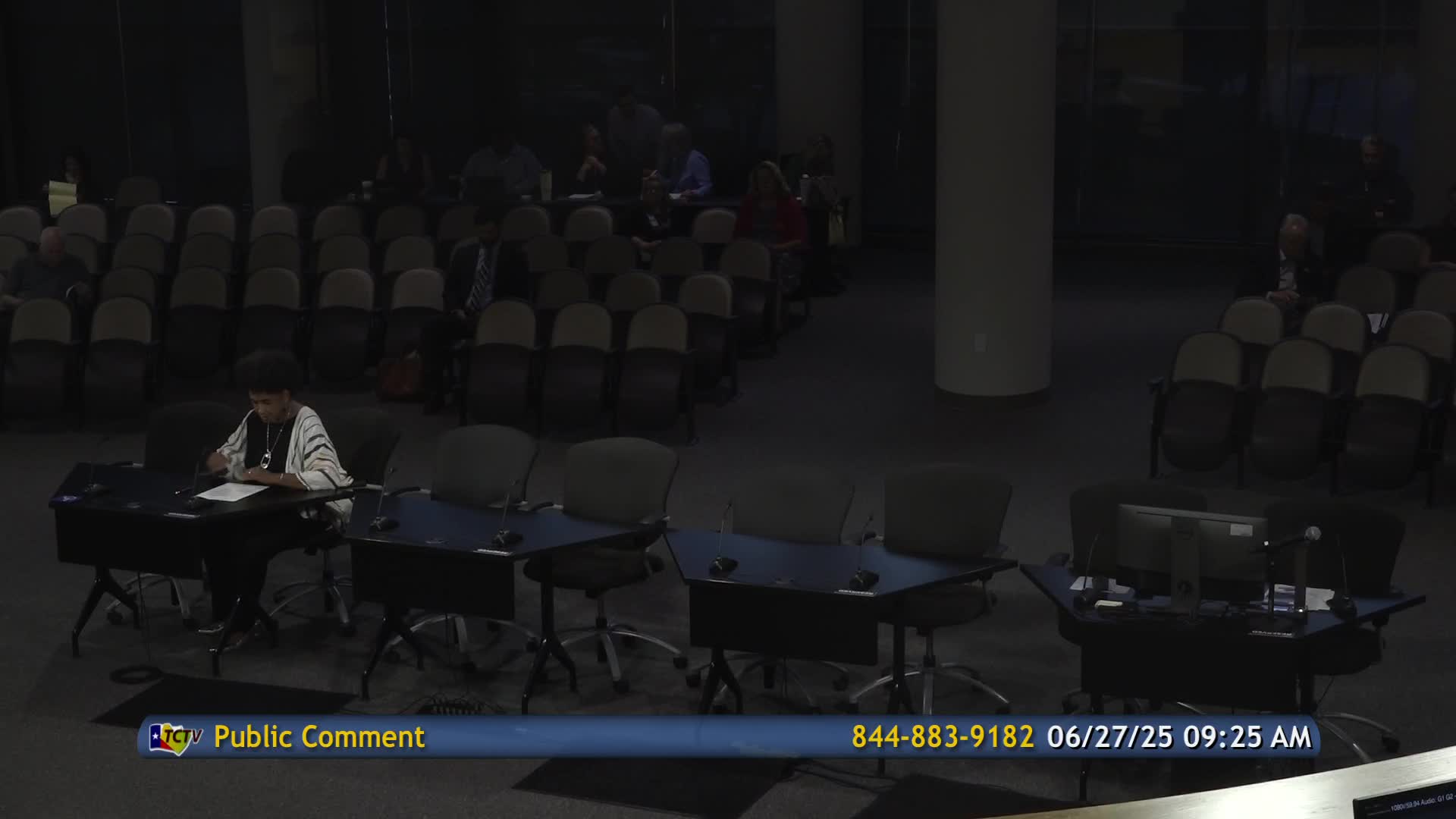
Summary
Rosalind Alexander Kasparik of Alexander Farm asked Travis County commissioners on June 27 to reconcile a years‑long dispute between the county and the City of Austin over access to a Texas historic‑property ad valorem tax exemption.
Rosalind Alexander Kasparik, owner of Alexander Farm, addressed the court during early public comment on June 27 and urged Travis County to work with the City of Austin to resolve an application process she says has excluded historically significant county properties from a Texas state historical and archaeological ad valorem tax exemption established in 1977.
Alexander said the family’s property has 178 years of tenure and lies about 1.2 miles outside the Austin city limits, within Austin’s extraterritorial jurisdiction. She told the court she has sought the state historic exemption for five years and that the exemption — enacted by the Texas Legislature to prevent loss of historic properties from rising property taxes — is often applied only to properties within Austin city limits, which she said has resulted in discriminatory outcomes.
"The law was added to the tax code by the Texas legislature to prevent the loss of historic properties due to rapidly increasing property taxes," Alexander said. She described repeated exchanges where "Travis County maintained that the state historic exemptions are managed by the city of Austin. The city countered that it cannot manage the exemption since Travis County residents aren't taxed by the city." Alexander called the result "bureaucratic machinations" that have disadvantaged minority landowners and asked the court to "discuss, implement, plan, and schedule a bureaucratic reconciliation between the City of Austin and Travis County on this issue."
Acting Judge Bridal Shea acknowledged Alexander's remarks and offered a county staff contact, saying, "Kate Garza in the back can speak with you. She's also been speaking with the city on this issue." The court did not take immediate action on the request during the session.
Alexander said she could provide particulars of several instances illustrating her claim but limited her remarks to the broader problem and urged the court to remedy the interjurisdictional gap she described.