
Commissioners adopt emergency-pay policy to compensate county staff working declared disasters
Get AI-powered insights, summaries, and transcripts
Subscribe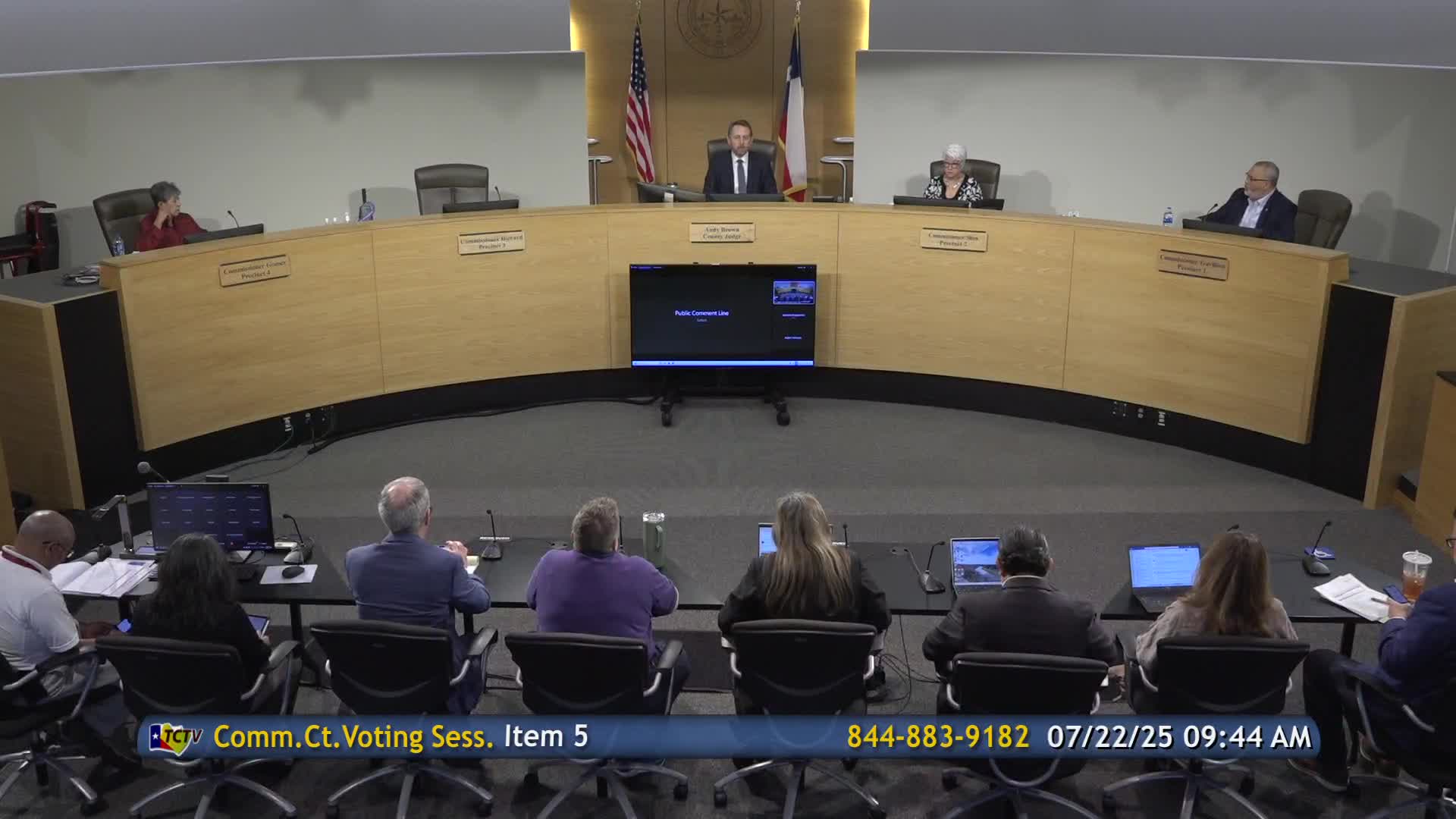
Summary
The Commissioners Court amended Travis County Code Chapter 114 to adopt an emergency pay policy effective July 1, 2025, clarifying that reassignment of duty during an emergency is a condition of employment and adjusting pay treatment for exempt and nonexempt employees during declared disasters.
The Travis County Commissioners Court on July 22 approved an amendment to the Travis County Code (Chapter 114) establishing an emergency-pay policy to govern compensation when employees are mobilized for declared disasters. The policy change, effective July 1, 2025, clarifies reassignment expectations and adjusts pay treatment for exempt employees.
"The primary compensation change though is that our exempt employees will be paid for all hours worked at their regular rate of pay," said Kim Austin Smith, Assistant Director of Human Resources, Talent Planning and Engagement Division, describing the proposal to the court.
Why it matters: County executives and labor representatives told the court the policy addresses repeated, multi-year demands on staff as emergencies have become more frequent and costly. The policy aims to provide a clear, countywide compensation framework for employees reassigned during declared emergencies and to ensure consistent tracking and payment for disaster hours.
Key points - Scope and effective date: The court approved an amendment to Chapter 114 to rename and replace existing implementation procedures with a new Subchapter I titled "Emergency Pay Policy." The policy was adopted with an edit to section 114.149 specifying that "reassignment of duty is a condition of employment during a disaster or emergency." The court set the effective date to July 1, 2025. - Pay mechanics: Under the new policy, exempt employees will be paid for all hours worked at their regular pay rate (instead of being capped at 40 hours), while nonexempt employees remain subject to Fair Labor Standards Act overtime rules (time-and-a-half for qualifying hours). HR staff said additional operational policies and payroll tracking mechanisms will follow to ensure accurate records. - Labor and union input: Gerald Guthrie, business manager for AFSCME Local 1624, requested a clarifying edit limiting the reassignment language to emergencies; the court adopted that edit in the motion. County HR and union representatives reported long discussions and collaboration on the text of the policy. - Costs and audit: Court members raised concerns about fiscal impacts and auditing. Staff said they will work with the auditor and Planning and Budget Office to set systems for tracking disaster hours and costs and will discuss specific funding and timing in executive session before final payouts.
Discussion and caveats County staff framed the change as both a recognition of repeated emergency work and a practical measure to improve morale and fairness. "We've had conversations with HR over a couple of years," an emergency-management official said in the briefing describing an increase in the number of incidents since 2020. Commissioners and the auditor asked staff to return with implementation details and audit procedures; the court moved the matter into executive session for fiscal and legal discussion and returned to vote on the policy with the agreed edit.
What the court decided The court voted unanimously to approve the Chapter 114 amendments and to add the clarified language in Section 114.149 that reassignment during a declared disaster or emergency is a condition of employment, making the policy effective retroactively to July 1, 2025. Court members asked staff to finalize implementation procedures and payroll controls and to consult with the auditor on timing of payouts.
Ending Staff will draft operating guidance and controls and return to the court with implementation details and any budget impacts; audit procedures and timing for retroactive payments were flagged for additional review before funds are distributed.