Get Full Government Meeting Transcripts, Videos, & Alerts Forever!
Get email alerts on the Homelessness topic
No spam. Unsubscribe anytime.
Advocates urge Travis County to fund family shelter beds, hygiene services and downtown workforce pilot
Summary
Advocates at the Travis County Commissioners Court asked the county to prioritize funding for family shelter beds, showers, laundry and a workforce pilot for unsheltered people downtown, stressing that current capacity forces families apart and that basic hygiene access is limited.
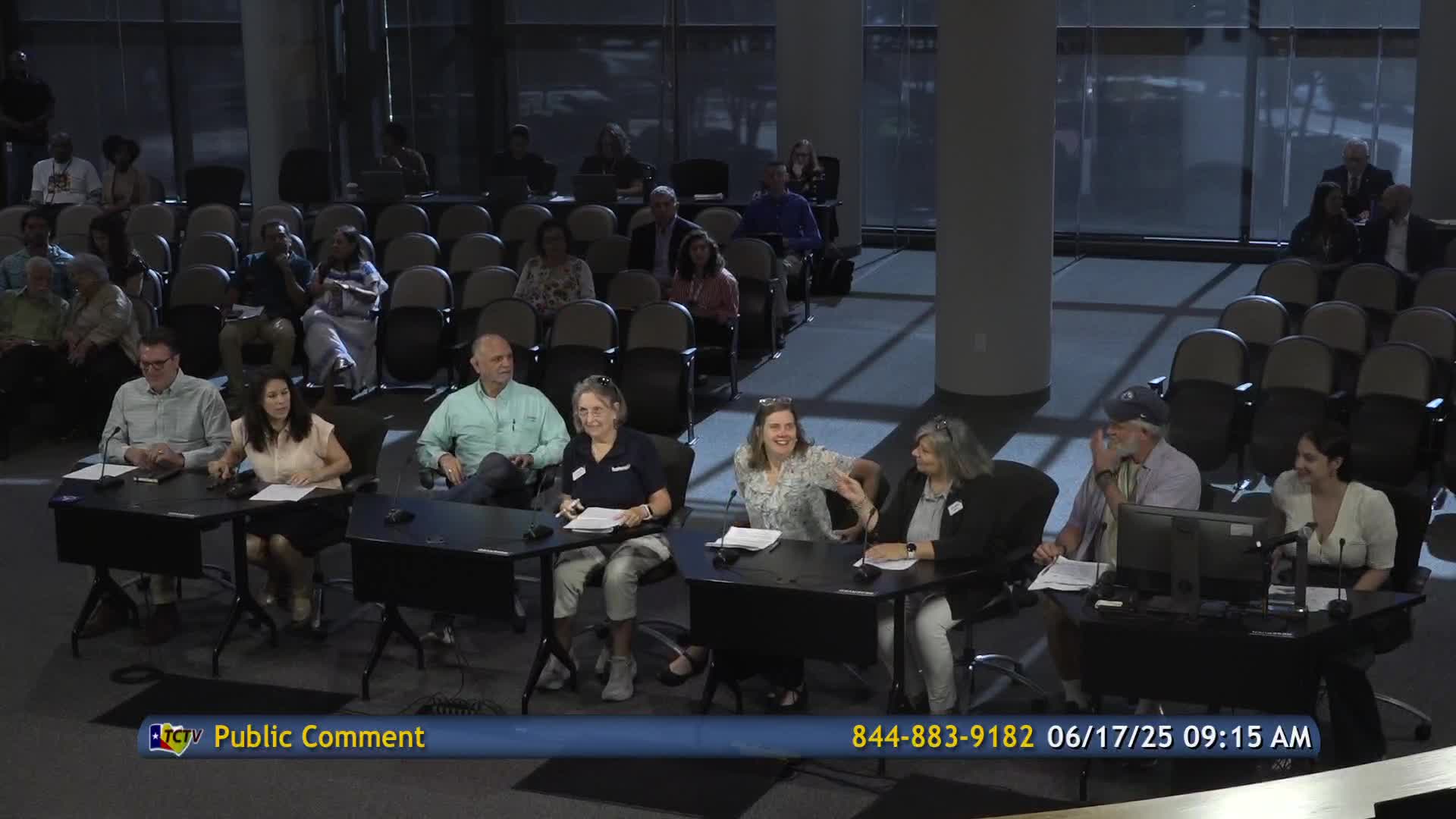
Members of Austin homeless-service organizations and volunteers told the Travis County Commissioners Court on June 17 that the county should target funding to family shelter beds, hygiene services and employment supports in Downtown Austin.
The central plea came from Andy Brower, who identified himself as a Central Presbyterian Church staffer and leader of the Homeless Advocacy Project: "We are asking for funding for more family shelter, for more hygiene facilities, and for a workforce pilot in Downtown Austin." Brower said family shelter capacity is far behind need and cited a single-provider wait list.
The request was echoed by Lynn Williams, executive director of Homemade Austin, who said local schools identified 1,600 homeless students in the 2024–25 school year and warned that "families in Travis County are being separated due to the lack of shelter options." Williams described a Homemade Austin model and the Peace Family Housing Project that would convert faith properties into transitional family housing and asked the court to "allocate resources for upcoming budget cycle" for family-friendly shelters.
Laura Ward, executive leader for St. Louis House, said the nonprofit offers long-term housing and wraparound services for women-led families and explained that "housing instability in childhood causes lasting harm and trauma," urging the county to fund a full continuum of care that includes childcare, mental health supports and workforce education.
Speakers pressed specific operational needs: Kim McCorkle (Homemade Austin/HAP) said existing shower programs were insufficient and estimated that keeping Trinity Center and the Charley Center open year-round would require about $30,000 for staffing. Volunteer Chris Kennedy described weekly outreach at Central Mission and noted that hygiene items such as shampoo often go unused because people have "no place to use it," and recommended subsidized laundry services. David Gomez, a longtime homeless-services advocate and contractor with TUF, suggested pilot options including a secured parking facility for families who live in vehicles and better integration of boarding-care homes into the continuum of care.
Court members listened and asked staff about coordination: Judge Andy Brown and commissioners discussed whether county housing partnerships (including units produced through the county housing finance corporation) are being coordinated with homeless providers to place people into set-aside deeply affordable units. No formal directive or vote on funding occurred at the meeting; commissioners asked staff follow up on coordination and placement practices.
The public commenters noted that many proposals would require intergovernmental and nonprofit coordination and additional funding. Advocates asked the county to include family-bed counts, hygiene-service staffing needs and workforce pilot design in upcoming budget considerations so gaps identified by providers can be addressed.
Ending: Commissioners did not take formal action on specific homelessness funding at the June 17 session; the comments form part of public record and could inform budget discussions and staff follow-ups before the upcoming fiscal cycle.