
Central Health outlines $98.8M primary care boost, proposes 11.8¢ tax rate amid federal funding uncertainty
Get AI-powered insights, summaries, and transcripts
Subscribe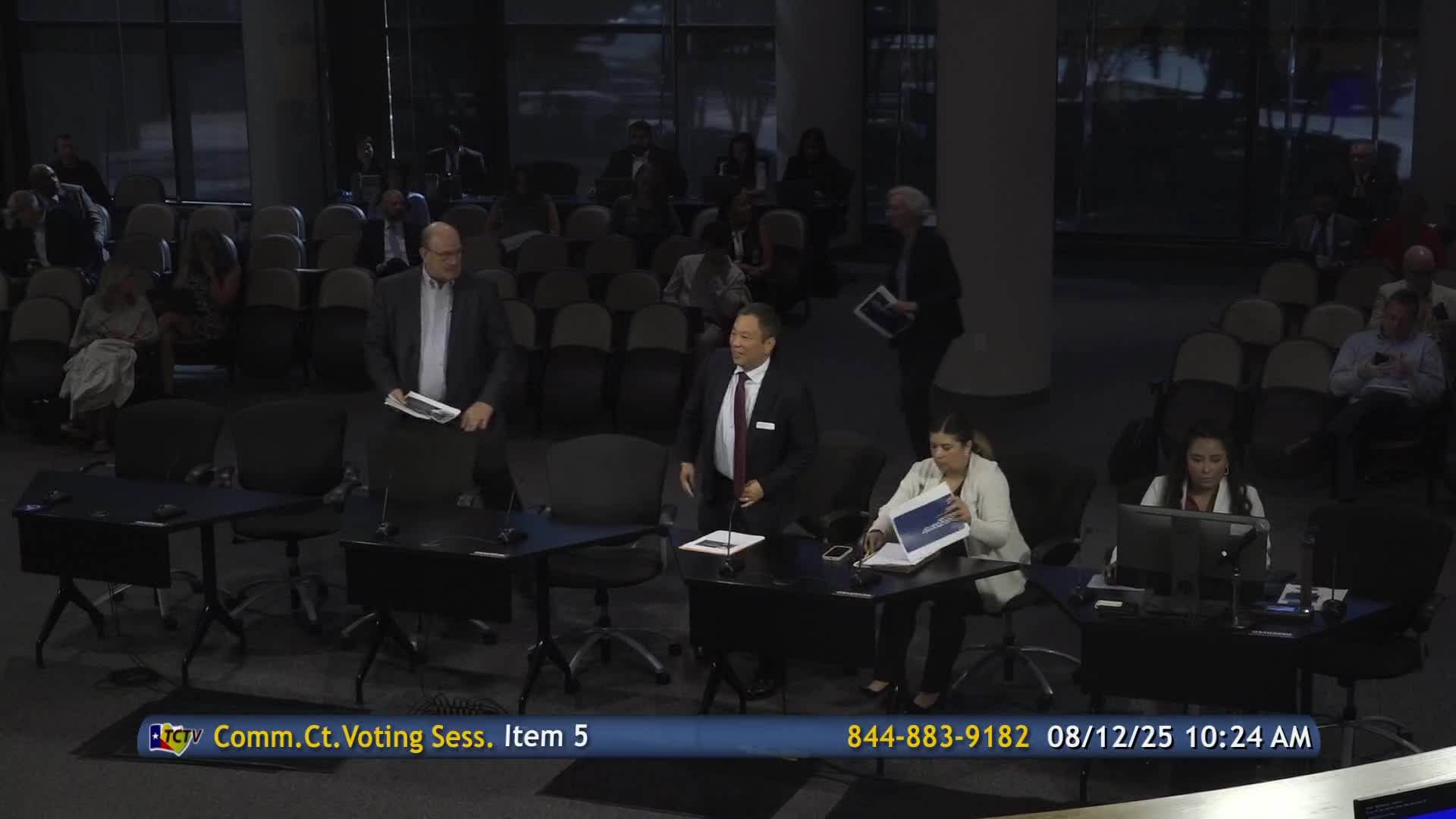
Summary
Central Health presented a FY2026 proposed budget that increases primary care funding by $98.8 million, proposes a property tax rate of $0.11802 per $100 valuation, and flagged potential federal policy changes that could reduce coverage and revenues for local partners.
Central Health on Aug. 12 presented its proposed fiscal year 2026 budget to the Travis County Commissioners Court, stressing a major expansion in primary care funding and warning of federal and state policy shifts that could reduce coverage and revenues for local health partners.
"FY 2026 will be the year of access," Pat Lee, Central Health president and CEO, told the court, summarizing the system's goal of reducing appointment wait times and increasing primary-care capacity. The Central Health proposal includes a $98.8 million increase in investment for Community Care — described by Central Health as the largest single-year expansion of primary-care funding in the organization's history.
Nut graf: Central Health proposed a property tax rate of 11.8¢ per $100 valuation (an 8% increase over the no-new-revenue rate), which the agency said would fund expanded clinical services, new specialty care and reserves to mitigate anticipated cuts to federal programs and marketplace subsidies.
Budget highlights and system goals - Proposed tax rate and reserves: Central Health proposed a tax rate of $0.118023 per $100 valuation. The FY26 plan draws on contingency reserves and proposes a $12 million public health center reserve and an increase of $10 million in an emergency reserve. The organization plans a potential debt issuance to sustain reserves and to finance capital projects. - Investment focus: The budget directs approximately $98.8 million more to community primary care (Community Care), plus expanded specialty, behavioral health and homeless services. Central Health described a roughly 188% increase in direct-care investment from FY 2024 to FY 2026 for the combined system. - System objectives: Central Health outlined four system-wide objectives: simplify patient journeys, build an equitable system, demonstrate community value and develop staff. Specific measurable aims included reducing appointment wait times (an ambitious two-week target for parts of the system), cutting avoidable readmissions and ER visits, and increasing patients with coverage by 5% net.
Policy risks and federal changes Central Health leaders and partners warned that federal and state policy shifts could worsen access and increase local costs. They flagged three major exposures: - Marketplace premium tax-credit changes: Central Health and Sendero officials said the extended premium tax credits that have subsidized ACA marketplace coverage are scheduled to expire at the end of the year unless Congress acts. "We believe that a lot of members will not be able to afford the product," said Sharon Alvis, CEO of Sendero, describing modelling that projected substantial disenrollment and adverse selection risk. - 340B program margin pressure: Central Health said changes in drug pricing and program rules are likely to reduce the 340B margin by an estimated $19–20 million in 2026, a material pressure on clinic finances that has downstream budget implications. - Uncertain reimbursement timing from FEMA and other federal sources: Central Health noted that reimbursements and other federal funding streams can be delayed and that those delays compound local funding stress.
Community care and Sendero Central Health emphasized the coordinated planning with Community Care and Sendero — the county's locally focused health plan. Pat Lee and Dr. Nick Yagoda (CEO of Community Care) said the organizations are planning as a “unified system” for FY26, with shared goals and some consolidated functions such as eligibility and enrollment.
Board process and next steps Central Health's Board of Managers will hold a public hearing on Sept. 3 and vote on Sept. 10; the board expects to return to Commissioners Court on Sept. 16 for further discussion. Central Health also said it will provide a follow-up briefing with more granular Delta reports on program risk, impact estimates and mitigation steps, including a clearer schedule of the value of services at risk under federal changes.
Ending: Commissioners asked for additional briefings on specific program impacts, including justice-involved health costs and the operational details tied to the $12 million public health-center reserve; Central Health staff said more detailed financial and program-level materials will be provided at future court briefings.