Get Full Government Meeting Transcripts, Videos, & Alerts Forever!
Get email alerts on the Solid Waste Debris topic
No spam. Unsubscribe anytime.
TNR seeks two solid‑waste FTEs to build countywide debris and illegal‑dumping program
Summary
Transportation & Natural Resources requested two FTEs to consolidate debris management, oversee the closed 290 landfill, support Eco Depot planning and restart illegal‑dumping outreach and enforcement, saying current oversight is spread across assistant directors.
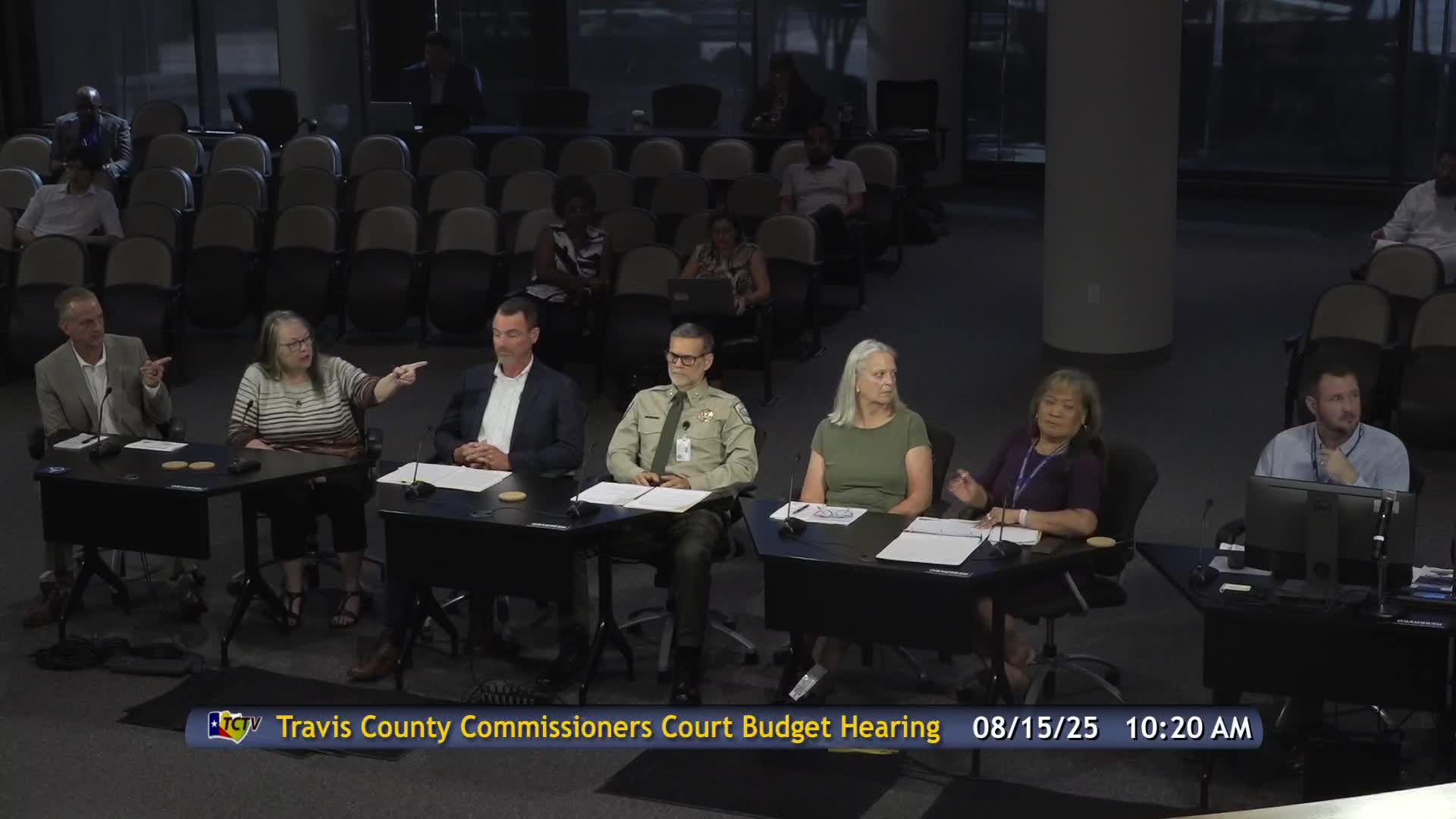
Travis County Transportation & Natural Resources asked the Commissioners Court on Aug. 15 for two full‑time positions to centralize solid‑waste and debris management functions the department says are currently spread across multiple leaders.
Emily Ackland, division director for natural resources and environmental quality, told the court the request predates the recent flood but is now more urgent. The positions would provide a project manager who would lead debris‑management preparedness and response, manage the closed 290 landfill responsibilities, serve as lead for county review of proposed solid‑waste siting under county code ("chapter 482" as referenced in the presentation) and oversee the Eco Depot site transition discussions and CAPCOG advisory participation.
Ackland said the county’s current approach has assistant directors covering narrow pieces of the overall portfolio — debris, landfill oversight and Eco Depot — leaving little bandwidth for proactive program development. David Peyton added the new roles would allow the county to restart illegal‑dumping response, build partnerships with neighborhood groups and HOAs, and perform outreach so cleanups are less likely to be emergency‑driven.
Why it matters: the 290 landfill is a funded, complex closure/remediation responsibility; debris management has large response costs when a flood or other emergency occurs; and illegal dumping creates recurring operational and environmental costs. Staff said the new positions would supply subject‑matter expertise that is not currently centralized.
Scope: the department asked for two FTEs (project manager for debris and a program manager for solid‑waste activities); commissioners requested a staffing history and a list of specific tasks those roles would take on over the last three years to assess incremental need.
Ending: staff agreed to provide a staffing trend analysis and task‑level breakdown for the last three years so the court can evaluate whether the positions will reduce emergency costs and improve ongoing compliance.