
Travis County proposes $42.3 million disaster reserve, shows $0 emergency reserve after July floods
Get AI-powered insights, summaries, and transcripts
Subscribe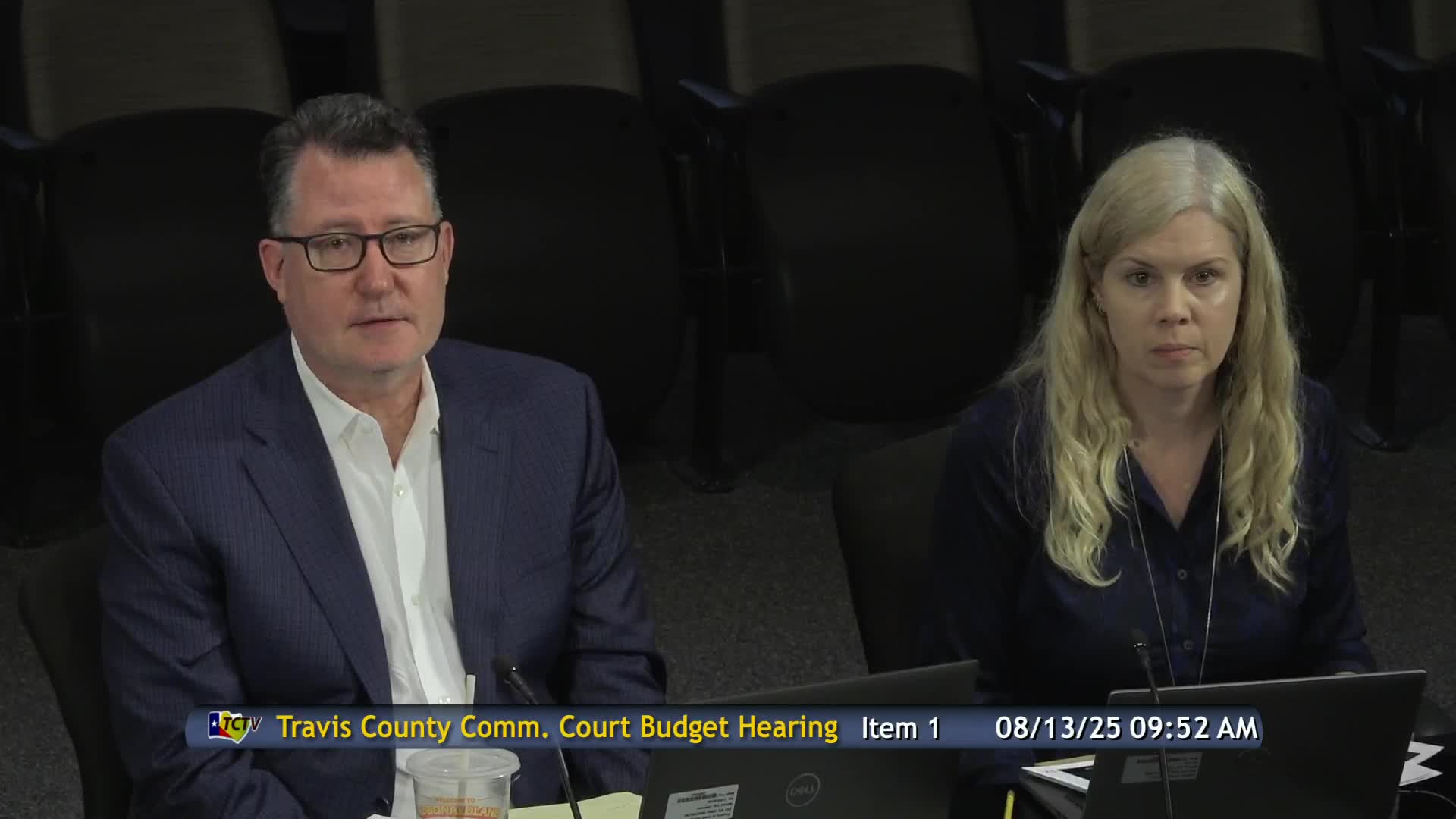
Summary
County staff presented the preliminary Fiscal Year 2026 budget and revenue estimate, including a one‑time $42.3 million disaster response reserve tied to a voter‑approval tax allowance and a $15 million annual emergency reserve that has been drawn down to zero after July flood costs.
The Travis County Commissioner's Court received the county's Fiscal Year 2026 preliminary budget on Aug. 13, with Planning & Budget staff presenting a revenue estimate and proposed reserves that reflect recent severe weather costs. The budget includes a $42,300,000 one‑time “disaster response” reserve tied to the property tax code allowance for a declared disaster and a recommended $15,000,000 ongoing emergency reserve. County staff said they moved $7,952,000 from current reserves this month and that the emergency reserve balance currently stands at zero after immediate flood response spending.
Jessica Rio, County Executive for Planning and Budget, explained that the preliminary budget is balanced to the third revenue estimate and that the final adopted budget will be balanced to the fifth estimate. She told the court that the preliminary budget shows a modest 2.79% increase in the general fund overall and staff trimmed capital recommendations as flooding response needs emerged in mid‑July.
Budget staff and the auditor described how the one‑time disaster reserve was calculated as the difference between an 8% voter‑approval maintenance and operations rate and the 3.5% no‑new‑revenue rate; that $42.3 million figure is visible in the preliminary materials. Travis Gatlin, Budget Director, and Jessica Rio told the court the portion of the median property tax increase attributable to the disaster response is about $54.39 of a roughly $102.11 median tax impact in the preliminary estimate; staff said the disaster portion would be removed when computing the 2027 tax rate because it is a one‑time item.
Travis County also reduced planned capital allocations to free up funds for immediate flood response. Rio said reimbursements from FEMA or other state/federal sources can take years, based on the county’s experience with prior events, so the court must use one‑time fund balance now and reassess capital priorities for next year.
The court heard questions about the legal basis and timing for the tax calculation. Planning and Budget staff pointed to the property tax code (section 26.042) and said the disaster reserve treatment is consistent with that statute; staff also referred commissioners to the preliminary budget sections that explain property tax impacts, exemptions and a 10‑year tax history.
Commissioners directed staff to include the disaster reserve calculation and narrative in the budget agenda worksheet so the public can see the funds and their intended purpose during markup. Staff said they will provide further updates as revenue estimates change and as federal/state reimbursements arrive.
County staff and the auditor underscored the fiscal uncertainty created by the July floods and warned that continuing extreme weather will likely require more frequent budget adjustments.