Get Full Government Meeting Transcripts, Videos, & Alerts Forever!
Get email alerts on the Workforce Compression topic
No spam. Unsubscribe anytime.
Transportation & Natural Resources asks for $601K to address employee compression among field crews
Summary
TNR requested approximately $601,000 to address pay compression that has left many long‑tenured field employees at or near minimum pay, citing the need for a systematic step approach to move employees toward midpoint.
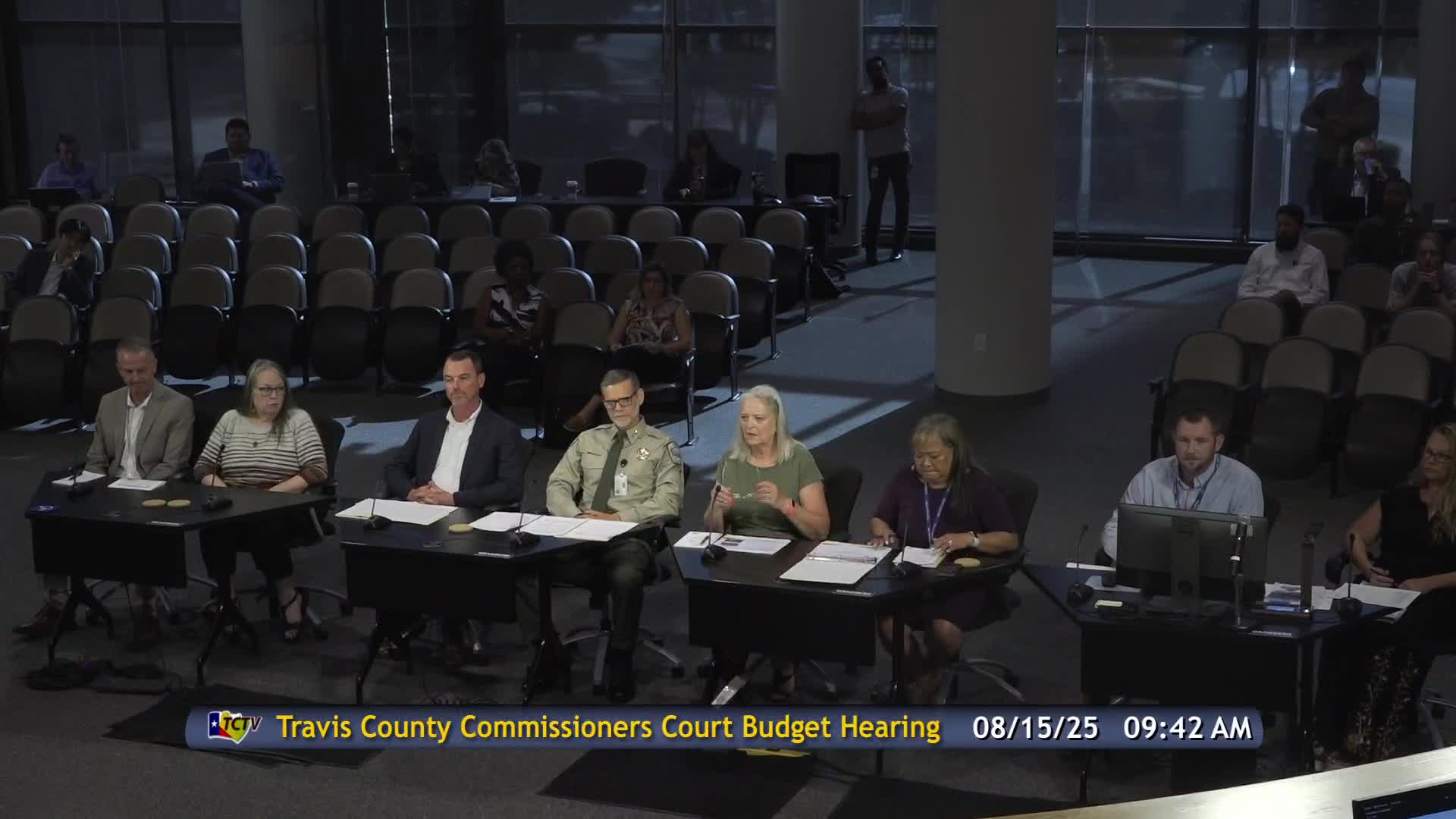
Travis County Transportation and Natural Resources (TNR) officials asked the Commissioners Court on Aug. 15 to fund a targeted compression adjustment for field and maintenance staff, estimating the first‑year cost at about $601,000 across three funds. Susan Welbes, addressing the court for TNR, said the department used a consultant methodology to calculate the cost of moving tenured employees partway through pay ranges so that by seven years on the job an employee reaches midpoint in the pay grade.
Welbes told the court that 54% of TNR’s non‑exempt workforce (175 of 324 employees) would be eligible for a compression increase under the proposed approach. She highlighted park maintenance workers as the most affected group: "90% of those workers are paid at the minimum of their pay grade," she said. TNR County Executive Cindy McDonald and commissioners discussed how recent living‑wage increases and across‑the‑board raises altered minimums while not necessarily advancing long‑tenured employees through the pay range.
Why it matters: TNR said the compressed pay structure has operational consequences because tenured employees with institutional knowledge are paid at levels similar to recent hires, undermining retention and career progression. Commissioners said they support a structured, transparent approach and asked for the department’s math and funding‑source breakdown so the court can consider partial options.
Scope and options: TNR staff described the $601,000 figure as a first‑year cost that may span the general fund, road and bridge fund and a county beach/park fund (BCP). Staff offered to treat TNR as a pilot and to provide options for partial funding should the court want phased implementation. Commissioner Margaret Gomez and others asked for the underlying calculations and asked staff to map alternative scenarios (half‑funding, targeted job families) ahead of budget markups.
Ending: staff will send the detail and alternate options to Planning & Budget for inclusion in the budget agenda worksheet; commissioners requested that the worksheet show funding sources and the possibility of smaller, phased options.