Get Full Government Meeting Transcripts, Videos, & Alerts Forever!
Get email alerts on the Electronic Health Records topic
No spam. Unsubscribe anytime.
County proposes $5.8M for sheriff's electronic health records to improve jail-clinic care and data sharing
Summary
Travis County staff recommended $5.8 million in CAR earmarked funds toward replacing the sheriff's office inmate medical records system to modernize records, enable health data exchange and support continuity of care, and to begin migrating an employee health clinic to the same platform.
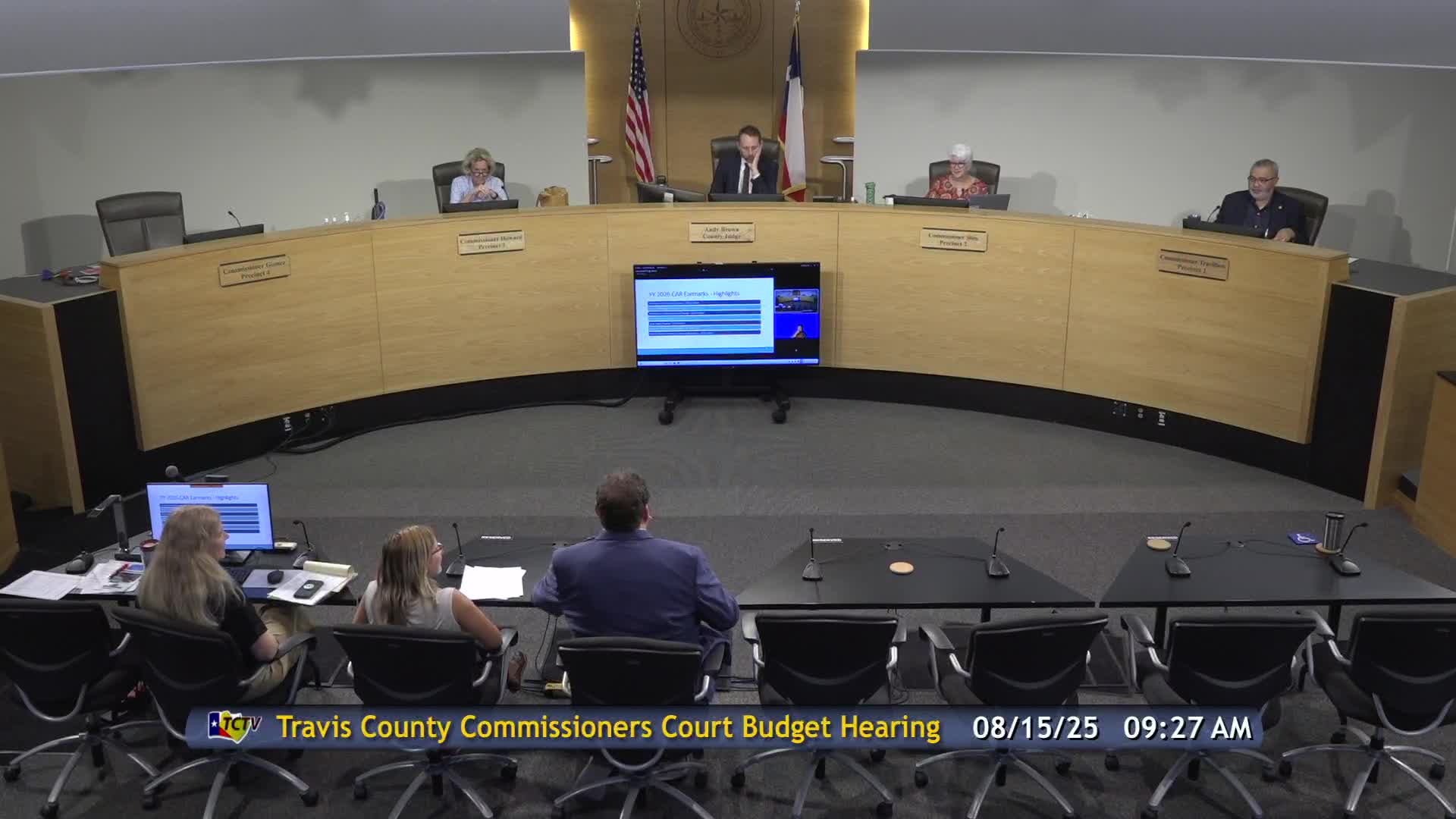
Travis County staff told the Commissioners Court on Aug. 15 that the FY26 preliminary budget includes an earmark of $5.8 million for a new electronic health record (EHR) system for inmates under the sheriff's office.
Alex (Sheriff's Office representative) explained the item as a replacement for an aging, manufacturer‑unsupported medical records system used in the jail. "This current system is very old and is no longer supported by the manufacturer," he said, adding legal and interoperability pressures as drivers for the project. The proposed EHR would create formal interfaces with regional health data exchanges so that providers outside the jail could share records with the sheriff's office and vice versa, improving continuity of care when individuals enter and leave custody.
The system is also planned to support dual records for protected mental‑health information while maintaining legal separations: "They’re gonna create dual systems to track both sides of that equation," Alex said, referring to mental‑health controls. Staff also noted a portion of the funding would begin moving the county's employee health clinic records into the same updated platform to standardize workflows and improve care coordination.
Why it matters: staff said the current system’s obsolescence creates compliance and interoperability risks and that a new EHR would better support treatment continuity for people who receive care both in custody and in the community. The project also drew attention from commissioners who emphasized HIPAA and access controls: Commissioner Jeff Trevillion asked about data access and privacy safeguards, and staff said county IT and risk units are involved.
Scope and cost: staff described the project as a multi‑year implementation that requires outside subject‑matter expertise and backfill for clinical staff who will work on the project while maintaining care operations in the jail. The $5.8 million figure in the preliminary budget is an earmark; staff said departments will return to court with procurement plans and further cost detail.
Ending: staff said the project is costly but necessary to reduce operational risk and improve care coordination; commissioners asked staff to document access and compliance controls and to coordinate with County IT, risk, and legal teams as implementation proceeds.