Get Full Government Meeting Transcripts, Videos, & Alerts Forever!
Get email alerts on the Compensation topic
No spam. Unsubscribe anytime.
Travis County staff urge court to approve market pay adjustments, proposes multi‑phase modernization of pay scales
Summary
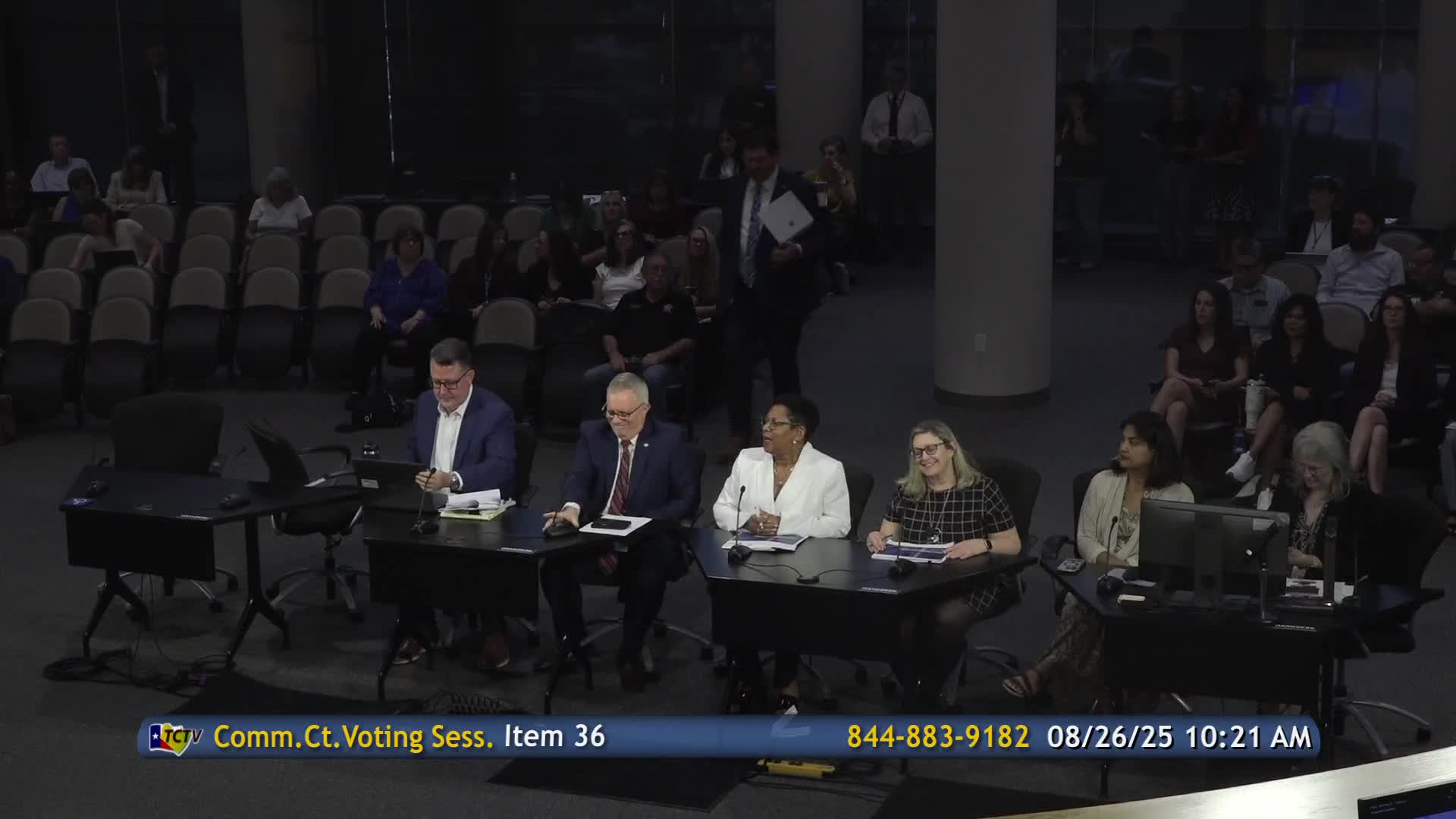
Travis County human resources and budget officials on Aug. 26 urged the Commissioners Court to approve market pay adjustments and a two‑phase modernization of county pay scales to address recruitment and retention gaps, but the court took no final action and asked staff for corrected costing and a clearer implementation plan.
Travis County human resources and budget officials on Aug. 26 urged the Commissioners Court to adopt a market adjustment and to approve a two‑phase modernization of county pay scales that would add a separate exempt schedule and later refine attorney and other specialty ladders. No vote was taken; staff said they will return with updated cost numbers for formal action.
The county’s Human Resources Management Department (HRMD) presented the final analysis of a project begun with an outside consultant in 2022 and completed by HRMD staff. The recommendations include applying a market salary adjustment to classifications below market, implementing an exempt pay schedule in phase one, and continuing detailed work on an attorney career ladder and other specialty scales in phase two. Travis County Planning and Budget Office (PBO) staff provided draft cost estimates for competing scenarios but said the numbers are still being finalized and could change.
Why it matters: County leaders said the move is intended to keep the workforce competitive after several years of large increases at the low end of the pay scale; staff told the court that while the county raised minimum wages aggressively between 2022 and 2025, many mid‑ and upper‑level positions remain behind local market pay and have created recruitment and retention problems.
What HR and budget staff proposed HRMD asked the court to approve two principal steps: 1) application of a market adjustment formula to the county’s unified pay scale, and 2) creation of an exempt pay schedule so that work judged to follow an “exempt” market (professional/managerial roles) can be benchmarked and managed independently from non‑exempt hourly jobs. HRMD staff described a two‑phase rollout: the market adjustment and exempt schedule in phase one, followed by follow‑up work (including an attorney pay ladder and revisions to compensation policy) in phase two.
PBO described three budget scenarios staff had modeled. PBO said its preferred package (labeled in the presentation as Option B) would include a modified calculation for the market adjustment, a two‑year ramp for certain judicial salary moves, and a limited 1% increase for employees who do not receive a market adjustment. PBO emphasized the estimates in the presentation were assembled using HRMD input delivered late in the process and may change.
Judicial and court staff priorities A group of elected judges and court staff urged the court to preserve a pending budget request to reclassify and raise pay for judicial executive assistants and judicial aides, saying turnover and cross‑office poaching had demonstrated a “glaring” gap. Hennepin County civil and criminal judges spoke collectively in support and requested the county ensure those reclassifications and raises are included; HRMD told the court that the judge’s reclassification requests are included in the MSS modeling and would move affected roles multiple pay grades under the proposed formula.
Union and employee comments AFSCME Local 1624 leaders and union members spoke in public comment earlier in the meeting, urging across‑the‑board increases and a pay structure that promotes equity. Carol Gaffrey, business manager for AFSCME Local 1624, criticized the market approach the county used and called the study “flawed,” arguing that it would leave many lower‑paid workers behind and that the calculation method used to convert market results to pay increases was not a “true market” methodology. HR and PBO staff said they would continue to meet with departments and unions as the figures are finalized.
Staff next steps HRMD and PBO said they will deliver corrected, finalized spreadsheets and updated cost estimates before the court’s upcoming budget deliberations. HRMD asked the court to consider Option B (the modified market adjustment) as the best balance of addressing market gaps while staying within the county’s projected compensation reserve; PBO noted it might present an additional option if late corrections materially change the cost. HRMD representatives committed to further work sessions to explain policy changes, implementation timing, and the governance process for the new exempt schedule.
Not decided today No formal action was taken on pay changes during the Aug. 26 session. The court opened and closed the statutorily required public hearing on elected officials’ salaries (Texas Local Government Code, Chapter 152), but the broader MSS recommendations will return to the court for formal vote after updated cost information is supplied.
Emma‑ending HR and budget staff told the court the measures are intended to improve recruitment and retention while aligning county compensation with relevant labor markets. Commissioners asked for clearer implementation plans, a risk assessment and a timeline showing how changes would be phased so the court can weigh tradeoffs against other priorities in the FY26 budget cycle. Staff said they will return with corrected costing and additional options before action is required.