Get Full Government Meeting Transcripts, Videos, & Alerts Forever!
Get email alerts on the Historic Preservation Hms Courthouse topic
No spam. Unsubscribe anytime.
Court asks staff for HMS courthouse options and costs; no decision made
Summary
After a staff update on the historic (HMS) courthouse and other large facility projects, the Commissioners Court asked for further cost timelines and directed staff to return with a phased plan that coordinates with diversion center and central intake projects.
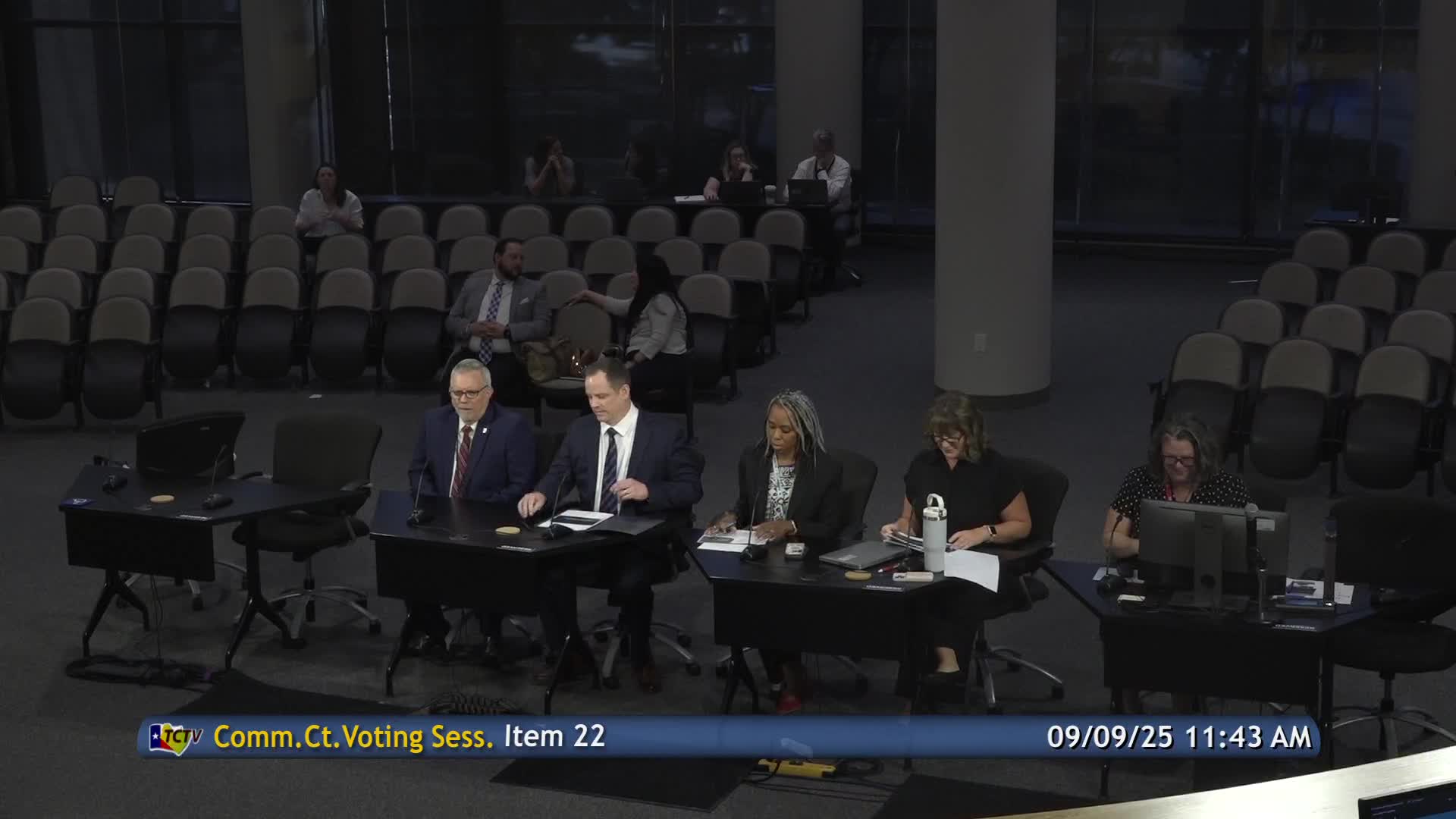
The Commissioners Court on Sept. 9 heard an update on the historic HMS courthouse and other large county facility projects, and commissioners asked staff to return with detailed cost and timeline options rather than approving immediate work.
Planning & Budget and Facilities Management staff summarized prior consultant work that estimated a range of costs for a full restoration and modernization of the HMS courthouse. Staff said a consultant’s preliminary schematic for a full restoration came to an approximate $124–$126 million range, including building restoration, building systems, and professional soft costs; staff reminded the court that previous grant pursuit from the Texas Historical Commission (THC) had been set aside because the grant size and timing did not match projected costs.
Court members emphasized two priorities: (1) retain and modernize functional courthouse operations and (2) preserve and interpret the building’s civil-rights history — the site was identified in the briefing as linked to the Sweatt v. Painter matter and other nearby historic resources. Commissioner Howard said a design scope could combine preservation and modernization, with options to include exhibit and archival partnerships with the Austin History Center Association. County Clerk Diana Limon Mercado underscored operational needs: her office remains the building’s largest tenant and she asked that clerk staff be prioritized in any planning because they must remain close to criminal courts and handle records and public interactions.
Staff did not present a procurement motion. Instead the court directed staff to return with a more detailed timeline that accounts for the diversion center/central intake project sequencing, estimates of phased costs and options for temporary relocation of long‑standing tenants. Staff said the court’s FY25 earmark for design (originally $10 million) had not been expended; PBO retained a $2 million placeholder in the FY26 preliminary budget to support further analysis if the court chooses to proceed.
Why this matters: HMS is historically significant and currently houses county court functions and record-keeping operations. A full restoration would be a major capital project with multi-year scheduling impacts on courthouse functions and county budgets. The court asked staff to develop a stair-stepped plan that balances operational continuity and historic preservation while coordinating with other large projects already under way.