
Council adopts PeaceDC omnibus amendments in Committee; debate centers on expanded pretrial detention presumption
Get AI-powered insights, summaries, and transcripts
Subscribe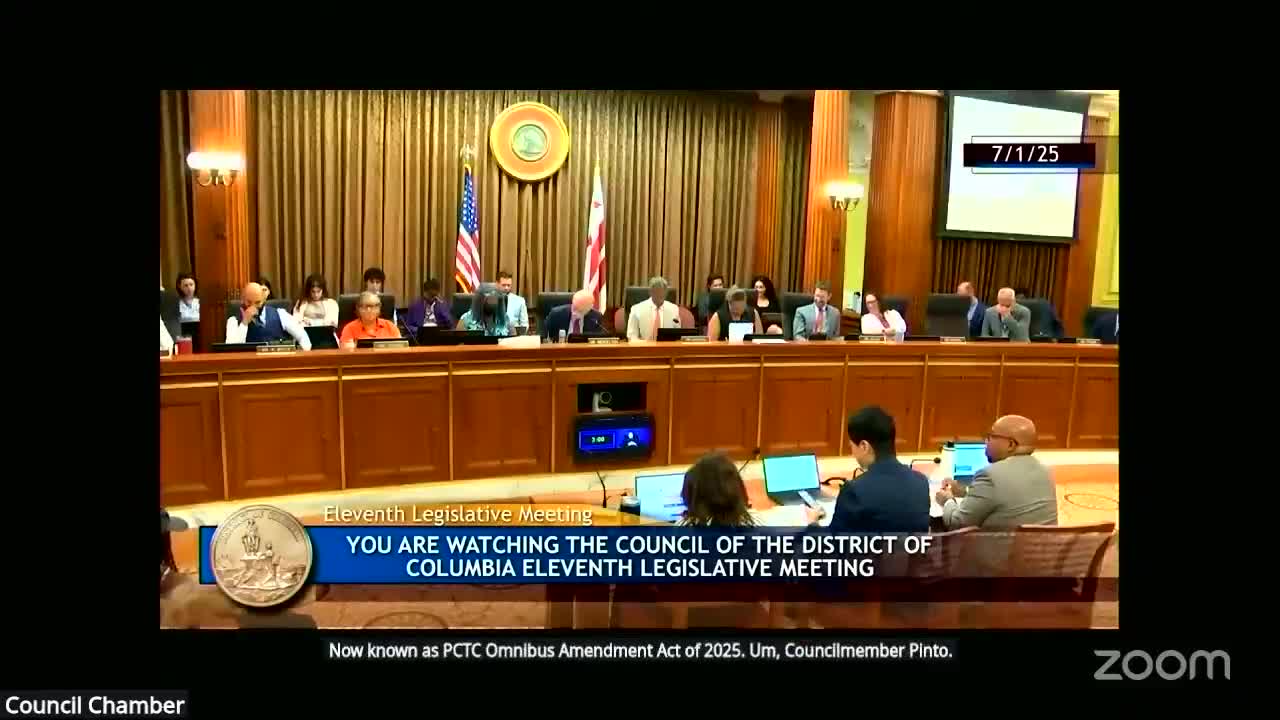
Summary
The Committee approved the PeaceDC omnibus amendments (Bill 26‑304) in Committee, a package that includes MPD training credit changes, firefighter survivor benefit clarifications, record‑sealing fixes, and an expanded rebuttable presumption for pretrial detention; a motion to strike the permanent presumption failed, and an amendment to extend the presumption temporarily and require additional CJCC study passed.
Council member Brooke Pinto moved the PeaceDC Omnibus Amendment Act (PCC, Bill 26‑304) and the Committee considered a suite of proposed changes bundled in the omnibus.
PCC includes multiple components: streamlining MPD training‑academy college credit requirements; ensuring full survivor benefits for families of fire and EMS personnel who die from presumed performance‑of‑duty illnesses; closing gaps in the Second Chance Amendment Act to improve record sealing; and continuing a rebuttable presumption for pretrial detention for certain violent crimes. Pinto said the presumption helped judges evaluate detention decisions in light of controlling case law (citing Pope v. United States) and argued the presumption does not mandate detention but creates parity across violent offenses.
Council member Robert White moved an amendment to strike the PCC provisions that would make expanded pretrial detention permanent, arguing the data are inconclusive and that pretrial detention disproportionately harms Black defendants; his amendment failed on a roll call (3 yes, 9 no). Council members Kenyon McDuffie and others then offered an amendment (co‑sponsored by Council member Fruman) to extend the rebuttable‑presumption expiration to Dec. 31, 2026 and to require further Criminal Justice Coordinating Council (CJCC) reporting; that amendment passed unanimously. Council member Louis George offered, then withdrew, a separate amendment that would have narrowed the presumption to defendants with a violent‑crime conviction within seven years.
Other PCC items — including firefighter survivor benefit clarifications — were amended and the Committee approved the emergency and temporary versions to avoid gaps while the permanent text proceeds. Pinto and colleagues instructed general counsel to conform the emergency bill language to the permanent changes except where a provision has a fiscal cost (fire/EMS presumptive disability changes were not incorporated into the emergency text because of cost).
The Committee advanced PCC in both permanent and emergency forms. Debate was extensive and divided along concerns over public safety tools versus civil liberties and racial equity; multiple members stressed the need for additional CJCC data and for careful oversight.