Get Full Government Meeting Transcripts, Videos, & Alerts Forever!
Get email alerts on the Supportive Housing Committee topic
No spam. Unsubscribe anytime.
Georgetown council names committee to study supportive housing, sets six-month deadline
Summary
The Georgetown Town Council appointed a community committee to research supportive/recovery housing and report back within six months, and several residents used public comment to raise safety, enforcement and homeless-services concerns.
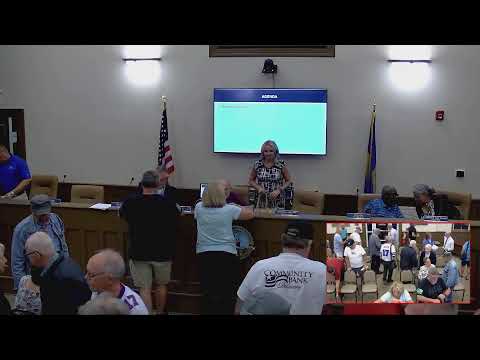
Georgetown — The Georgetown Town Council on Sept. 8 appointed a citizen committee to research local supportive and recovery housing and directed the group to report recommendations within six months. Council also asked the group to hold an initial meeting within two to three weeks to begin compiling a factual timeline and options for council consideration.
Council said the committee should focus on researching relevant law and the organizations operating supportive housing locally. “This group has some work to do. They've got to research the law,” a council member said as names for the first committee were read into the record.
The committee roster, read at the meeting, includes: John Barnby, Adam Bichowski, Linda Dennis, Tammy Hardy Kistler, Trish Hill, Janet Laws, Sharon Pritchard, Andrew Turn, Dennis Winsory and Eddie Wise. Council indicated it did not want two married people serving together on the same committee and instructed staff and the appointees to establish a timeline and factual documentation standards (for example, dates and witnesses) rather than relying on hearsay.
Residents used the public-comment period to press council on safety, sanitation and enforcement issues related to homelessness and street activity. Shelley Wise, a Georgetown resident, described encounters in the town circle she said included sleeping on benches and public urination, and urged council to “take back Georgetown.” Eddie Wise, another resident, asked for a clear contact route for code enforcement and noted widespread litter and overflowing trash containers on neighborhood streets. Several speakers urged stiffer enforcement and faster follow-up from town staff.
Council framed the committee as fact-finding rather than policy-adopting; officials asked the group to produce concrete timelines and verifiable incidents (for example, “on January 10, 2025, this was witnessed by …”) to support future recommendations. The council did not adopt policy changes or vote on service-provision measures at the meeting.
Members of the public said they want visible enforcement and clearer lines for reporting problems: one resident suggested posting a direct email link to code enforcement on the town website and urged the town to increase fines for visible code violations as a revenue and deterrent measure.
The council asked the committee to return to the council with findings and proposals that council can discuss and refine. No formal motion creating an enforceable regulatory change was made at the meeting; instead, the council approved the committee appointments and set the six-month reporting expectation by voice vote.