Get Full Government Meeting Transcripts, Videos, & Alerts Forever!
Get email alerts on the Parking Policy topic
No spam. Unsubscribe anytime.
Wasilla planners outline parking‑standards review, suggest flexible downtown rules and Alaska‑specific options
Summary
City planning staff presented a wide review of parking standards and challenges in Wasilla, recommending district‑based minimums, mixed‑use permitting, shared‑parking mechanisms and Alaska‑specific measures (snow storage, heated lots, lighting). Commissioners raised enforcement and Main Street/DOT access as implementation concerns.
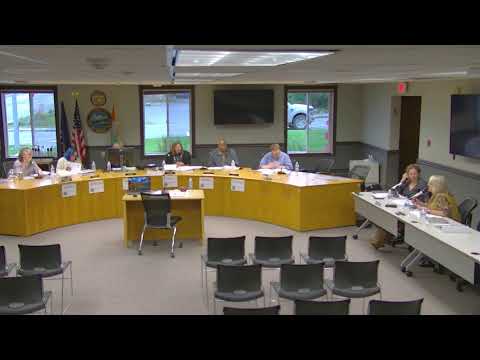
Planning staff presented an informational report on Aug. 19 reviewing Wasilla’s current parking standards and possible updates to address growth, mixed use and unique Alaskan conditions such as snow storage and long winter darkness.
The acting city planner and contract planner, Elise Blocker, told commissioners the city’s parking requirements are embedded in multiple sections of Wasilla Municipal Code (Title 16, landscaping, and public works sections) and noted downtown areas that recently shifted from rural to urban classification since the last census. Staff described everyday permitting difficulties in downtown small lots where required minimums can be difficult to meet without flexible standards.
Staff suggested policy options including district‑specific parking minimums (commercial, downtown overlay, industrial/airport), reduction or elimination of parking minimums to encourage mixed‑use development (citing Anchorage and Fairbanks examples), shared‑parking frameworks, and continued streamlining of permitting for parking lot modifications. Alaska‑specific items included planning for snow storage, larger vehicle spaces for big trucks and buses, heated parking areas where utilities allow, and additional lighting for pedestrian safety during long winter nights.
Staff acknowledged enforcement capacity limits — the city currently has a single code‑compliance officer — and noted shared‑parking agreements are commonly used but can be hard to enforce. Commissioners asked whether electric‑vehicle charging infrastructure and curbside design for deliveries (e.g., DoorDash) would be included; staff said EV infrastructure is not yet in code and can be considered during modernization.
Commissioners and members of the public shared local examples of constrained parking in shopping areas near Raising Cane’s, Fred Meyer and other centers and debated how regulatory minimums and private market incentives interact. Staff recommended a potential five‑year plan, parking inventory, and pilot projects for mixed‑use parking in larger developments as next steps.
The briefing did not propose or adopt a specific ordinance; it was an informational presentation to guide future revisions to Title 16 and the comprehensive plan.