Get Full Government Meeting Transcripts, Videos, & Alerts Forever!
Get email alerts on the Land Use Zoning topic
No spam. Unsubscribe anytime.
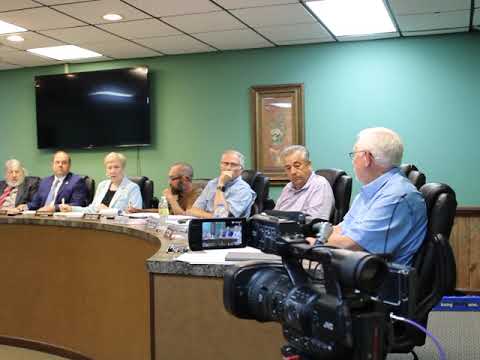
Kennett City Council rejects rezoning of former hospital at 1301 First Street
Summary
After extended discussion and a roll-call vote that failed to reach the seven-vote threshold to override the Planning and Zoning Board, the Kennett City Council voted down an ordinance to rezone the former hospital property at 1301 First Street from R-1 single-family residential to B-2 general business.
The Kennett City Council voted against an ordinance to rezone the former hospital property at 1301 First Street from R-1 single-family residential to B-2 general business after a lengthy public discussion and a roll-call vote that did not reach the seven votes required to override a recommendation from the Planning and Zoning Board.
Council members and members of the public debated whether rezoning would encourage investment or simply allow uses the city could not control. Council Member Johnson said she could not support the rezoning because “I've really struggled with this because I would like to approve it, but I'm not going to be able to because I've not seen a demonstration that the developer will be able to do what he has committed to.”
Supporters of rezoning said making the parcel permissive for general business uses could attract buyers and investment to a large parcel that has stood vacant and in poor condition for years. City staff and speakers repeatedly distinguished zoning from building- and property-maintenance responsibilities: zoning controls permitted uses; the building must still meet code to be occupied. Council discussion referenced a code official named Victor as the city staff member who would need to approve any future use for safety and building-code compliance.
Council members also cited a letter from the developer's architect estimating that bringing the building up to code would cost “between 4 and a half and 6 and a half million dollars,” a point cited by both supporters and skeptics during the discussion. Several council members said they had not seen documentation demonstrating the developer could deliver a viable redevelopment plan.
The mayor (unnamed in the transcript) moved to a roll-call vote and explained the voting threshold: “There will have to be 7 votes in favor of the rezoning for it to pass since it is a recommendation from the planning zoning board not to approve this.” The roll call recorded five affirmative votes (Andy Carter; Council Member Burn; Council Member Swain; Council Member Panosas; Council Member Young). The council did not record the seven affirmative votes required to override the Planning and Zoning Board, and the rezoning ordinance therefore failed.
Council Member Johnson and others urged stronger enforcement of property-maintenance codes if the building remains vacant or condemned; staff confirmed the owner remains responsible for maintenance and that code enforcement can pursue fines or remediation under existing ordinances regardless of zoning. No new deadline or formal direction to staff was recorded to require a developer demonstration or a follow-up plan.
The meeting ended with the council taking no further action on the property; the parcel remains zoned R-1 and subject to code enforcement and any future formal rezoning proposals.